

Maddy summaryThis bill strengthens the HUD-VASH program, which provides housing vouchers and case management to homeless veterans. It requires the VA to prioritize vulnerable homeless veterans - especially those with disabilities - for case managers and mandates annual reports tracking program effectiveness, staffing ratios, and veteran outcomes. The law also prohibits revoking housing assistance solely because a veteran refuses case management and protects veterans from eviction for this reason. Additionally, it directs a GAO report assessing veterans' housing stability, case manager recruitment, and program demographics.
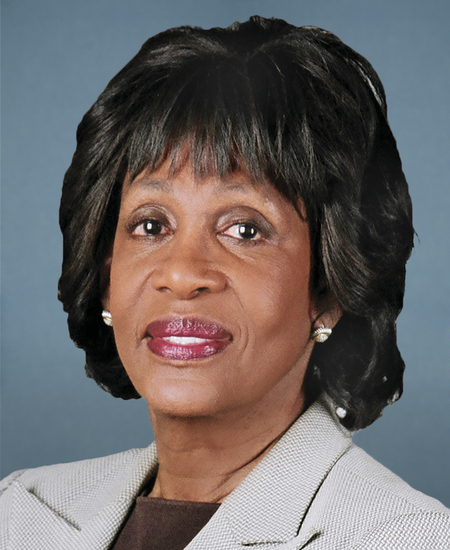
Rep. Maxine Waters
Sponsored bills
Maddy summaryThis bill creates a federal framework for "extreme risk protection orders" (ERPOs) that temporarily remove firearms from individuals who pose a risk of harming themselves or others. Family members or law enforcement officers can petition a federal court for a temporary order (up to 14 days) based on probable cause, followed by a hearing within 72 hours to determine if a longer-term order (up to 180 days) is warranted. The bill requires clear and convincing evidence of risk at the hearing and mandates respondents to surrender firearms to law enforcement within 48 hours. It also includes provisions for reporting, training law enforcement on ERPOs, and a federal grant program to support state ERPO implementation, without preempting state laws.
Maddy summaryHRES 901 is a U.S. House resolution expressing support for democracy and human rights in Pakistan. It calls on the U.S. President and Secretary of State to collaborate with Pakistan to uphold democratic processes, human rights, and the rule of law. The resolution urges Pakistan to protect freedoms of speech, assembly, and press, and to avoid arbitrary detention or suppression of political participation. It also condemns efforts to undermine Pakistan's electoral or judicial systems, including harassment of citizens during protests or interference with elections.
Maddy summaryThis bill amends the Occupational Safety and Health Act to explicitly include public employees - such as those working for federal, state, or local government agencies - under OSHA's coverage. It changes the definition of "employee" to specify that public sector workers are protected, removing previous exclusions. The law takes effect 90 days after enactment for most workplaces, but gives states and local governments without OSHA-approved plans up to 36 months to comply. This directly affects public service workers in government roles by bringing their workplace safety protections under the same federal OSHA framework as private-sector employees.
Maddy summaryHR 8732, the Domestic Workers Bill of Rights Act, would establish new labor protections for domestic workers including nannies, housekeepers, and caregivers who work in private homes. The bill requires written agreements between employers and domestic employees, provides earned sick days, ensures fair scheduling practices, and prohibits unfair wage deductions for cash shortages or communications. It also creates a Domestic Employee Standards Board to recommend workplace standards and establishes a National Domestic Employee Hotline for assistance. The bill specifically targets domestic workers who have historically been excluded from labor protections under the Fair Labor Standards Act and Civil Rights Act, benefiting an estimated 2.2 million domestic workers in the U.S. who are disproportionately women of color and immigrants.
Maddy summaryThis bill delays a Medicare policy that would have restricted coverage to only intravenous drugs for managing phosphate levels in kidney failure patients. It specifically postpones the implementation of the "oral-only" policy under Medicare's ESRD payment system until January 1, 2033, or until an intravenous drug for phosphate control receives FDA approval - whichever comes first. The bill directly affects Medicare beneficiaries with end-stage renal disease (ESRD) who rely on oral medications for phosphate management. It ensures continued Medicare coverage for these oral drugs during the extended timeline, without changing the underlying payment structure.
Maddy summaryHR 8639, the Warehouse Worker Protection Act, requires employers in covered warehouse facilities (including distribution centers, storage facilities, and delivery services) to provide workers with clear written descriptions of any quotas they're subject to, including how performance is measured and monitored. The bill prohibits quotas that interfere with breaks, safety compliance, or anti-discrimination protections, and mandates that employers provide employee work speed data in human-readable formats. It creates new anti-retaliation protections for workers who exercise these rights or file complaints, and establishes a Fairness and Transparency Office within the Department of Labor to oversee implementation. The act also amends the National Labor Relations Act to explicitly prohibit quotas that discourage workers from exercising their labor rights.
Maddy summaryHR 1687 names the United States Postal Service facility at 6444 San Fernando Road in Glendale, California, as the "Paul Ignatius Post Office." All official U.S. government references to this location - such as in laws, maps, or documents - will now use the new name. This is a procedural bill with no policy changes beyond the naming designation.
Maddy summaryThe George Floyd Justice in Policing Act of 2024 establishes a National Police Misconduct Registry to track complaints and disciplinary actions against officers, requiring all federal, state, and local law enforcement agencies to report use-of-force incidents with racial, gender, and age data. It bans chokeholds and carotid holds in police encounters, prohibits no-knock warrants in drug cases, and reforms qualified immunity to make it harder for officers to avoid accountability for misconduct. The bill mandates body cameras for federal officers, requires independent investigations of officer-involved shootings, and creates new data collection systems to monitor racial profiling and use-of-force patterns. It also includes provisions for civilian oversight boards, improved officer training on de-escalation and implicit bias, and restrictions on military equipment transfers to local police departments. This law affects all law enforcement agencies receiving federal funding under programs like Byrne and COPS grants.
Maddy summaryThe Alzheimer’s Accountability and Investment Act (HR 620) requires the National Institutes of Health (NIH) Director to annually submit a budget estimate for Alzheimer’s-related initiatives - including personnel needs - directly to the President for review and then to Congress. This budget must be prepared after public comment and submitted without changes by the Secretary of Health and Human Services or the Advisory Council. The bill directly affects the NIH’s budget reporting process for Alzheimer’s research and programs, mandating transparency in how funds are allocated. It does not change funding levels but establishes a specific annual reporting mechanism to improve accountability.