

Maddy summaryThis bill redesignates a United States Postal Service facility at 3500 West 6th Street, Suite 103 in Los Angeles, California, as the "Dosan Ahn Chang Ho Post Office." It directly affects the postal service location by changing its official name to honor Dosan Ahn Chang Ho, a Korean independence activist and community leader. The bill amends prior legislation to update references to the facility’s address and name in all federal records and documents. This is a ceremonial naming resolution with no policy changes to postal services or operations.
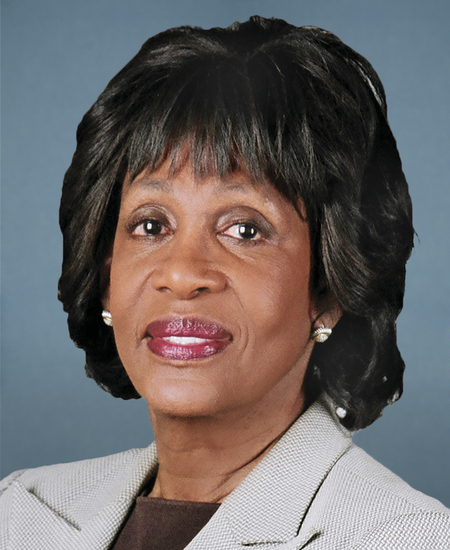
Rep. Maxine Waters
Sponsored bills
Maddy summaryThis bill establishes federal grants to expand training and support services for unpaid caregivers of people with Alzheimer's disease or related dementia. It authorizes funding for organizations like senior centers, area agencies on aging, and community health centers to provide direct caregiver support, requiring at least 50% of grant funds to go directly to services (not administration) and limiting administrative costs to 10%. Priority is given to nonprofit organizations serving underserved communities, including minority, low-income, and disability communities. The program, funded for fiscal years 2025-2029, aims to improve access to culturally appropriate caregiver resources nationwide.
Maddy summaryThe Minority Diabetes Initiative Act (HR 10193) creates a federal grant program to improve diabetes care in minority communities. It authorizes the Secretary of Health and Human Services to fund public and nonprofit health providers - including community health centers, tribal health departments, and community organizations - to deliver specific diabetes services. These grants must cover routine care, prevention education, eye/foot care, and treatment for complications like kidney disease, while requiring services to be culturally appropriate and offered in accessible languages. The program is funded through annual appropriations for fiscal years 2025-2030. This bill directly affects minority communities with high diabetes rates by expanding access to comprehensive, culturally responsive care through eligible health providers.
Maddy summaryThis bill, the International Financial Institution Improvements Act of 2024, aims to enhance transparency, accountability, and human rights protections in international financial institutions like the World Bank and International Monetary Fund. It requires institutions to publicly share project details in simple terms for host country citizens, engage meaningfully with civil society organizations throughout project development, and implement stronger safeguards against corruption and human rights abuses. The bill directs U.S. representatives to advocate for debt relief for countries affected by climate disasters, oppose projects with human rights concerns, and support initiatives that decrease reliance on Russia for agricultural commodities. Additionally, it includes provisions for capital increases for the African Development Bank and European Bank for Reconstruction and Development.
Maddy summaryThis bill expands Medicaid coverage for low-income individuals diagnosed with breast or cervical cancer. It requires Medicaid programs to cover breast reconstruction surgery after a medically necessary mastectomy, adding this as a mandatory benefit under existing Medicaid rules. The bill also modifies eligibility criteria to ensure coverage for these specific cancer patients, aligning with prior Medicaid provisions. These changes apply to all states administering Medicaid, directly affecting eligible patients seeking cancer treatment and recovery services.
Maddy summaryThe VA Employee Fairness Act of 2024 modifies collective bargaining rules for employees of the Veterans Health Administration (VHA). It removes existing subsections (b), (c), and (d) from the law governing VHA employee bargaining and renumbers the remaining provision. This change streamlines the collective bargaining framework but does not alter the Secretary of Veterans Affairs' existing authorities over incentive pay and expedited hiring. The bill directly affects VHA employees by changing how their collective bargaining rights are structured under federal law. The law remains neutral, focusing solely on procedural adjustments to the existing bargaining framework.
Maddy summaryThis bill removes a key barrier preventing student loan debt from being discharged in bankruptcy. It amends the U.S. Bankruptcy Code by eliminating the exception that previously made most federal student loans non-dischargeable, meaning borrowers could not erase this debt through bankruptcy proceedings. The change applies only to bankruptcy cases filed on or after the bill's enactment date, affecting new cases where student loan borrowers may now seek relief. This is a procedural change to bankruptcy law, not a direct loan forgiveness or repayment program.
Maddy summaryHRES 1513 is a symbolic House resolution affirming that the term "woke" originates from Black history and liberation movements, not modern political discourse. It highlights historical roots, including Marcus Garvey’s "Wake up Ethiopia!" and 1940s labor activism, while condemning media and right-wing groups for misusing and distorting the term (e.g., the Stop W.O.K.E. Act). The resolution encourages accurate historical use of "woke" and opposes efforts to erase its connection to social justice. It does not create new laws but directly addresses Black educators and movements targeted by legislation seeking to limit inclusive history teaching.
Maddy summaryThis resolution formally censures Representative Glen Clay Higgins (LA-03) for a September 25, 2024, social media post containing racist remarks and false claims about Haitians. The bill requires Higgins to appear in the House chamber to receive the censure, with the resolution publicly read by the Speaker. It specifically references his post describing Haiti as "the nastiest country," falsely accusing Haitians of eating pets, and labeling them "slapstick gangsters and thugs." The censure is a formal disciplinary action by the House, not a policy change.
Maddy summaryHR 3433, the "Give Kids a Chance Act of 2024," requires pharmaceutical companies developing certain cancer drugs to conduct pediatric studies if the drugs target molecular pathways relevant to childhood cancers. It directly affects drug manufacturers submitting new applications for cancer treatments, particularly those combining previously approved adult cancer drugs or containing a single new active ingredient. The bill amends FDA regulations to mandate these pediatric investigations only when specific conditions are met, such as when a drug's molecular target is relevant to pediatric cancer growth. The FDA must issue implementing guidance within 12 months, and reports to Congress will track implementation and effectiveness starting 2 years after enactment.