

Maddy summaryThis bill removes marriage restrictions that previously caused Disabled Adult Children (DACs) to lose Social Security disability benefits upon marriage. It amends Social Security rules to treat married DACs the same as unmarried ones for eligibility, ensuring they retain benefits for child's insurance based on a disability. Key provisions prevent states from counting a spouse's income/resources against a married DAC and guarantee Medicaid eligibility remains unchanged if the DAC would qualify as unmarried. The bill directly affects DACs receiving Social Security Disability Insurance (SSDI) through a parent's account who are married, ensuring they maintain access to Medicare, Medicaid, and SSDI benefits without geographic or marital status barriers.
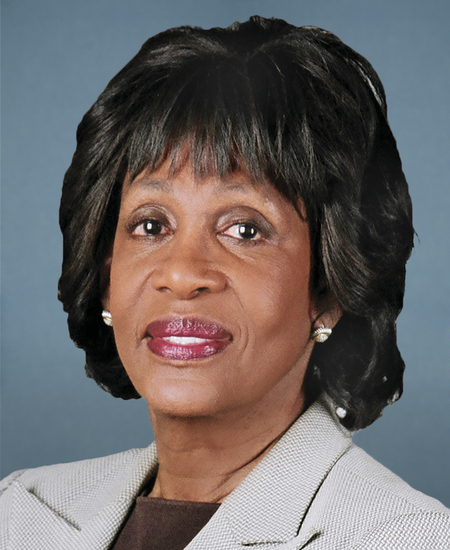
Rep. Maxine Waters
Sponsored bills
Maddy summaryThe Black History Matters Act directs the National Museum of African American History and Culture to study how public elementary and secondary schools teach Black history across the U.S. The study will identify which schools require this education, assess teaching quality through classroom discussions and materials, and examine how schools measure student learning. It requires the Director to complete the study within three years of the bill’s passage and submit a report to Congress within 180 days of completion. The bill does not change school curricula but aims to gather data on existing practices to inform future education policies. This study directly affects all public schools covered under the Elementary and Secondary Education Act.
Maddy summaryThe Office of Gun Violence Prevention Act of 2025 would create a new office within the Department of Justice to coordinate federal efforts on reducing gun violence. The office, led by a Director appointed by the Attorney General, would integrate existing DOJ programs, evaluate data gaps, and develop evidence-based recommendations for Congress and the President. It would also establish an advisory council including survivors of gun violence, public health officials, and community representatives to guide its work. The office would produce annual reports detailing gun violence trends and policy proposals, while collaborating with agencies like Health and Human Services and the FBI.
Maddy summaryHR 1251, the All Access Act of 2025, requires Members of Congress (House members and Senators) to present official identification to enter federal public buildings during regular business hours. For access outside these hours, Members must notify the building head at least 12 hours in advance. The bill establishes clear, procedural access rules for congressional members but does not create new policies or affect the public. It is a straightforward procedural measure governing Member access to federal facilities.
Maddy summaryThe Fair Play for Women Act would require schools and athletic associations receiving federal funding to collect and publicly disclose detailed data on gender equity in sports, including participation rates, funding, facilities, and coaching. It mandates annual training for staff and athletes about Title IX rights and establishes civil penalties for schools that fail to comply with gender equity requirements. The bill directly affects all public elementary, secondary, and higher education institutions, as well as state athletic associations. Key provisions include requiring detailed reporting on gender disparities in sports participation and funding, and creating enforcement mechanisms to hold schools accountable for noncompliance.
Maddy summaryHR 1196 prohibits using federal funds to eliminate the U.S. Agency for International Development (USAID) as an independent agency, as defined by law. It requires the Secretary of State to certify annual compliance with this restriction to the House Foreign Affairs and Senate Foreign Relations committees. The bill directly affects USAID's operational status and U.S. foreign aid programs by preventing congressional or executive actions that would dismantle or merge the agency, maintaining its role in U.S. international development efforts.
Maddy summaryThis bill restricts access to Treasury payment systems (including the Bureau of the Fiscal Service) to only Treasury employees with a "fully successful" performance rating and at least one year of civil service, or contractors/outsiders with security clearances, required privacy/cybersecurity training, ethics agreements, and no conflicts of interest. It treats non-government users accessing these systems as government employees for ethics rules and defines specific actions (like stopping payments) as "personal and substantial participation" in government matters. The Treasury Inspector General must investigate any unauthorized access within 30 days and report to Congress, detailing the breach, security risks, and any halted payments. The bill directly affects Treasury staff, contractors, and any external entities accessing federal payment systems.
Maddy summaryThis bill amends the Omnibus Crime Control and Safe Streets Act to include Transportation Security Administration (TSA) employees as eligible for public safety officers' death benefits. It specifically covers TSA officers who die while performing duties related to protecting transportation systems, ensuring their families receive financial support similar to other public safety officers. The key change adds a new definition (subparagraph H) to the existing law, expanding eligibility to TSA personnel who are actively safeguarding transportation infrastructure. This directly affects TSA employees and their dependents by granting access to these death benefits for on-duty fatalities. The amendment applies to incidents occurring on or after October 31, 2013.
Maddy summaryThis bill, titled the "Nobody Elected Elon Musk Act," makes the head of the Department of Government Efficiency personally liable for any legal claims against the federal government related to the department's activities. The department leader, defined as a special Government employee, would cover costs for claims arising from violations of labor laws, data privacy laws, security threats, or other federal statutes. This shifts financial responsibility from the government to the department leader for all such claims. The bill does not create new policies but directly imposes personal liability on the department head for the department's actions.
Maddy summaryThe Department of Peacebuilding Act of 2025 would establish a new federal department within the executive branch dedicated to promoting peacebuilding, nonviolent conflict resolution, and violence prevention both domestically and internationally. The department would include seven specialized offices focused on peace education, domestic peacebuilding, international peacebuilding, technology for peace, arms control, research, and human rights. It would develop new policies to address violence in communities, create a Peace Academy for training peacebuilders, and establish grant programs for schools and community organizations to implement peacebuilding initiatives. The bill requires the department to consult with other federal agencies on matters related to conflict prevention and mandates that at least 85% of funds would support domestic peace programs. The department would also research and report on violence prevention metrics and develop peace education curricula for schools.