

Maddy summaryHR 753, the FIRE Act of 2025, directs the NOAA Administrator to establish a program improving wildfire forecasting and detection to reduce loss of life and property. The bill requires developing advanced satellite detection, fuel moisture assessments, and coupled fire-atmosphere modeling systems to better predict wildfire spread, smoke dispersion, and enable early detection. It authorizes $15 million for fiscal year 2026 to fund research testbeds for these capabilities, created through NOAA partnerships with industry and academia. This program directly affects communities at wildfire risk, firefighters, and emergency responders by enhancing early warning systems and risk communication.
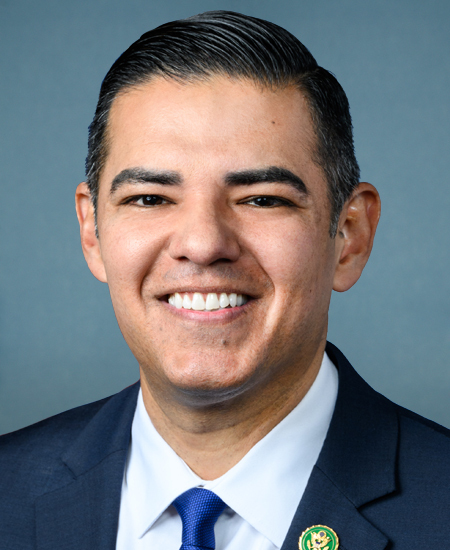
Rep. Robert Garcia
Sponsored bills
Maddy summaryHR 766, the SEWER Act, establishes a federal National Wastewater Surveillance System led by the CDC to monitor pathogens like SARS-CoV-2, influenza, and mpox in sewage. It authorizes $150 million annually (2026-2030) to expand this system for early disease outbreak detection. The bill explicitly states wastewater utilities are not required to comply with surveillance requests. This system aims to provide public health officials with data to track community-level disease spread through wastewater analysis.
Maddy summaryHRES 68 is a non-binding House resolution expressing strong disapproval of the President’s announcement to withdraw the U.S. from the Paris Agreement. It commends states, businesses, and citizens supporting the Agreement, urges the President to reverse the withdrawal decision, and calls for Congress to prioritize U.S. climate leadership. The resolution does not create new laws or affect specific groups but formally states the House’s position against withdrawing from the international climate accord. It was introduced by 115 co-sponsors and reflects broad congressional concern about reversing U.S. climate commitments.
Maddy summaryHR 728, the Expanding Head Start Eligibility Act of 2025, would amend the Head Start Act to broaden eligibility criteria. It adds a new definition of "public assistance" to include benefits from programs like SNAP (food stamps), housing assistance under Section 8, and state-funded food programs with similar income standards. This change directly affects low-income families seeking Head Start enrollment, as children in households receiving these benefits would now qualify under the expanded definition. The bill modifies the Head Start Act’s eligibility rules to count these additional benefits, making it easier for more children to access early childhood education programs.
Maddy summaryThe ICE Security Reform Act of 2025 transfers Homeland Security Investigations (HSI) from U.S. Immigration and Customs Enforcement (ICE) to become a separate entity within the Department of Homeland Security (DHS) within two years of enactment. It renames the remaining ICE entity to "U.S. Immigration Compliance Enforcement" and establishes a new Director for HSI, appointed by the President with Senate approval. The bill requires DHS to develop updated investigative guidelines for HSI within two years, covering surveillance technology use and data protection, and mandates a joint review with the Attorney General to clarify HSI's role relative to other federal agencies in areas like human trafficking and cybercrime. Existing legal proceedings and agreements remain unaffected by the transfer.
Maddy summaryHR 612, the Health Care Providers Safety Act of 2025, provides federal funding to help health care facilities improve safety. It authorizes the Secretary to award grants to hospitals, clinics, and other health care providers to cover costs for physical security (like structural improvements) and cyber security (such as data privacy tools and video surveillance systems). These grants directly help health care providers protect their facilities, staff, and patients from security threats. The bill creates a new funding mechanism under the Public Health Service Act, making specific security upgrades eligible for federal support.
Maddy summaryHR 576 makes Executive Order 14096 legally binding by codifying it into federal law. This order directs federal agencies to prioritize environmental justice, focusing on communities disproportionately affected by pollution and environmental hazards. The bill requires agencies to integrate environmental justice considerations into their decision-making processes, directly affecting federal departments managing environmental programs. It transforms an executive directive into a permanent legal requirement, ensuring continued focus on equitable environmental policies.
Maddy summaryThe Prevent Tariff Abuse Act amends the International Emergency Economic Powers Act to prohibit the President from using emergency powers to impose tariffs or import quotas on goods entering the U.S. It adds a specific provision stating the President cannot impose duties, tariffs, or quotas under this law. This directly limits the executive branch's authority during emergencies, preventing the use of emergency powers for trade restrictions. The bill does not affect other trade policies or the President's other emergency authorities.
Maddy summaryHR 429, the Rosie the Riveter Commemorative Coin Act, authorizes the U.S. Treasury to mint and sell three types of commemorative coins ($5 gold, $1 silver, and half-dollar) to honor women who worked on the U.S. home front during World War II. The coins will be sold at face value plus surcharges ($35 for gold, $10 for silver, $5 for half-dollar), with all surcharge revenue directed to the Rosie the Riveter Trust to support the Rosie the Riveter WWII Home Front National Historical Park and related educational programs. The coins must be issued between January 1, 2028, and December 31, 2028, in specified quantities (50,000 gold, 400,000 silver, 750,000 half-dollar), with all costs covered by the sales revenue to avoid net government expense.
Maddy summaryHR 433, the Department of Education Protection Act, prohibits the use of federal funds to reorganize the Department of Education. Specifically, it blocks any spending from current fiscal year appropriations on activities that would decentralize the department, reduce staffing, or alter its structure, responsibilities, or authority relative to its organization as of January 1, 2025. The bill directly affects the Department of Education by preventing structural changes to its existing offices and operations. This is a procedural measure focused solely on preserving the current departmental framework, not on changing education policy or funding.