

Maddy summaryHR 3757, the Pride In Mental Health Act of 2025, provides $20 million annually (2026-2030) to fund grants for mental health services targeting LGBTQ+ youth, including nonbinary, intersex, and Two Spirit youth, and their families/caregivers. The bill mandates grantees to provide trauma-informed care, cultural competency training, school bullying prevention guidelines, and evidence-based practices while explicitly prohibiting the use of funds for conversion therapy or its promotion. It also requires the federal government to restore mental health reports on LGBTQ+ youth, conduct a national survey measuring mental health distress, and produce a report on mental health services for LGBTQ+ youth in foster care. The law directly affects these youth populations by expanding access to tailored mental health resources and data collection, with funding administered through the Substance Abuse and Mental Health Administration.
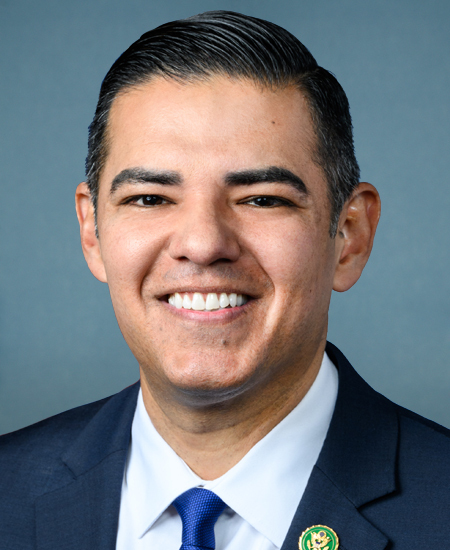
Rep. Robert Garcia
Sponsored bills
Maddy summaryThe bill's title ("Protect Vulnerable Immigrant Youth Act") does not align with its actual provisions. HR 3763 amends two sections of the Immigration and Nationality Act to adjust employment-based visa categories, specifically adding "or (J)" to existing numerical limitations and preference allocation rules. These changes would affect certain employment-based visa applicants (e.g., those in categories like "J" for religious workers or other specific employment groups) by removing numerical caps that previously applied to them. The bill contains no provisions related to youth protection, immigration status for minors, or direct safeguards for vulnerable immigrant youth.
Maddy summaryHRES 473 is a non-binding House resolution calling on the U.S. government to urgently use diplomatic efforts to ensure food and medical supplies reach civilians in Gaza. It directly addresses the needs of approximately 2.2 million Palestinians facing acute hunger, including 10,000 children identified with acute malnutrition, following a border blockade that blocked aid from March to May 2025. The resolution specifically urges the White House and State Department to secure "immediate and secure delivery and disbursement" of aid and a lasting end to the conflict, citing collapsed bakeries, exhausted food rations, and a near-total health system collapse.
Maddy summaryThis bill reinstates the federal government's authority to provide Direct Stafford Loans to graduate and professional students, preventing them from losing access to these loans after 2012. It temporarily extends this loan program through June 30, 2025, by modifying the Higher Education Act to remove a prior termination clause. The key provision allows graduate students to continue borrowing for education costs during this temporary period. This directly affects graduate and professional students who rely on these loans to cover tuition and expenses.
Maddy summaryThis bill directs the National Oceanic and Atmospheric Administration (NOAA) to conduct a study on the financial costs of extreme heat events. The study will quantify economic impacts including health costs (emergency care, hospitalizations), property damage, insurance claims, labor productivity losses, infrastructure disruptions, energy expenses, and agricultural losses. NOAA must coordinate with multiple federal agencies (like Health, Agriculture, and Energy Departments) and publish findings on HEAT.gov within 4 years. The bill does not create new regulations or directly affect citizens; it solely authorizes a data-gathering study to inform future policy.
Maddy summaryThis bill establishes a federal interagency committee within NOAA to coordinate heat-health response across 15+ departments (including HHS, EPA, and FEMA) and requires a 5-year strategic plan to improve data sharing, research, and public communication about extreme heat. It creates the National Integrated Heat Health Information System (NIHHIS) to centralize heat-related data and forecasts, making it openly available for public use. The law mandates $5 million annually for 2025-2029 to fund these efforts, directly affecting federal agencies, state/local governments, Tribal nations, and communities facing heat risks. Key provisions include standardizing heat definitions, requiring agency coordination, and building public health preparedness tools to reduce heat-related illness and death.
Maddy summaryThe Excess Urban Heat Mitigation Act of 2025 creates a federal grant program to fund heat-reduction projects in communities most affected by urban heat islands, primarily low-income neighborhoods (defined as census tracts with ≥20% poverty rate) and areas with higher heat exposure for communities of color. It authorizes $30 million annually for grants to states, cities, tribes, or nonprofits for projects like planting native trees, installing cool roofs/pavements, building shaded transit stops, and creating community cooling centers. Grants require community engagement plans to ensure equitable participation and prioritize projects in underserved areas (75% of funds must target "covered census tracts"). The program mandates annual reporting to Congress and includes oversight to evaluate project success in reducing heat impacts.
Maddy summaryThis resolution (HRES 457) is a symbolic measure expressing congressional support for designating June 6, 2025, as "National Gun Violence Awareness Day" and June 2025 as "National Gun Violence Awareness Month." It does not create new laws or policies but encourages public awareness through specific actions: wearing orange on June 6, focusing on gun safety during summer months, and holding community discussions. The resolution references statistics on gun violence deaths and honors Hadiya Pendleton, a teen victim killed in 2013. It directly affects the public by calling for voluntary observance and community engagement, not government mandates.
Maddy summaryThis bill updates federal housing law to explicitly prohibit discrimination based on sexual orientation and gender identity. It amends the Fair Housing Act to include these characteristics as protected classes alongside race, color, religion, sex, and other existing categories. The law now covers discrimination against individuals due to their own sexual orientation or gender identity, or because of their association with someone who has these characteristics. This applies to all housing providers, including landlords, real estate agents, and mortgage lenders, making it illegal to deny housing or services based on these factors.
Maddy summaryThis bill requires new passenger cars, SUVs, and light trucks (under 10,000 lbs) to have automatic emergency braking systems that detect cyclists in all lighting conditions and across diverse appearances. The rule must be finalized within 3 years of enactment, with manufacturers required to comply within two model years after the rule's release. It mandates systems that activate at appropriate speeds and recognize vulnerable road users like bicyclists, regardless of skin tone, clothing, or protective gear. The law directly affects vehicle manufacturers and aims to improve safety for cyclists through standardized vehicle technology.