

Maddy summaryHR 345, the TRUST in Congress Act, requires Members of Congress, their spouses, and dependent children to place certain investments into a "blind trust" within 90 days of taking office or after the bill's enactment. It directly affects current and future lawmakers and their immediate family members by mandating that covered investments - such as stocks, commodities, or derivatives (excluding Treasury bonds and some mutual funds) - be placed in a trust they cannot manage. Members must certify the trust setup to House or Senate officials within 15 days, and trusts cannot be dissolved until 180 days after leaving office. The law excludes investments providing primary income (e.g., from a spouse's job) but requires transparency through public website disclosures of certifications.
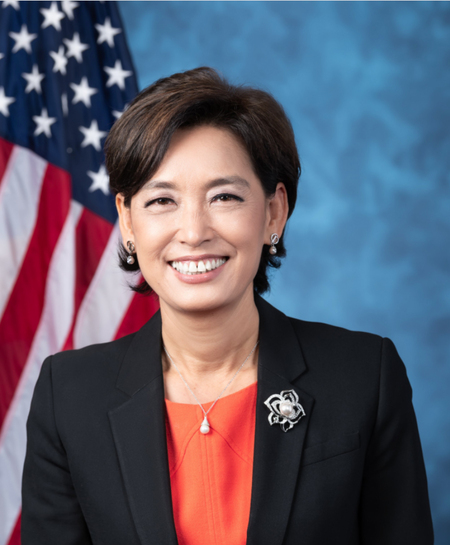
Rep. Young Kim
Sponsored bills
Improving the Federal Response to Organized Retail Crime Act of 2023 This bill requires various federal agencies to develop a strategy to improve coordination with state and local law enforcement entities to address organized retail crime. Specifically, the bill requires the Department of Justice, the Department of Homeland Security, the U.S. Postal Service, and other relevant agencies to improve federal information sharing about organized retail crime networks; assist state and local law enforcement in compiling materials and evidence necessary to prosecute organized retail crime; and increase cooperation and information sharing between federal agencies, the retail industry, and retail crime task forces. The bill also requires the Government Accountability Office to report on coordination between the private sector and law enforcement to deter and investigate organized retail crime.
American Workforce Empowerment Act This bill allows tax-preferred college savings plans (529 plans) to fund certain postsecondary certificate programs and apprenticeship programs.
Maddy summaryHR 252, the Inflation Prevention Act of 2023, would require Congress to block any new spending bill or amendment that could increase inflation above 4.5%, as measured by the Consumer Price Index (CPI). If current inflation exceeds 4.5%, the bill would prevent consideration of new spending measures unless a three-fifths Senate supermajority votes to override the rule. The Congressional Budget Office (CBO) would estimate the inflation impact of proposed spending and notify Congress if inflation rises above 4.5%. This rule applies to all spending bills, amendments, and conference reports in both the House and Senate, directly affecting how Congress processes budget-related legislation. The bill focuses on procedural rules for spending decisions, not on specific policies or affected groups.
Maddy summaryHJRES 8 proposes a constitutional amendment to permanently set the Supreme Court's size at nine justices. The bill would require any future changes to the Court's composition to follow this specific number, locking in the current structure. It does not alter the existing Court size (which has been nine since 1869) but aims to prevent future adjustments through legislative action. The amendment must be ratified by three-fourths of state legislatures within seven years to take effect. This is a procedural proposal focused on constitutional structure, not a direct policy affecting citizens or programs.
Maddy summaryHR 208, the Pet Safety and Protection Act of 2023, restricts where research facilities can obtain dogs and cats for laboratory use. It requires facilities to source animals only from licensed breeders, registered shelters meeting specific criteria, owners who've had the pet over a year, or other research facilities - banning purchases from pet stores or random sources. The bill amends the Animal Welfare Act to define permissible sources and imposes $1,000 fines per violation for non-compliance. It affects research facilities, shelters, and breeders by changing their legal sourcing options for animals used in research. The changes take effect 90 days after the bill becomes law.
This act designates the facility of the United States Postal Service located at 6401 El Cajon Boulevard in San Diego, California, as the Susan A. Davis Post Office.
Faster Payments to Veterans' Survivors Act of 2022 This act modifies policies and procedures related to the payment of benefits under certain life insurance programs administered by the Department of Veterans Affairs (VA). If a primary beneficiary has not made a claim for payment within one year (currently two years) after the death of the insured under the National Service Life Insurance (NSLI) program or the United States Government Life Insurance (USGLI) program, the VA is authorized to make payment to another designated beneficiary as if the primary beneficiary had predeceased the insured. If no designated beneficiary makes a claim within two years (currently four years) after the death of the insured, the VA is authorized to make a payment to a person the VA deems to be equitably entitled to such benefit. The act also modifies the beneficiary designation process under NSLI and USGLI. Specifically, if a person does not designate a beneficiary for insurance, or if the designated beneficiary predeceases the insured person, the VA must determine the beneficiary in a specified order of succession. Additionally, the act requires the VA to improve its processes and procedures with respect to identifying, locating, and paying hard-to-find beneficiaries of life insurance policies, including by improving its website search tools.
This act designates the facility of the United States Postal Service located at 1400 N Kraemer Blvd. in Placentia, California, as the PFC Jang Ho Kim Post Office Building.
This act designates the facility of the United States Postal Service located at 2016 East 1st Street in Los Angeles, California, as the Marine Corps Reserve PVT Jacob Cruz Post Office.