

Maddy summaryHR 6973 reauthorizes the COPS on the Beat grant program for fiscal years 2025-2034, with new provisions to support diverse hiring and better compensation for officers in rural communities. The bill provides increased federal funding (up to 90% in the first year, decreasing to 75% over four years) for jurisdictions with median household incomes below 80% of the national average. It sets a $75,000 cap on hiring costs per officer and limits compensation to 80% of the national median household income for qualifying rural areas. The legislation also requires the GAO to report on law enforcement workforce diversity and pay relative to local costs of living in 2029 and 2034. This bill directly affects local law enforcement agencies seeking federal grants to hire and retain officers, particularly in rural communities with lower median incomes.
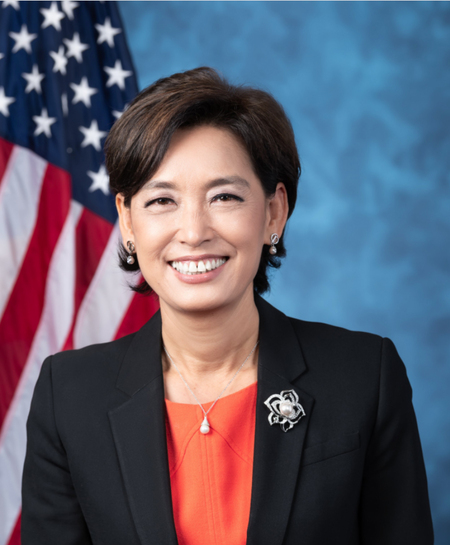
Rep. Young Kim
Sponsored bills
Financial Stability Oversight Council Reform Act This bill subjects the budgets of the Financial Stability Oversight Council (FSOC) and the Office of Financial Research (OFR) to the annual appropriations process and establishes requirements for reports and a public notice and comment period. The budgets of the FSOC and the OFR are funded by assessments on financial institutions which are deposited into the Financial Research Fund and, under current law, are immediately available to be spent. This bill requires the funding from the Financial Research Fund to be made available by appropriations acts. The OFR must submit quarterly reports to Congress regarding its finances; workforce; and actions taken to achieve the goals, objectives, and performance measures of the office. The OFR must provide a public notice and comment period of at least 90 days before issuing any proposed report, rule, or regulation. The bill expands the duties of the OFR to include publishing an annual work plan; consulting with other federal departments and agencies with relevant expertise prior to preparing any public report with respect to a specified entity, class of entities, or financial product or service; and developing and implementing a cybersecurity plan. The Government Accountability Office must annually audit the cybersecurity plan and its implementation.
Expanding Access to Lending Options Act This bill allows the National Credit Union Administration Board to increase the federal credit union loan maturity cap from 15 to 20 years. It also removes as a requirement for a mortgage from a credit union that a property must be a credit union member's principal residence.
Maddy summaryHRES 955 is a resolution commending Taiwan for its democratic election history and supporting Taiwan's democratic institutions. It recognizes Taiwan's transition to democracy since the late 1980s, including 7 presidential and 9 legislative elections held since then, all deemed free and fair. The resolution specifically expresses support for Taiwan's upcoming January 13, 2024, elections and condemns interference by the Chinese Communist Party. It affirms U.S. commitment to a strong partnership with Taiwan across multiple domains and supports Taiwan's self-defense and liberty. As a procedural resolution, it does not create new law but formally expresses congressional support for Taiwan's democratic development.
Maddy summaryThe Affordable Connectivity Program Extension Act of 2024 allocates $7 billion in funding for the Affordable Connectivity Program (ACP) during fiscal year 2024. The ACP provides subsidies to low-income households to help cover the cost of internet service and connected devices like laptops or tablets. This funding ensures the program can continue supporting eligible households throughout the year, with the money remaining available until fully spent. The bill extends existing program funding without changing eligibility criteria or service requirements.
Maddy summaryThis bill clarifies the Consumer Financial Protection Bureau's (CFPB) authority to enforce rules against "unfair, deceptive, or abusive acts or practices" (UDAAP) affecting consumers. It defines "abusive" acts as those intentionally interfering with consumer understanding or taking unreasonable advantage of consumer vulnerabilities, requiring the CFPB to provide a clear definition within 180 days. Financial institutions must now receive written notice and 180 days to correct potential violations before penalties are imposed, and the CFPB must conduct cost-benefit analyses for new rules. The bill also prohibits the CFPB from treating discrimination as part of UDAAP enforcement and limits penalties for past conduct to the most recent compliance rating period.
Maddy summaryThis bill reauthorizes and extends funding for programs addressing substance use disorders and opioid addiction, including residential treatment for pregnant and postpartum women, first responder training, and community recovery initiatives. It increases funding levels for these programs, adds xylazine to Schedule III of controlled substances, and requires a study on remote monitoring for patients prescribed opioids. The bill also expands Medicaid coverage requirements for medication-assisted treatment and mandates reporting on mental health condition data alongside substance use disorder data, directly affecting individuals with substance use disorders, healthcare providers, and state and tribal governments.
Maddy summaryThis bill amends existing law to expand substance abuse treatment services for children, adolescents, and young adults to explicitly include suicide prevention. It broadens eligibility for funding to include pediatric specialists, children’s hospitals, emergency departments, and Indian Health Service programs. The bill requires grantees to provide parents or guardians with counseling on preventing overdose/suicide and supplies to reduce access to lethal means (like medications or firearms). It mandates a minimum of $2 million annually in federal grants for these suicide and overdose prevention programs, effective 2024-2028.
Maddy summaryHR 6600, "Tyler’s Law," requires the Secretary of Health and Human Services to study how often hospital emergency departments test for fentanyl during overdose cases, along with the costs, benefits, risks, and patient privacy impacts. The study must be completed within one year of the bill’s enactment, followed by guidance issued within six months on whether fentanyl testing should become routine. This guidance will address how hospitals can inform clinicians about testing protocols and how fentanyl testing might affect future overdose risks and patient health outcomes. The bill directly affects hospitals and emergency departments treating overdose patients, focusing on improving data-driven practices for fentanyl detection.
Maddy summaryThe PLAN for School Safety Act of 2023 creates a federal program to fund State and regional centers that help schools develop and improve individualized safety plans. These centers, established by eligible entities like state education agencies or Tribal organizations, provide tailored consulting on school safety, mental health, and violence prevention using research-backed methods. The program requires centers to cover 5% of activity costs and prioritizes support for schools in rural, Tribal, or low-resourced communities. Annual reports to Congress will track implementation progress, effectiveness, and how centers assist schools in accessing funding for safety initiatives.