

Maddy summaryThis bill requires the Department of Veterans Affairs (VA) to implement annual sensitivity training for all VA employees handling military sexual trauma (MST) claims, including staff processing claims, communicating about evidence, and making decisions. It also mandates that the VA automatically obtain a veteran's service records when processing MST claims and directs the VA to report on improving training for contracted health care professionals who examine veterans filing such claims. The changes aim to ensure VA staff and contracted medical personnel are properly trained to avoid retraumatizing veterans during the claims process. The VA must submit a report to Congress within 90 days detailing current training and future plans for these requirements.
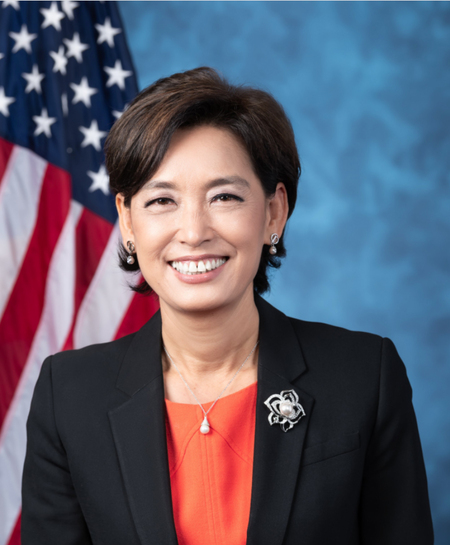
Rep. Young Kim
Sponsored bills
Maddy summaryThe Rohingya GAP Act establishes a U.S. Special Coordinator for Rohingya Atrocities Prevention and Response to coordinate U.S. government efforts on Rohingya issues. It authorizes $10 million annually for atrocity investigations and $8 million for a Burma-focused conflict observatory to document human rights violations. The bill directs U.S. agencies to support Rohingya refugees' protection, education, and livelihoods in Bangladesh while promoting durable solutions including safe return to Myanmar with full citizenship rights when conditions allow. It requires annual reporting on U.S. efforts to address atrocity risks, protect Rohingya, and advance accountability for crimes against them. The legislation aims to address root causes of violence against Rohingya through empowerment, inclusion in decision-making, and support for transitional justice mechanisms.
Maddy summaryThe PAID Act of 2024 requires the U.S. government to publicly list foreign entities from designated adversary countries (including China, Russia, Iran, and others) that are using American patents or trade secrets related to critical technologies without authorization. U.S. owners of such intellectual property can petition the government to investigate and identify an entity, with a 90-day deadline for a decision. The government must publish the list in the Federal Register, and entities can be removed if they secure a license or agreement with the IP owner. This law increases transparency about foreign use of U.S. technology without permission, focusing on critical and emerging fields.
Maddy summaryThe DFC Modernization and Reauthorization Act of 2024 updates the United States International Development Finance Corporation (DFC) framework by redefining country classifications (including "less developed country" and "wealthy country"), prioritizing support for less developed countries, and increasing the DFC's maximum contingent liability from $60 billion to $120 billion. The bill allows the DFC to accept subordinate creditor status (meaning it would be a lower priority for repayment than other creditors), reduces the board size from 5 to 3 members, and creates a new Vice President for Foreign Policy and National Security position. It also repeals the European Energy Security and Diversification Act of 2019. These changes aim to modernize the DFC's operations to better align development financing with U.S. foreign policy goals. The bill directly affects how the DFC operates and where it provides financing for development projects.
Maddy summaryHR 3042 updates the eligibility rules for countries seeking to become "candidate countries" under the Millennium Challenge Corporation (MCC) program. It revises the income threshold to align with World Bank graduation standards and clarifies that U.S. waivers or suspensions of foreign aid restrictions no longer disqualify countries. The bill specifies that the MCC Board will make the final determination on candidate country status. This directly affects countries aiming to qualify for U.S. economic aid through the MCC program.
Maddy summaryThis bill creates a national registry to help Korean American families separated from relatives in North Korea after the 1953 Korean War Armistice reunite. The Secretary of State must identify eligible families and collect their information (including deceased members) to support future in-person or video reunions. It authorizes $1 million for this registry and requires the State Department to push for family reunions during U.S.-North Korea talks, while consulting South Korea. The State Department must also report annually to Congress on the registry's status, reunion progress, and North Korea's policies affecting family reunions.
Maddy summaryThis bill (HR 2365, Public Law 118-66) directs the U.S. Department of Health and Human Services (HHS) to establish the National Parkinson’s Project. It requires HHS to create and update a coordinated national plan for preventing, diagnosing, treating, and researching Parkinson’s disease and related disorders (including multiple system atrophy and progressive supranuclear palsy), while coordinating federal research and care efforts across agencies like the NIH, CDC, and VA. The law mandates annual progress assessments, an advisory council with patient advocates and diverse experts, and annual reports to Congress on federal Parkinson’s programs and recommendations for improvement. It affects federal agencies managing Parkinson’s-related programs and aims to improve care coordination and research efficiency for patients and caregivers, with the law sunsetting in 2035.
Maddy summaryThis bill extends the sunset period for certain Burma sanctions from 8 to 10 years and modifies reporting requirements. It mandates annual assessments (for 7 years) by the President to determine if specific Burmese state-owned enterprises, the Myanma Economic Bank, and jet fuel sector entities meet sanctions criteria, requiring reports to Congress. The bill also limits U.S. support for increasing Burma's International Monetary Fund shareholding if the military-led State Administration Council governs, with limited waiver authority. Additionally, it creates a U.S. Special Coordinator at the State Department to coordinate diplomatic efforts promoting human rights and democratic restoration in Burma, including multilateral sanctions and engagement with Burmese civil society. The bill directly affects U.S. sanctions enforcement, Burma's military leadership, and entities operating in Burma's economy.
Maddy summaryHRES 901 is a U.S. House resolution expressing support for democracy and human rights in Pakistan. It calls on the U.S. President and Secretary of State to collaborate with Pakistan to uphold democratic processes, human rights, and the rule of law. The resolution urges Pakistan to protect freedoms of speech, assembly, and press, and to avoid arbitrary detention or suppression of political participation. It also condemns efforts to undermine Pakistan's electoral or judicial systems, including harassment of citizens during protests or interference with elections.
Maddy summaryHR 8821, the HOPE with Fertility Services Act, requires group health plans and health insurance issuers that cover obstetrical services to provide comprehensive coverage for infertility treatments and fertility preservation when medical treatments (like cancer therapy) cause or risk iatrogenic infertility. It defines infertility broadly and mandates coverage for procedures like IVF, egg freezing, and ovulation induction, while allowing standard cost-sharing but prohibiting insurers from discouraging or penalizing these services. Insurers must annually submit analyses of their coverage rules for these treatments to the Secretary of Labor for 5 years after enactment, with potential civil penalties for noncompliance. The law applies to all applicable plans starting January 1, 2026.