

Maddy summaryThis bill authorizes a posthumous Congressional Gold Medal for actor James Earl Jones to recognize his career achievements in theater and film. It directs the Treasury Secretary to strike a gold medal bearing his name, which will be presented to his son, Flynn Earl Jones, following Jones' passing. The bill also permits the sale of bronze duplicates to cover costs. As a ceremonial honor with no policy changes, it does not affect legislation or government operations.
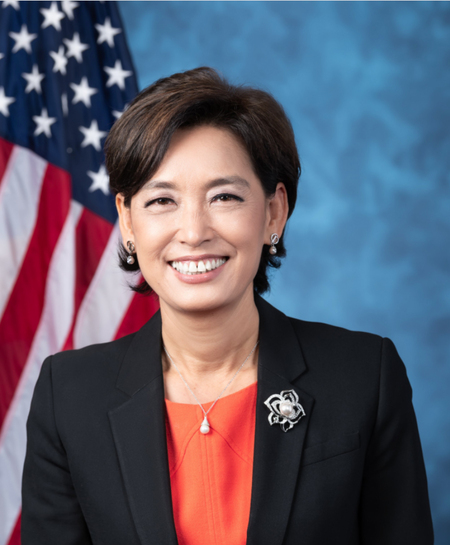
Rep. Young Kim
Sponsored bills
Maddy summaryHR 1938 requires the Department of Defense to request modifications to stormwater permits at military facilities, mandating quarterly monitoring of PFAS discharges and implementation of best management practices to reduce them. The bill directly affects all Department of Defense facilities subject to federal stormwater permits under the Clean Water Act. It allocates at least 1% of annual PFAS remediation funds specifically for testing stormwater runoff at these sites. The legislation focuses on preventing PFAS contamination in waterways by strengthening monitoring and reduction measures at military operations.
Maddy summaryHR 471, the Fix Our Forests Act, establishes a new system for identifying and managing high-risk wildfire areas called "firesheds" and creates a centralized Fireshed Center to coordinate wildfire risk management across federal agencies. The bill streamlines environmental reviews for wildfire risk reduction projects, allowing for faster implementation of hazardous fuels management activities in designated areas. It includes provisions for community wildfire risk reduction programs, water source protection, and specific initiatives for restoring white oak forests. The legislation also includes litigation reforms to expedite forest management projects and reduce delays from legal challenges. These provisions aim to reduce wildfire risk and improve forest health through more coordinated, data-driven management approaches.
Maddy summaryHR 1889, the *Cutting Red Tape on Child Care Providers Act of 2025*, prohibits states from creating regulatory barriers that restrict home-based child care providers from preparing fresh fruits and vegetables through simple methods like washing, peeling, or cutting. This directly affects home and family-based child care centers - serving roughly one-quarter of families, especially low-income, rural, and shift-work families - who face declining options due to complex food regulations. The bill amends the Child Care and Development Block Grant Act of 1990 to explicitly ban state restrictions on "simple food preparation" of minimally processed produce. It aims to reduce bureaucratic hurdles that currently make serving fresh food harder than offering pre-packaged snacks, without changing nutritional standards.
Combat Veterans Pre-Enrollment Act of 2025 This bill requires the Department of Veterans Affairs (VA) to establish a program to carry out all activities necessary to permit certain members of the Armed Forces to elect to enroll in the VA health care system on the date of separation of such members from active service. Specifically, the program is for those who served on active duty in a theater of combat operations during a period of war after the Persian Gulf War or in combat against a hostile force during a period of hostilities after November 11, 1998. The VA must, in conjunction with the Department of Defense (DOD) and Department of Homeland Security, establish a mechanism to permit a member of the Armed Forces to elect to pre-enroll in the VA health care system during the 180-day period preceding the date of separation of the member from active service. The VA-DOD Joint Executive Committee must brief Congress on the efforts to implement such a mechanism under the program. The Government Accountability Office must report on the program and include recommendations with respect to methods to improve the program.
Maddy summaryThis bill prohibits the U.S. Interior and Agriculture Secretaries from transferring title of certain federal lands to non-government entities. It specifically blocks transfers of lands that are publicly accessible (via roads, trails, or waterways) or adjacent to such lands, unless the land is under 300 acres or meets specific exceptions. Key exceptions include small parcels under 5 acres accessible by water, transfers authorized by historical laws like the Alaska Statehood Act, and land exchanges already permitted by federal law. The bill does not affect existing transfers under these authorized programs or prevent agencies from subdividing land to meet acreage thresholds.
Maddy summaryHJRES 64 is a joint resolution disapproving a rule issued by the Bureau of Consumer Financial Protection (CFPB) that defined "larger participants" in the market for general-use digital payment applications. The resolution directs Congress to reject the rule (published in the Federal Register on December 10, 2024), stating it shall have no force or effect. This action directly affects the CFPB’s regulatory authority over digital payment platforms, specifically targeting how the agency classifies major companies in this sector. The resolution does not create new policy but formally overturns the CFPB’s existing rule on this matter.
Maddy summaryHR 1699, the TOTAL Care Act, removes referral requirements for obstetrical and gynecological (OB/GYN) care under the TRICARE Prime health plan. It allows female TRICARE Prime beneficiaries to directly choose an OB/GYN provider as their primary care manager, eliminating the need for a prior referral from another provider. The bill establishes a 5-year pilot program to test this change, requiring the Secretary of Defense to report on enrollment shifts, cost impacts, and other outcomes after four years. This directly affects female military family members enrolled in TRICARE Prime who opt into the pilot.
Maddy summaryHR 1657, the Humane Cosmetics Act of 2025, prohibits cosmetic companies from conducting or contracting animal testing for products sold in the U.S. beginning one year after the law takes effect. It also bans the sale or transport of cosmetics developed using such testing after that date, with limited exemptions (e.g., for foreign regulatory requirements or when no non-animal safety alternatives exist). The bill directly affects cosmetic manufacturers, retailers, and distributors by requiring them to shift to non-animal testing methods. The Food and Drug Administration (FDA) will enforce the law, including reviewing records and imposing civil penalties for violations.
Maddy summaryHR 1659, the Truck Parking Safety Improvement Act, creates a federal grant program to address commercial truck parking shortages on highways. It authorizes $151 million annually (2025-2029) for states, local governments, tribes, and other eligible entities to build or improve public parking facilities for commercial motor vehicles. Projects must be on or near highways, include safety features, and provide free, publicly accessible parking - prohibiting fees for drivers. The bill also requires annual reports to Congress evaluating parking availability and project effectiveness.