

Delivering for Rural Seniors Act of 2025 This bill directs the Food and Nutrition Service (FNS) to award competitive grants to state agencies under a home delivery pilot program for participants in the Commodity Supplemental Food Program (CSFP). As background, the CSFP works to improve the health of low-income persons at least 60 years of age by supplementing their diets with nutritious Department of Agriculture foods. Under the pilot program, a state agency must distribute grant funds to an eligible entity (i.e., a local agency or subdistributing agency) to operate projects that facilitate home delivery of commodities to CSFP participants. Grant funds may be used for costs associated with transportation and distribution of commodities to CSFP participants, staffing required to operate home delivery services, and home delivery outreach to CSFP participants or potential participants. A state agency must prioritize eligible entities that serve CSFP participants who reside in rural areas. A state agency must also submit an annual report to FNS about the project, including best practices regarding the use of home delivery to improve the effectiveness of the CSFP.
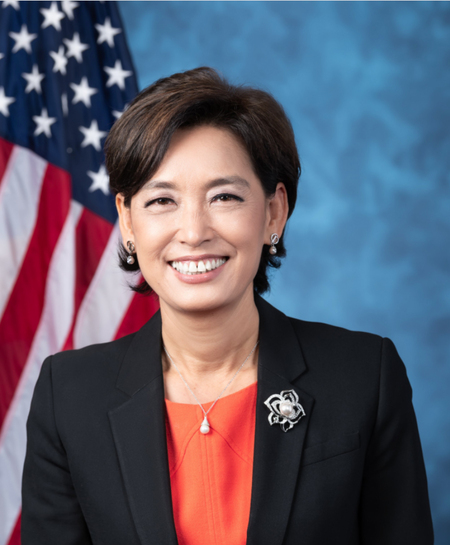
Rep. Young Kim
Sponsored bills
Maddy summaryHR 2477, the Portable Ultrasound Reimbursement Equity Act of 2025, would amend Medicare rules to require equal reimbursement for portable ultrasound transportation and setup services as is currently provided for portable X-ray services. This change directly affects Medicare beneficiaries needing portable ultrasound exams and healthcare providers (like mobile clinics) who offer these services. The bill mandates that Medicare pay separately for portable ultrasound transportation and setup in the same way and to the same extent as portable X-ray services, using similar supplier requirements as existing regulations. The policy change would take effect for services provided on or after January 1, 2027.
Maddy summaryHR 2410 creates a 20% federal tax credit for developers converting older non-residential buildings (at least 20 years old) into affordable housing. The credit applies to qualified conversion costs, requiring that 20% of units be rent-restricted for residents earning 80% or less of the area median income for 30 years. It establishes a $12 billion national credit limit, with $3 billion reserved for conversions in economically distressed areas, and mandates state-level allocation plans prioritizing projects near transit and employment. The bill directly affects developers seeking tax incentives for downtown revitalization, not tenants or local governments.
Maddy summaryHR 2381, the SCREENS for Cancer Act of 2025, reauthorizes and updates the National Breast and Cervical Cancer Early Detection Program (NBCCEDP). It directly affects low-income, uninsured, or underinsured women across all 50 states, territories, and tribal communities by expanding access to breast and cervical cancer screenings, diagnostic services, and patient navigation support. Key provisions include updating program language to emphasize prevention alongside detection and control, adding specific strategies to reduce disparities, and appropriating $235 million annually for fiscal years 2026-2030. The bill also requires a GAO study by 2027 to assess program eligibility, service trends, and barriers to screening access.
Maddy summaryHR 2370, the Taiwan Travel and Tourism Coordination Act, directs the U.S. Assistant Secretary of Commerce for Travel and Tourism to coordinate with the State and Commerce Departments within 90 days to expand travel and tourism cooperation with Taiwan's authorities. Key provisions include identifying opportunities to enhance U.S.-Taiwan travel, strengthen mutual tourism industries through industry partnerships (e.g., hotels, attractions, air travel), preserve cultural heritage tourism, and coordinate visitor safety. The bill also requires a report within 270 days (and annually for five years) detailing cooperation efforts and challenges, plus a separate 180-day report analyzing preclearance facility feasibility in Taiwan and its impacts on trade, tourism, and security. This bill directly affects U.S. travel/tourism industry stakeholders and Taiwan's tourism authorities through formalized coordination mechanisms.
Maddy summaryThis bill allows schools to use existing public health block grants to purchase naloxone (a medication that reverses opioid overdoses) and provide training for school staff on its use. It directly affects schools, teachers, nurses, administrators, and students by requiring the allocation of funds for naloxone kits, staff training, and fentanyl awareness education. Key provisions include adding specific grant uses for naloxone procurement, training school personnel in administration, and distributing fentanyl safety materials to students. The bill amends the Public Health Service Act to enable these concrete, preventative measures within educational settings.
Maddy summaryHRES 248 is a non-binding resolution passed by the U.S. House of Representatives urging federal agencies to explore distributed ledger technologies (DLT), such as blockchain, for specific government applications. It directs agencies like the State Department and USAID to investigate how DLT could strengthen democratic governance, enhance transparency in aid delivery, combat misinformation, and protect human rights - without creating new laws or funding. The resolution emphasizes DLT's potential for secure land registration, reducing aid intermediaries, and enabling decentralized platforms that support internet freedom. It calls for policy development to ensure responsible DLT use while promoting U.S. leadership in ethical technology frameworks.
Maddy summaryThis bill adds Medicare coverage for home-based treatment of Alpha-1 Antitrypsin Deficiency Disorder (a rare genetic condition causing lung and liver damage). It specifically covers "augmentation therapy" (replacement protein therapy) delivered at home by qualified suppliers to Medicare Part A and B enrollees with this diagnosis who aren't in Medicare Advantage plans. The bill establishes payment for intravenous kits and up to 2 hours of nursing services per session, set at 80% of the lesser of actual cost or a defined rate. It amends Medicare rules to include this treatment under coverage, effective January 2027.
Maddy summaryThis bill gives the Treasury Secretary authority to identify foreign financial institutions or transactions as primary money laundering concerns for fentanyl trafficking, requiring U.S. domestic financial institutions to implement specific anti-money laundering measures. It mandates updated advisories for banks to identify Chinese professional money laundering schemes facilitating fentanyl trafficking, incorporating three existing financial crime advisories. The bill also requires the Financial Crimes Enforcement Network to issue guidance for reporting suspicious transactions linked to transnational criminal organizations trafficking narcotics. These provisions directly affect U.S. banks and financial agencies by imposing new reporting obligations and compliance requirements related to fentanyl-related money laundering.
Maddy summaryThis bill modifies SNAP (food stamp) program rules to prevent potential misuse. It requires states to suspend SNAP benefits for households making all card transactions out-of-state for over 60 days, unless they prove continued residency in their state through evidence or an investigation. It also prohibits households where members own retail or wholesale food stores from using SNAP benefits at those businesses, with exceptions for publicly owned or government-run stores. These changes directly affect SNAP recipients who move without updating their address or own participating food businesses, aiming to ensure benefits are used by eligible residents. The rules take effect one year after enactment.