

Commonsense Reporting Act of 2022 This bill addresses the eligibility verification process for the premium assistance tax credit and cost-sharing subsidy under the Patient Protection and Affordable Care Act (PPACA). It requires the Department of the Treasury to develop and implement a reporting system that allows employers to voluntarily report information about their health plans for the current plan year prior to the beginning of open enrollment. The bill also allows electronic transmission of employee and enrollee statements and permits Treasury to accept full names and dates of birth in lieu of dependents' and spouses' Social Security account numbers. The bill also allows certain large employers who do not offer their employees minimum health care coverage 90 days to appeal an assessment for not providing such coverage. The Government Accountability Office must evaluate (1) for the period beginning on January 1, 2015, and ending on December 31, 2020, the notification of employers by PPACA exchanges of the eligibility of employees for advance payments of the premium assistance tax credit or cost-sharing subsidies; and (2) for calendar year 2023, the functionality of the prospective reporting system established by this bill, including the accuracy of information collected.
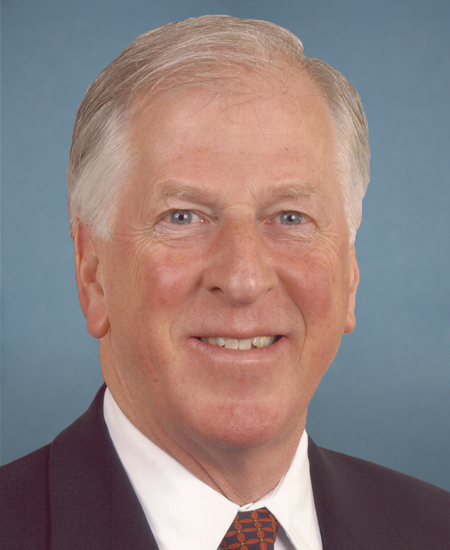
Rep. Mike Thompson
Sponsored bills
Maddy summaryHRES 1110 is a non-binding resolution passed by the U.S. House of Representatives on May 12, 2022, to recognize and mourn the 1,000,000 Americans who died from COVID-19. It formally honors the deceased and extends condolences to their families and loved ones without creating new laws or policies. The resolution does not directly affect any specific group or alter existing legislation, as it serves solely as a commemorative expression of national grief. Its key mechanism is the House’s formal acknowledgment of the pandemic’s human toll, referencing the milestone of one million deaths.
Tribal Access to Clean Water Act of 2022 This bill provides funding for and expands access to water resources for Native communities (i.e., Indian tribes and Native Hawaiian communities). First, the bill provides funding for the Indian Health Service to (1) provide essential sanitation facilities to community structures (e.g., schools, hospitals, and tribal offices) that were not previously considered eligible for such service; (2) provide technical assistance; and (3) operate and maintain water facilities that serve Native communities. Next, the bill provides funding for the Department of Agriculture to provide water and wastewater facility grants to eligible entities (e.g., Native communities) that have residents facing significant health risks due to inadequate water supply systems. The bill specifies that these funds shall not require any matching contribution. In addition, the bill reauthorizes through FY2032 the Bureau of Reclamation's Rural Water Supply Program. Further, the bill provides funding for and establishes a grant program for tribal clean water access projects. It also provides funding for the Native American Affairs Technical Assistance Program.
Federal Firefighters Fairness Act of 2022 This bill makes it easier for federally employed firefighters who contract certain illnesses to qualify for federal workers' compensation. Specifically, the bill provides that chronic obstructive pulmonary disease, mesothelioma, and specified other cancers of those employed in fire protection activities for at least five years are presumed to be proximately caused by such employment for purposes of a disability or death claim under the federal workers' compensation program. This presumption also applies to federal employees employed in fire protection activities for at least five years who experience a sudden cardiac event or stroke within 24 hours of performing a fire protection activity. The bill also requires the Department of Labor to conduct a review to determine whether breast cancer, gynecological cancer, and rhabdomyolysis should be included under the presumption and to conduct periodic reviews to determine whether other diseases should be included. In addition, a person may petition Labor to include another disease under the presumption. An employee in fire protection activities is a firefighter, paramedic, emergency medical technician, rescue worker, ambulance personnel, or hazardous material worker who (1) is trained in fire suppression; (2) has the legal authority and responsibility to engage in fire suppression; (3) is engaged in the prevention, control, and extinguishing of fires or response to emergency situations where life, property, or the environment is at risk, including the prevention, control, suppression, or management of wildland fires; and (4) performs such activities as a primary responsibility.
Benjamin Berell Ferencz Congressional Gold Medal Act This bill provides for the award of a Congressional Gold Medal to Benjamin Berell Ferencz in recognition of his service to the United States and the international community during the post-World War II Nuremberg trials and his lifelong advocacy for international criminal justice and the rule of law.
This resolution extends collective bargaining rights prescribed in the Congressional Accountability Act of 1995 to employees of the House of Representatives.
United States Innovation and Competition Act of 2021 This bill addresses U.S. technology and communications, foreign relations and national security, domestic manufacturing, education, trade, and other matters. Among other provisions, the bill provides funding for FY2022-FY2026 to support U.S. semiconductor manufacturing, research and development, and supply chain security; provides funding for wireless supply chain innovation; establishes a Directorate for Technology and Innovation in the National Science Foundation; extends through 2025 the authority of the National Aeronautics and Space Administration (NASA) to lease its non-excess real property and related personal property; authorizes various programs and policies related to space exploration; authorizes various international affairs programs and activities, including foreign assistance for the Indo-Pacific region; requires federal infrastructure programs to provide for the use of materials produced in the United States; imposes sanctions on China for cybersecurity and human rights abuses; requires the Department of Health and Human Services to consider national security risks associated with sensitive genetic information; includes initiatives related to elementary and secondary education, including those to increase computer science education; contains provisions related to higher education, including those reauthorizing through FY2027 international education programs and addressing China's influence on institutions of higher education; modifies and expands the schedule for graduated merger filing fees; prohibits federal funding for the Wuhan Institute of Virology; requires the U.S. Trade Representative to take certain actions related to digital trade and censorship practices; and extends through 2027 the Generalized System of Preferences.
Preventing Disaster Revictimization Act This bill requires the Federal Emergency Management Agency (FEMA) to waive certain debts owed to the United States related to disaster assistance provided to an individual or household. Specifically, FEMA must waive a debt owed to the United States related to disaster assistance provided to an individual or household if such assistance (1) was distributed based on an error by FEMA and such debt is construed as a hardship, and (2) is subject to a claim or legal action. FEMA must report to Congress on (1) actions that it will take to reduce the assistance payment error rate, and (2) the internal processes used to make decisions regarding the distribution of federal disaster assistance to individuals and households and any changes made to such processes.
Modernizing Access to our Public Land Act or the MAPLand Act This bill directs the Department of the Interior, the Forest Service, and the U.S. Army Corps of Engineers to jointly develop and adopt interagency standards to ensure compatibility and interoperability among federal databases for the collection and dissemination of outdoor recreation data related to federal lands and used to depict locations at which recreation uses are available to the public. Interior, the Forest Service, and the Corps of Engineers must digitize and publish geographic information system data that includes federal interests, including easements and rights-of-way, in private land; status information as to whether roads and trails are open or closed; the dates on which roads and trails are seasonally opened and closed; the types of vehicles and recreational uses that are allowed on each segment of roads and trails; and the boundaries of areas where hunting or recreational shooting is permanently restricted or closed. Interior, the Forest Service, and the Corps of Engineers may work with the U.S. Geological Survey to collect, digitize, standardize, or publish data to meet the requirements of this bill.
National Discovery Trails Act This bill amends the National Trails System Act to include national discovery trails as part of the national trails system. Such trails (1) shall be extended, continuous, interstate trails located to provide for outstanding outdoor recreation and travel and to connect representative examples of America's trails and communities; (2) shall provide for the conservation and enjoyment of significant natural, cultural, and historic resources and be so located as to represent metropolitan, urban, rural, and back country regions of the Nation; and (3) may be designated on federal lands and, with the owner's consent, on nonfederal lands. The 6,000-mile American Discovery Trail extending from Cape Henlopen State Park in Delaware, to Point Reyes National Seashore in California, splitting into northern and southern routes near Cincinnati, Ohio, and rejoining at Denver, Colorado, is designated as a national discovery trail. The bill sets forth requirements for designation of a trail as a national discovery trail. The appropriate federal department for each national discovery trail shall (1) administer the trail in cooperation with at least one competent trailwide volunteer-based organization; and (2) submit a comprehensive plan for the trail's protection, management, development, and use.