

Maddy summaryThe John R. Lewis Voting Rights Advancement Act of 2023 would strengthen the Voting Rights Act of 1965 by updating the criteria for which states and localities must obtain federal preclearance before changing voting practices. It would establish new standards for proving vote dilution and vote denial by requiring courts to consider historical discrimination, racial polarization in voting, and whether voting practices disproportionately burden minority voters. The bill would also require states and localities to provide public notice of voting changes and share demographic data about polling locations. These changes would primarily affect jurisdictions with a history of voting rights violations, aiming to prevent discriminatory voting practices before they take effect.
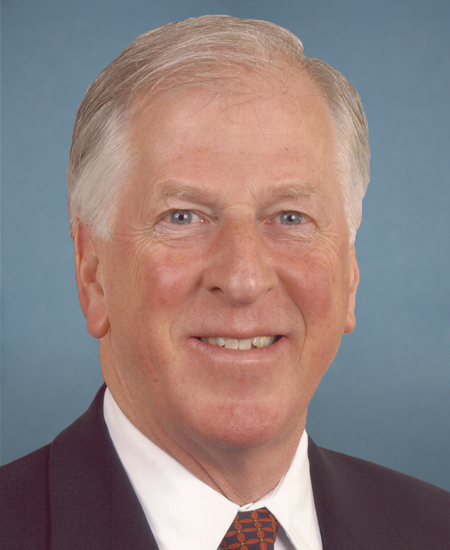
Rep. Mike Thompson
Sponsored bills
Maddy summaryThis resolution designates the week of September 17-23, 2023, as "Telehealth Awareness Week" to highlight telehealth's role in healthcare. It does not create new laws or funding but symbolically supports raising public awareness about telehealth benefits, especially for rural and underserved communities. The resolution urges stakeholders to promote telehealth access, share resources, and analyze its impacts - though these are non-binding recommendations. It affects the general public, healthcare providers, and policymakers by encouraging continued discussion on telehealth integration in healthcare.
Maddy summaryThis bill improves access to donor human milk for high-risk infants by supporting nonprofit milk banks. It amends the Child Nutrition Act to allow states to use funds for collecting, storing, and transferring unprocessed human milk to registered nonprofit milk banks, and creates $3 million in emergency grants for milk banks facing high demand or supply shortages. The bill also requires a public awareness campaign distributing educational materials to healthcare providers (like pediatricians) and WIC program participants, focusing on the safety and benefits of donor milk. These changes directly affect nonprofit milk banks, healthcare providers, and families of high-risk infants needing this resource.
Maddy summaryThe Humane Cosmetics Act of 2023 bans cosmetic animal testing in the United States, prohibiting companies from conducting or contracting such testing after its enactment (effective 1 year later). It also bans selling or transporting cosmetics developed using animal testing conducted after that date within U.S. interstate commerce. The law directly affects cosmetic manufacturers, retailers, and suppliers operating in the U.S. market, requiring them to use non-animal testing methods for safety evaluations. Exceptions exist for foreign regulatory requirements or when no alternative testing methods are available for specific ingredients.
Maddy summaryThis bill requires the Department of Homeland Security to develop a strategy addressing untraceable firearms (ghost guns), defined as privately made or modified weapons lacking serial numbers. It mandates DHS agencies to produce annual threat reports on ghost gun use in terrorism, analyze cross-border smuggling patterns (especially U.S. firearms recovered in Mexico), and track airport security violations involving such weapons. The law also directs the Secret Service to research prevention methods and requires the Transportation Security Administration to report on firearm violations at checkpoints. These provisions focus on improving interagency coordination and data collection on ghost gun threats, without changing gun ownership laws.
Maddy summaryHRES 682 is a symbolic resolution designating the week beginning September 11, 2023, as "National Hispanic-Serving Institutions Week." It does not create new programs or funding but formally recognizes Hispanic-Serving Institutions (HSIs) for their role in educating Hispanic students and underserved communities. The resolution calls for the public to observe the week with ceremonies during Hispanic Heritage Month, highlighting HSIs' contributions to higher education access and economic mobility. This resolution affects no specific entities or policies, as it is purely commemorative.
Maddy summaryThis bill allows the President to declare a "smoke emergency" when wildfire smoke causes a significant drop in air quality across one or more states, following a request from a state governor. If declared, the federal government (via FEMA and other agencies) can provide direct assistance to affected states and communities, including grants for smoke shelters, air purifiers, and air monitoring equipment. It also authorizes the Small Business Administration to offer grants to small businesses that suffer significant revenue loss due to the smoke emergency. The bill includes a budget provision ensuring funds for this assistance won't count toward deficit reduction targets.
Maddy summaryThe Smoke Exposure Research Act of 2023 directs the U.S. Department of Agriculture to fund research on how wildfire smoke affects wine grapes and wine. The research will identify harmful smoke compounds, develop affordable testing methods for smoke exposure, create a database of natural smoke levels in grapes, and explore protective measures for vineyards. This bill specifically requires collaboration with land-grant universities in California, Oregon, and Washington - major wine-producing states - with $6.5 million authorized annually from 2024 through 2028. The funding supports concrete research goals without altering industry regulations or consumer standards.
Maddy summaryHR 4350, the MONARCH Act of 2023, establishes a $12.5 million annual fund (2023-2027) to support habitat restoration for western monarch butterflies, which are at risk of extinction due to a 99% population decline over 30 years. The bill authorizes grants to eligible entities like tribal governments, nonprofits, and local agencies to restore milkweed, protect overwintering sites, and conserve pollinator habitats across California, Arizona, Nevada, Washington, Oregon, Idaho, and Utah. Projects must include community consultation, avoid conflicts with food safety, and demonstrate clear conservation benefits. The Secretary of the Interior will manage the grants, require annual progress reports to Congress and the public, and coordinate with existing conservation plans.
Maddy summaryHRES 645 is a non-binding House resolution recognizing August as "Chicano Heritage Month" to celebrate the contributions of Mexican Americans to U.S. history. It highlights historical figures like labor leaders Cesar Chavez and Dolores Huerta, landmark court cases (e.g., *Mendez v. Westminster* ending school segregation), and cultural impacts such as Selena's influence on music. The resolution does not create new laws or policies but serves as a symbolic acknowledgment by the House to honor this heritage. It encourages the public and institutions to observe the month with events celebrating Mexican American contributions.