

Maddy summaryHRES 434 is a non-binding resolution declaring a mental health crisis among U.S. youth, citing statistics like 49.5% of adolescents experiencing mental health disorders and a 30% rise in emergency visits for youth during the pandemic. It urges states and schools to improve educator training, expand on-campus mental health resources, remove harmful practices (such as risk assessment teams disproportionately affecting students of color), and address barriers for undocumented and low-income students. The resolution also emphasizes combating stigma, integrating mental and physical health care, and reaching high-risk communities with better resources. As a declaration - not a law - it expresses congressional support for historic federal investments in youth mental health care but does not create new policy.
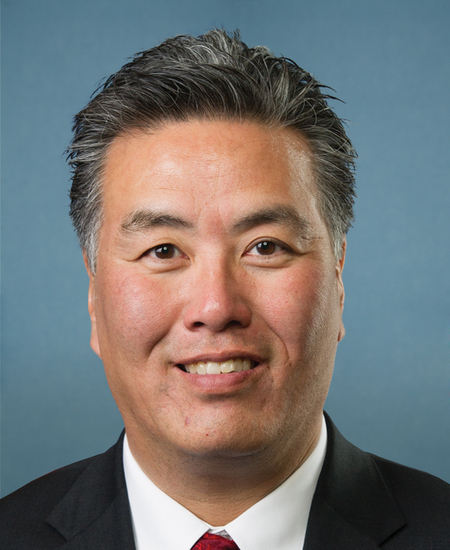
Rep. Mark Takano
Sponsored bills
Adult Day Center Enhancement Act This bill requires the Administration for Community Living (ACL) to carry out various activities related to adult day programs. These programs provide care to individuals living with neurological diseases or conditions (e.g., Parkinson's disease or traumatic brain injury). Specifically, the ACL must conduct a survey that identifies successful programs, programs that serve young adults, and financial support that the ACL provides to programs; develop best practices for establishing adult day programs; and award grants to programs that support younger people.
Maddy summaryHR 3713 creates federal grants to fund comprehensive school-based mental health programs for students in grades K-12, including those in Bureau of Indian Education schools. It requires partnerships between schools and community mental health providers to deliver trauma-informed, culturally appropriate services addressing suicide risk, grief, violence, and trauma exposure. The bill authorizes $300 million annually (2024-2027) for these programs, mandating privacy protections under HIPAA and FERPA, and requires annual reporting on program effectiveness.
Maddy summaryHR 3680, the Stop Mental Health Stigma in Our Communities Act, targets mental health disparities affecting Asian American, Native Hawaiian, and Pacific Islander (AANHPI) communities. It requires the Health and Human Services Secretary to develop a national outreach strategy (Section 4) to create culturally appropriate mental health resources and reduce stigma, with annual reports on outcomes. The bill also mandates two studies: one on AANHPI youth mental health and suicide rates (Section 5), and another on AANHPI mental health workforce shortages (Section 6), both requiring disaggregated data by race, language, and other factors. Funding of $3 million annually (2024-2028) supports the strategy, while $1.5 million each funds the studies.
Maddy summaryThe Cady Housh and Gemesha Thomas Student Suicide Prevention Act of 2023 requires states to establish a policy mandating annual suicide prevention training for school staff and high school students (grades 9-12). The training must be evidence-based, cover recognizing suicide warning signs, appropriate responses, and referrals to mental health services, while including cultural competency. It allocates $48 million in federal funds, with at least 15% dedicated to supporting this training program, and requires states to collaborate with mental health experts. The bill directly affects school staff and high school students in states that adopt the policy and receive federal funding.
This bill allows a new tax credit for a taxpayer's employment-related expenses necessary to care for a dependent who has attained age 50. Employment-related expenses include (1) expenses for household services; and (2) expenses for the care of the dependent, including respite care and hospice care. The expenses must be incurred to enable the taxpayer to be gainfully employed for any period for which there are one or more dependents that qualify for the credit. The bill limits the amount of such credit to $3,000 for the care of one dependent and $6,000 for the care of two or more dependents of the taxpayer in a taxable year.
Preemption of Real Property Discrimination Act This bill preempts any state law that prohibits or restricts the purchase of real property by an individual based on the individual's citizenship.
Maddy summaryThis bill amends the Older Americans Act to better serve LGBTQI older adults (defined as lesbian, gay, bisexual, transgender, queer, intersex individuals, and those living with HIV) by adding specific definitions and creating new support structures. It establishes an Office of LGBTQI Inclusion within the Administration on Aging, led by a Director and Assistant Director, to coordinate services, advocate for this community, and collect data on their challenges. The bill also creates a National Resource Center on LGBTQI Aging to provide training and resources to organizations serving LGBTQI older adults and requires data collection on discrimination against them in long-term care settings. These changes aim to improve access to culturally competent services and address the unique needs of LGBTQI older adults through concrete policy updates.
Maddy summaryHRES 439 is a non-binding resolution expressing the House of Representatives' support for keeping the U.S. Postal Service (USPS) as an independent federal agency, not subject to privatization. It highlights USPS's constitutional role, self-sustaining nature (relying on service revenue, not taxpayer funds), and its importance to rural communities, e-commerce, and over 600,000 employees. The resolution urges Congress to take action to preserve USPS's independence, emphasizing that privatization could raise prices, reduce services, and harm the nation's mail infrastructure. As a procedural resolution, it does not change law but formally states the House's position.
Maddy summaryHR 3610, the Neighbors Not Enemies Act, repeals specific sections (4067-4070) of the Alien Enemies Act of 1798 from U.S. law. This bill removes the legal authority allowing the president to detain or deport non-citizens during wartime based on that historical statute. The repeal directly affects the federal legal framework governing emergency powers over non-citizens, eliminating a provision dating to the Quasi-War with France. The bill makes no new policy changes but formally removes this outdated legal mechanism from the U.S. Code.