

Maddy summaryThis bill provides $280 million in funding for the Department of Education's Office for Civil Rights (OCR) for fiscal year 2024, with funds available through September 2025. The OCR investigates school discrimination complaints related to race, sex, disability, and other protected characteristics. This funding directly supports the OCR's ability to handle civil rights cases involving students and schools nationwide, without creating new student requirements or altering existing laws.
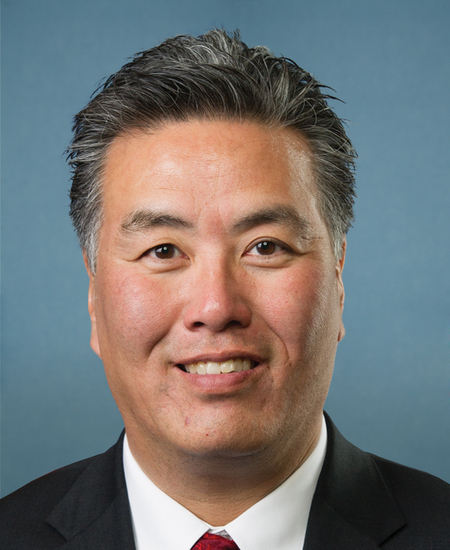
Rep. Mark Takano
Sponsored bills
Maddy summaryThis bill names a specific United States Postal Service facility at 24355 Creekside Road in Santa Clarita, California, as the "William L. Reynolds Post Office Building." It directly affects the physical location of this post office by changing its official designation. The key provision is a simple name change, with all existing references to the building in federal documents automatically updated to reflect the new name. This is a ceremonial designation with no policy or funding changes.
Maddy summaryHRES 1202 is a symbolic resolution expressing the U.S. House of Representatives' support for designating May 5-11, 2024, as Wildfire Preparedness Week. It encourages public education on fire safety, evacuation planning, and preventive measures like vegetation management and reducing human-caused ignitions (e.g., fireworks). The resolution does not create new laws or allocate funding but aims to raise awareness about wildfire risks, citing statistics on recent fires and health impacts from smoke exposure. It directly supports communities in wildfire-prone areas by promoting existing preparedness resources and educational initiatives. The resolution was introduced by Representatives Torres, Huffman, and Jacobs and referred to the Committee on Natural Resources.
Maddy summaryHRES 1180 is a non-binding resolution recognizing the importance of diversity, equity, and inclusion (DEI) efforts in medical education. It affirms that a diverse medical workforce better serves the nation's diverse patient populations and supports medical schools in fostering inclusive environments to improve health equity. The resolution highlights existing disparities in health outcomes and representation, such as Black and Hispanic patients experiencing higher rates of chronic conditions compared to White patients, and notes that current medical school demographics (e.g., 10.8% Black or African American matriculants in 2023) do not reflect U.S. population diversity. It does not create new laws or funding but symbolically endorses DEI initiatives as essential for enhancing patient trust, clinical learning, and equitable care delivery.
Maddy summaryThis bill amends veterans' education benefit rules to expand when institutions must repay funds. It adds two new scenarios triggering repayment: (1) course/program suspension due to risk-based surveys under Section 3673A, and (2) Secretary of Education findings that an institution harmed borrowers through actionable misconduct. Educational institutions receiving VA benefits must repay all assistance funds if they close or terminate a program due to these fraud determinations. The policy directly affects veterans whose benefits could be restored if institutions repay funds, and institutions that must now repay if found liable for fraud harming students.
Maddy summaryThe CROWN Act of 2024 prohibits discrimination based on hair texture or style commonly associated with race or national origin, such as braids, locs, cornrows, twists, or afros. It directly affects individuals - particularly people of African descent - who face workplace, school, housing, or public accommodation discrimination due to natural or protective hairstyles. The bill expands existing federal civil rights laws (like Title VI, the Fair Housing Act, and Title VII) to explicitly include hair-based discrimination, requiring compliance in federally funded programs, housing, employment, and public spaces. It clarifies that grooming policies targeting these hairstyles violate anti-discrimination protections without creating new legal standards.
Maddy summaryThe Captive Primate Safety Act prohibits the import, export, sale, transport, breeding, or possession of certain nonhuman primates - including chimpanzees, gorillas, monkeys, and their hybrids - in interstate or foreign commerce. It directly affects private owners, breeders, and commercial traders of these animals, with limited exceptions for pre-enactment animals (requiring registration with the U.S. Fish and Wildlife Service and restrictions on breeding/sale) and registered research facilities. The law amends the Lacey Act to add these primates to prohibited species lists, effective upon enactment, with regulations to be issued within 180 days. Enforcement remains active even if regulations are delayed, ensuring immediate prohibitions on commercial trade and possession.
Maddy summaryHouse Resolution 1158 recognizes the 82nd anniversary of the establishment of the U.S. Naval Construction Force (Seabees) on March 5, 2024. It honors their dual role in building military infrastructure and fighting in combat since World War II, as well as their global humanitarian efforts including disaster relief and community projects. The resolution expresses gratitude for their service, sacrifices, and contributions to U.S. military operations and international goodwill. As a symbolic measure, it does not create new policies or obligations.
Maddy summaryHR 3303, the Maternal Health for Veterans Act, requires the Department of Veterans Affairs (VA) to annually report on maternity care coordination programs and maternal health outcomes for veterans receiving care through VA facilities or VA-contracted providers. The bill mandates the VA to collect data on maternal outcomes - including disparities affecting high-risk demographic groups - and submit recommendations to Congress by September 2028. It authorizes $15 million annually (2024-2028) for VA maternity care coordination programs, supplementing existing funding without reducing current resources. The law directly affects veterans using VA maternity services, aiming to improve care through data-driven strategies.
Maddy summaryThis bill creates a new federal tax credit for family child care providers who operate from their primary residence and hold state licenses. It allows qualifying providers to claim up to $5,000 in startup costs per year, including licensing fees, supplies, insurance, safety equipment, furniture, and required home renovations. The credit applies only once per provider (no repeat claims) and expires after 7 years. It directly benefits small-scale, licensed family child care providers serving at least two non-family children, aiming to reduce their initial business setup costs.