

Maddy summaryHR 8859, the Deafblind DATA Act, requires the Census Bureau to create and publish a new annual table starting in 2026 showing the number of people in the U.S. who reported both hearing and vision loss in the American Community Survey. This table will display data by state, including sex, race, age, and economic factors like employment and income, without revealing personal details. The bill directly addresses the lack of a centralized count for deafblind individuals, who currently aren't accurately represented in census data. By cross-referencing existing survey responses, the Act aims to provide a clearer national picture to better understand and serve this population's needs.
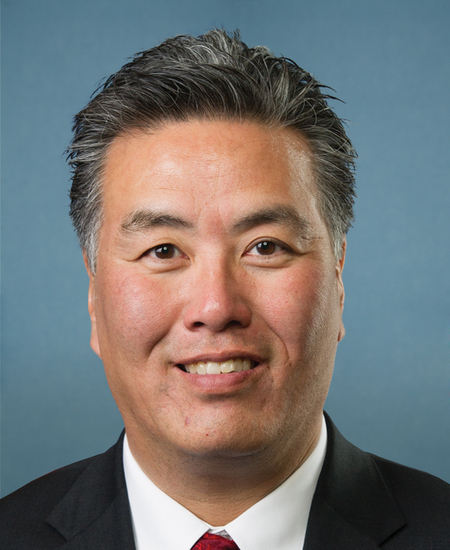
Rep. Mark Takano
Sponsored bills
Maddy summaryThis bill strengthens the HUD-VASH program, which provides housing vouchers and case management to homeless veterans. It requires the VA to prioritize vulnerable homeless veterans - especially those with disabilities - for case managers and mandates annual reports tracking program effectiveness, staffing ratios, and veteran outcomes. The law also prohibits revoking housing assistance solely because a veteran refuses case management and protects veterans from eviction for this reason. Additionally, it directs a GAO report assessing veterans' housing stability, case manager recruitment, and program demographics.
Maddy summaryThis bill expands Post-9/11 GI Bill benefits to National Guard members who perform specific full-time duty. It amends eligibility rules to include service on "full-time National Guard duty" (as defined in Title 32) and "active duty" (as defined in Title 32), which previously did not count toward full benefits. The change applies retroactively to service since September 11, 2001, and takes effect one year after enactment. This directly affects National Guard members serving in these specific full-time roles, granting them parity with other veterans for educational benefits.
Maddy summaryThis bill creates a federal framework for "extreme risk protection orders" (ERPOs) that temporarily remove firearms from individuals who pose a risk of harming themselves or others. Family members or law enforcement officers can petition a federal court for a temporary order (up to 14 days) based on probable cause, followed by a hearing within 72 hours to determine if a longer-term order (up to 180 days) is warranted. The bill requires clear and convincing evidence of risk at the hearing and mandates respondents to surrender firearms to law enforcement within 48 hours. It also includes provisions for reporting, training law enforcement on ERPOs, and a federal grant program to support state ERPO implementation, without preempting state laws.
Maddy summaryHCONRES 115 is a procedural resolution calling for a joint session of Congress in Philadelphia, Pennsylvania, on July 2, 2026. It directs both the House and Senate to convene together at Independence National Historical Park to commemorate the 250th anniversary (semiquincentennial) of the Declaration of Independence. The resolution does not create new laws or affect any specific group; it solely schedules a ceremonial event honoring Philadelphia's historical role as the site where the Declaration was approved. This is a non-binding commemorative measure focused on marking a historical milestone.
Maddy summaryThe Gun Theft Prevention Act requires licensed firearm dealers to implement specific security measures, including locked cabinets, security systems, and site hardening, to prevent gun thefts. It mandates annual security plan certifications with inventory reconciliation, employee background checks before firearm possession, and 30-day reporting of stolen firearms to authorities. The bill increases inspections (annual for high-risk dealers, triennial for others) and establishes civil penalties of up to $20,000 for violations. These requirements apply to all federally licensed gun dealers nationwide, with a one-year transition period for implementation, while maintaining state law authority over firearm dealing.
Maddy summaryHR 8732, the Domestic Workers Bill of Rights Act, would establish new labor protections for domestic workers including nannies, housekeepers, and caregivers who work in private homes. The bill requires written agreements between employers and domestic employees, provides earned sick days, ensures fair scheduling practices, and prohibits unfair wage deductions for cash shortages or communications. It also creates a Domestic Employee Standards Board to recommend workplace standards and establishes a National Domestic Employee Hotline for assistance. The bill specifically targets domestic workers who have historically been excluded from labor protections under the Fair Labor Standards Act and Civil Rights Act, benefiting an estimated 2.2 million domestic workers in the U.S. who are disproportionately women of color and immigrants.
Maddy summaryThis bill amends federal jury selection laws to explicitly prohibit discrimination based on sexual orientation and gender identity. It updates definitions in Title 28 of the U.S. Code by adding "sexual orientation and gender identity" to the protected characteristics under "sex" and defining key terms like "gender identity" and "sexual orientation." The changes directly affect federal jury pools by requiring courts to consider these factors when selecting jurors and preventing discrimination in the process. The law clarifies that discrimination based on these characteristics - including associations with others who share them - is prohibited during jury selection. This is a concrete policy change to expand anti-discrimination protections in federal jury service.
Maddy summaryHR 537 authorizes a Congressional Gold Medal to honor 60 diplomats who saved Jewish lives during the Holocaust by issuing visas and passports against their governments' orders, risking expulsion and personal danger. The medal will be presented to the next of kin of these diplomats, alongside representatives from their home countries, and permanently displayed at the United States Holocaust Memorial Museum. The bill also permits the sale of bronze duplicates to cover production costs, with proceeds going to the U.S. Mint. This legislation recognizes the diplomats' humanitarian actions without creating new government programs or altering existing laws.
Maddy summaryThe Financial Fitness Act requires the Department of Education to create a free, online personal finance education portal for students receiving federal student aid. The portal will provide interactive resources on budgeting, saving, investing, and managing student loan repayment - including details on repayment plans, forgiveness options, employer benefits, and tax deductions - using plain-language content. It must be established within three years of enactment, updated every three years based on usage analytics, and funded with $5 million over fiscal years 2024-2027. The portal is available for voluntary use by borrowers to support informed financial decisions related to education debt and broader financial planning.