

Maddy summaryThe Equal Pay for Equal Work Act establishes a National Equal Pay Enforcement Task Force to strengthen enforcement of existing equal pay laws. The task force, made up of representatives from the Equal Employment Opportunity Commission, Department of Justice, Department of Labor, and Office of Personnel Management, will coordinate efforts to investigate pay disparities and develop solutions. It will create action plans to address enforcement gaps and improve public education about pay equity. This bill directly affects federal agencies and workers facing wage discrimination by enhancing how equal pay laws are enforced across government.
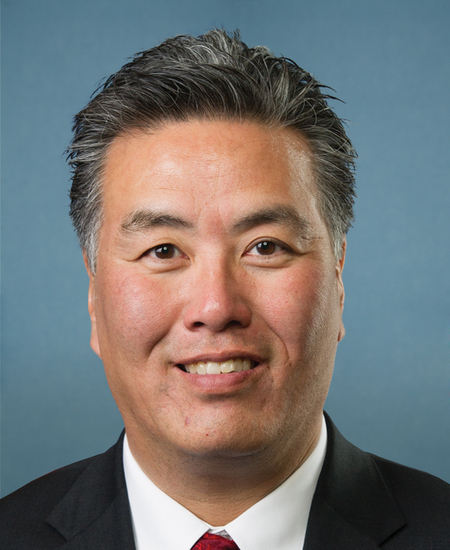
Rep. Mark Takano
Sponsored bills
Maddy summaryHR 7643, the Veterans Congressional Work Study Act of 2024, amends existing law to allow veterans using a Department of Veterans Affairs work-study allowance to work in specific congressional offices. It directly affects veterans enrolled in the VA work-study program by expanding where they can apply their allowance - specifically permitting work in committee offices, the Congressional Research Service, the Government Accountability Office, or the Congressional Budget Office. The key change adds a new provision (subparagraph L) to the eligibility rules, specifying these congressional entities as approved locations for such work. This is a procedural adjustment to the existing work-study program, not a new benefit or policy change.
Maddy summaryHRES 1414 is a non-binding resolution expressing congressional support for "Warehouse Worker Recognition Week" (August 18-24, 2024), which celebrates workers in the logistics industry. It does not create new laws or funding but symbolically acknowledges warehouse workers’ contributions to the economy, noting they number over 9 million and face challenging conditions like extreme heat. The resolution encourages public awareness of their role in supply chains and commits to addressing workplace safety concerns. It directly affects warehouse workers by formally recognizing their labor, though it has no legal force.
Maddy summaryThis bill establishes a federal grant program to fund school sports access for K-12 students. It provides grants to elementary and secondary schools that comply with Title IX, allowing them to expand athletic programs, cover costs like equipment/uniforms, or reduce participation barriers - especially for girls and women in underrepresented sports. Schools receiving funds must certify they won’t discriminate based on gender identity or sexual orientation. The legislation directly affects public schools seeking to improve equity in youth sports, building on existing Title IX protections for transgender and LGBTQ+ students.
Maddy summaryHR 6531, the TRAIN VA Employees Act, requires the Department of Veterans Affairs (VA) to create mandatory training for all VA supervisors and certain other designated employees. The training program, to be developed within one year of enactment, covers key supervisor duties like performance appraisals, addressing workplace issues (including hostile environments), and managing employee conduct. All affected employees must complete the initial training within 18 months and refresher sessions every two years. The bill directly impacts VA supervisors and specific leadership roles, focusing on improving management practices through structured, adult-learning-based instruction.
Maddy summaryThis bill creates a new program to provide emergency grants to farm worker organizations during covered disasters. It directly affects migrant and seasonal farm workers who lose income or cannot work due to events like hurricanes, wildfires, pandemics, or extreme weather. The grants fund immediate relief (including direct cash or aid), building community resilience, infrastructure support, and emergency services. Funds remain available until spent, and the program requires consultation with eligible organizations, defined as farm worker groups or qualified nonprofits with relevant experience.
Maddy summaryThe SCOPE Act directs the Environmental Protection Agency (EPA) to develop standardized guidance for reporting scope 3 emissions - indirect emissions from a company’s supply chain and product use - within 12 months of enactment. It requires the EPA to establish reporting thresholds, calculation methods, monitoring frequency, data quality standards, and recordkeeping procedures for facilities already subject to EPA greenhouse gas reporting rules (like major industrial plants). The guidance will help direct emitters (facilities currently reporting under EPA regulations) understand how to measure and report these indirect emissions. This bill does not mandate reporting but creates a framework for future EPA rules on scope 3 emissions.
Maddy summaryThe Campus Accountability and Safety Act amends the Clery Act to require colleges and universities to collect and report more detailed statistics about campus incidents of domestic violence, dating violence, sexual assault, sexual harassment, and stalking. It establishes new requirements for institutions to provide confidential support through "sexual and interpersonal violence specialists" who can help victims navigate reporting options and campus resources without triggering investigations. The bill mandates trauma-informed training for staff involved in addressing these incidents and requires institutions to provide clear information about their disciplinary processes and support services. It also creates specific reporting requirements about how many cases were reported to Title IX coordinators, how many victims sought campus disciplinary action, and how many cases were resolved through campus processes. Institutions that fail to comply may face civil penalties of up to 1% of their operating budget.
Maddy summaryThe Active Shooter Alert Act of 2024 establishes a national coordination system for active shooter alerts by designating a Department of Justice Coordinator. The Coordinator will work with federal agencies (FEMA, FCC, Transportation) and state/local governments to develop voluntary best practices for alert systems, including geotargeted notifications, multilingual messaging, and training for transportation authorities. The bill requires annual reports to Congress on state adoption of protocols and mandates a Comptroller General study on state response times to active shooter alerts, funded by $2 million for the Department of Justice. It does not mandate state adoption but encourages coordination to improve alert effectiveness.
Maddy summaryThe NO BAN Act (HR 9244) prohibits U.S. immigration authorities from denying visas or entry based on national origin, religion, or sex. It amends immigration law to explicitly ban such discrimination in visa decisions and tightens restrictions on the president’s power to suspend entry of certain groups under Section 212(f). The bill requires specific evidence, narrow tailoring, time limits, and congressional notification for any entry restriction, while mandating public reports on visa denials and waivers. It directly affects nonimmigrant visa applicants (e.g., students, workers) and federal agencies administering immigration policy.