

Maddy summaryHRES 75 is a symbolic resolution recognizing the cultural and historical significance of Lunar New Year (celebrated as the Year of the Snake in 2025). It acknowledges Lunar New Year's origins in China over 4,000 years ago, its global celebration as Seollal (Korea) and Tết (Vietnam), and its importance to Asian American communities in the U.S. The resolution expresses respect for Asian Americans and others celebrating the holiday and wishes them a happy new year, but it creates no new laws, funding, or obligations. As a ceremonial resolution, it has no direct policy impact.
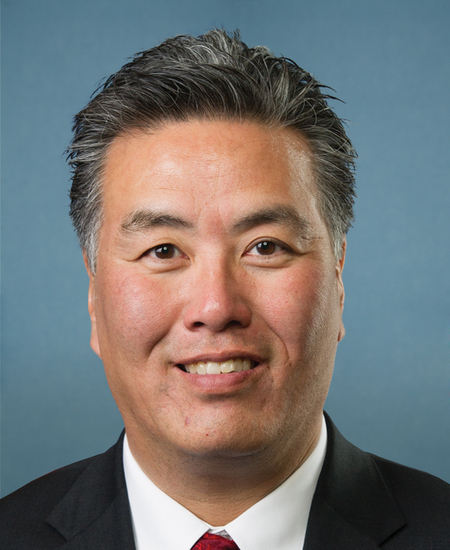
Rep. Mark Takano
Sponsored bills
Maddy summaryThis resolution (HRES 77) supports designating January 30, 2025, as "Fred Korematsu Day of Civil Liberties and the Constitution" to honor Japanese American civil rights advocate Fred Korematsu. It commemorates his 1944 legal challenge to the WWII internment of Japanese Americans under Executive Order 9066, which was later overturned after evidence revealed government misconduct. The resolution encourages public reflection on preserving civil liberties during national emergencies, referencing Korematsu's later warnings about post-9/11 civil liberties threats. It is a symbolic gesture with no binding legal effect, building on existing state designations in seven states.
Maddy summaryHR 794, the Lunar New Year Day Act, would designate the Lunar New Year as a federal holiday by adding it to the list of official federal holidays under Title 5 of the U.S. Code. This change would directly affect federal government operations and employees, who would observe the holiday on the date of the Lunar New Year each year. The bill’s sole mechanism is amending the existing holiday schedule to include "Lunar New Year Day" following the Birthday of Martin Luther King, Jr. It does not create new programs, allocate funding, or impact non-federal entities.
Maddy summaryThis bill authorizes a posthumous Congressional Gold Medal for Fred Korematsu, a Japanese American civil rights advocate who challenged the World War II internment of Japanese Americans. It recognizes his legal fight against Executive Order 9066, which led to the unjust incarceration of over 120,000 people, and his lifelong advocacy against racial discrimination. The medal, designed by the Treasury Secretary, will be displayed at the Smithsonian Institution. The bill is purely commemorative and does not create new legal rights or funding requirements.
Maddy summaryThe MAKERS Act (HR 812) establishes a National Science Foundation grant program to fund research and development of makerspaces at colleges and community organizations. It prioritizes funding for projects partnering with community colleges, historically Black colleges, minority-serving institutions, rural communities, and workforce training programs. Grants support equipment, research on makerspace effectiveness in teaching STEM skills, and sharing best practices - without funding new building construction. The bill directly affects higher education institutions and community groups seeking to build STEM skills through hands-on learning spaces.
Maddy summaryHR 753, the FIRE Act of 2025, directs the NOAA Administrator to establish a program improving wildfire forecasting and detection to reduce loss of life and property. The bill requires developing advanced satellite detection, fuel moisture assessments, and coupled fire-atmosphere modeling systems to better predict wildfire spread, smoke dispersion, and enable early detection. It authorizes $15 million for fiscal year 2026 to fund research testbeds for these capabilities, created through NOAA partnerships with industry and academia. This program directly affects communities at wildfire risk, firefighters, and emergency responders by enhancing early warning systems and risk communication.
Maddy summaryThis bill requires the U.S. Department of Education to proactively notify eligible college students about potential access to SNAP (food stamp) benefits. It targets students with a negative or zero student aid index (SAI) who file the Free Application for Federal Student Aid (FAFSA). The Department must send annual written and electronic notices explaining SNAP eligibility and providing state contact information for applying. The bill also mandates consultation between the Education and Agriculture Departments to design these notifications. This is a policy change focused on improving access to nutrition assistance for low-income students already enrolled in college.
Maddy summaryHRES 68 is a non-binding House resolution expressing strong disapproval of the President’s announcement to withdraw the U.S. from the Paris Agreement. It commends states, businesses, and citizens supporting the Agreement, urges the President to reverse the withdrawal decision, and calls for Congress to prioritize U.S. climate leadership. The resolution does not create new laws or affect specific groups but formally states the House’s position against withdrawing from the international climate accord. It was introduced by 115 co-sponsors and reflects broad congressional concern about reversing U.S. climate commitments.
Maddy summaryHR 612, the Health Care Providers Safety Act of 2025, provides federal funding to help health care facilities improve safety. It authorizes the Secretary to award grants to hospitals, clinics, and other health care providers to cover costs for physical security (like structural improvements) and cyber security (such as data privacy tools and video surveillance systems). These grants directly help health care providers protect their facilities, staff, and patients from security threats. The bill creates a new funding mechanism under the Public Health Service Act, making specific security upgrades eligible for federal support.
Neighbors Not Enemies Act This bill repeals provisions authorizing the President to apprehend and remove from the United States the citizens of a particular nation, if the United States has declared war against that nation or that nation has threatened an invasion against the United States.