

Maddy summaryThis bill creates a new federal tax credit for family child care providers who operate from their primary residence. It allows eligible providers to claim up to $5,000 annually toward specific startup costs like licensing fees, supplies (diapers, toys), insurance, fencing, playground equipment, and required renovations. To qualify, providers must be licensed/registered, serve at least two non-family children, and operate from their home. The credit is limited to one year per provider (no repeat claims) and expires after seven years. It directly affects small-scale home-based child care operators seeking to establish or improve their licensed services.
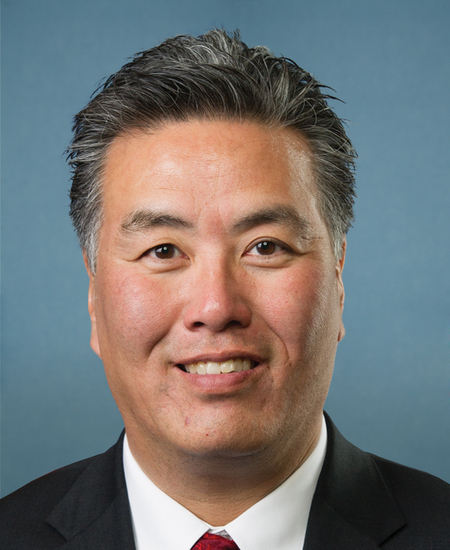
Rep. Mark Takano
Sponsored bills
Maddy summaryHR 1356, the Mudslide Recovery Act, creates a federal grant program to help communities repair damage from mudslides that occur after wildland fires. The program provides competitive grants to eligible recipients - including states, tribes, local governments, fire departments, and community non-profits in fire-risk areas - to fund innovative repair solutions. It authorizes $5 million annually from fiscal years 2026 through 2032 for the Secretaries of the Interior and Homeland Security (via FEMA) to administer the program. This bill directly affects communities impacted by post-wildfire mudslides by providing targeted funding for recovery efforts.
Maddy summaryThe Office of Gun Violence Prevention Act of 2025 would create a new office within the Department of Justice to coordinate federal efforts on reducing gun violence. The office, led by a Director appointed by the Attorney General, would integrate existing DOJ programs, evaluate data gaps, and develop evidence-based recommendations for Congress and the President. It would also establish an advisory council including survivors of gun violence, public health officials, and community representatives to guide its work. The office would produce annual reports detailing gun violence trends and policy proposals, while collaborating with agencies like Health and Human Services and the FBI.
Maddy summaryHR 1251, the All Access Act of 2025, requires Members of Congress (House members and Senators) to present official identification to enter federal public buildings during regular business hours. For access outside these hours, Members must notify the building head at least 12 hours in advance. The bill establishes clear, procedural access rules for congressional members but does not create new policies or affect the public. It is a straightforward procedural measure governing Member access to federal facilities.
Maddy summaryThis bill proposes a constitutional amendment stating that only "natural persons" (living humans) have rights protected by the U.S. Constitution, explicitly denying constitutional rights to corporations, LLCs, and other artificial entities. It would require governments to regulate campaign contributions and spending to prevent money from influencing elections, banning the view that spending to influence elections constitutes protected speech under the First Amendment. The amendment would not affect the constitutional right to a free press. This change would directly impact how corporations and other non-human entities can legally challenge laws or regulations in court.
Maddy summaryThis bill requires federal agencies to publicly disclose journal subscription costs and make library access policies clearly available to employees via intranet within six months. It mandates a report within 12 months on improving access to scientific journals across agencies like the EPA and NASA, identifying issues such as contract limitations and regional access barriers. The law prohibits contracts that hide subscription costs and aims to reduce duplication through better transparency and shared purchasing models. Key beneficiaries are federal employees in scientific agencies needing research materials, with no new funding or regulations imposed.
Maddy summaryThis bill restricts access to Treasury payment systems (including the Bureau of the Fiscal Service) to only Treasury employees with a "fully successful" performance rating and at least one year of civil service, or contractors/outsiders with security clearances, required privacy/cybersecurity training, ethics agreements, and no conflicts of interest. It treats non-government users accessing these systems as government employees for ethics rules and defines specific actions (like stopping payments) as "personal and substantial participation" in government matters. The Treasury Inspector General must investigate any unauthorized access within 30 days and report to Congress, detailing the breach, security risks, and any halted payments. The bill directly affects Treasury staff, contractors, and any external entities accessing federal payment systems.
Maddy summaryThis bill creates a new grant program to fund high-quality workforce development programs at community colleges. It directs the Secretary of Labor to award competitive grants to community colleges that partner with employers in high-skill, high-wage, or in-demand industries to develop programs leading to nationally or regionally portable postsecondary credentials. The grants require evidence-based program design, employer engagement, and tracking of outcomes like program completion rates and job advancement for participants. Funded at $65 million annually from 2026-2031, the program prioritizes serving individuals with employment barriers, incumbent workers, and new workforce entrants through community college partnerships.
Protecting Sensitive Locations Act This bill prohibits immigration enforcement actions within 1,000 feet of a sensitive location except in exigent circumstances, such as the imminent risk of death, violence, or physical harm to any person. Sensitive locations include health care facilities; schools and school bus stops; places that provide assistance for people such as children, pregnant women, and abuse victims; child care facilities; places that provide disaster or emergency services; places of worship; courthouses and lawyers’ offices; facilities used as polling places; certain labor union facilities; and public assistance offices. The prohibition shall apply to Department of Homeland Security officers and agents, as well as state employees pursuing immigration enforcement actions. If an enforcement action is carried out in violation of this prohibition (1) no information resulting from the action may be entered into the record in a resulting removal proceeding, and (2) the affected individual may move to immediately terminate such a proceeding. U.S. Immigration and Customs Enforcement and U.S. Customs and Border Protection shall annually report to Congress about enforcement actions taken at sensitive locations in the preceding year.
Maddy summaryHR 1053, the Filipino Veterans Family Reunification Act of 2025, exempts certain family members of eligible Filipino veterans from annual U.S. immigrant visa limits. It directly affects adult children and spouses of Filipino veterans who served in U.S. military during WWII and were naturalized under two specific historical programs: the 1940 naturalization law for WWII veterans or the 1990 Immigration Act provision. The bill adds a new exemption to the Immigration and Nationality Act, allowing these family members to qualify for visas under existing categories (like family-based preference categories) without competing for limited annual visa numbers. This change aims to streamline family reunification for descendants of veterans who met the historical naturalization criteria.