

Equal COLA Act This bill applies a cost-of-living adjustment (COLA) for annuities paid under the Federal Employees Retirement System that is equal to the increase in inflation, regardless of the amount of the increase. Specifically, for any year in which the Consumer Price Index (CPI) has increased over the previous year, the COLA amount shall be increased by the change in the CPI from the previous year. Current law applies an adjustment equal to the change in CPI only if the change is 2% or less. If the change is between 2% and 3%, the adjustment is limited to 2%. If the change is more than 3%, the adjustment is limited to 1% less than the change.
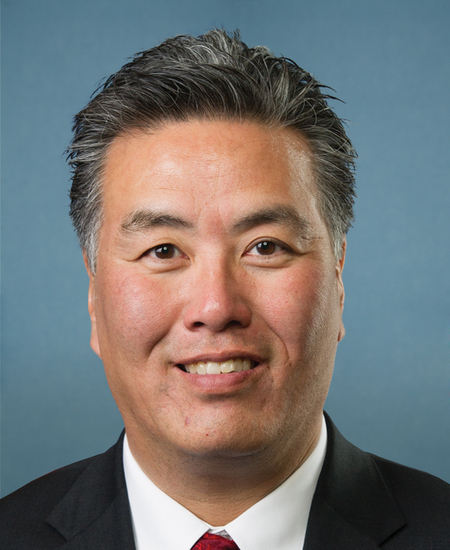
Rep. Mark Takano
Sponsored bills
Maddy summaryHR 5309, the Congressional Tribute to Constance Baker Motley Act of 2025, authorizes a posthumous Congressional gold medal for Constance Baker Motley, a pioneering civil rights attorney and judge. The bill directs the Treasury Secretary to strike the medal with her image and name, to be presented to her son, Joel W. Motley III, and her niece, Constance Royster. It also permits the sale of bronze duplicates at cost to cover expenses, with proceeds going to the U.S. Mint fund. This is a commemorative measure with no substantive policy changes, honoring Motley’s legacy as the first African-American woman appointed to a federal judgeship.
Maddy summaryHR 5340 prohibits the U.S. Department of Housing and Urban Development (HUD) and public housing agencies from sharing tenant records with immigration authorities for immigration enforcement purposes. It directly affects all HUD housing program participants (including renters and applicants, regardless of immigration status) by requiring HUD to obtain written consent or a language-proficient request from the individual before disclosing their records. Key provisions include banning disclosure without consent, preventing HUD from forcing public housing agencies to share records, and mandating a 90-day compliance report to Congress detailing record security and past sharing practices. The bill aims to protect housing privacy by ensuring immigration enforcement cannot access sensitive tenant information held by HUD without explicit individual authorization.
Maddy summaryHRES 684 is a non-binding House resolution designating September 9, 2025, as "National Firearm Suicide Prevention Day." It aims to raise public awareness about firearm suicide statistics (including that firearms were used in 55% of U.S. suicides in 2023) and promote safe firearm storage as a key suicide prevention strategy. The resolution encourages health professionals to discuss safe storage with patients and supports existing awareness efforts led by organizations like Brady and End Family Fire. It directly affects the public and healthcare providers by emphasizing evidence-based prevention practices, not by creating new laws.
Maddy summaryThe Tipped Worker Protection Act eliminates the sub-minimum wage for tipped workers, requiring employers to pay the full minimum wage instead of the current $2.13/hour rate that relies on tips to make up the difference. During a transition period, tipped workers would receive a minimum cash wage of $3.60/hour in the first year, increasing by $1.50 annually until reaching the full minimum wage. The bill also prohibits employers from keeping tips or using them for anything other than distributing to employees, requires transparency about service charges, and establishes rules for voluntary tip pooling. This bill directly affects workers in restaurants, bars, and other service industries who traditionally receive tips as part of their compensation.
Maddy summaryHJRES 113 designates August 20 as Slavery Remembrance Day to commemorate the arrival of the first 20 enslaved Africans in Virginia in 1619 and honor the enduring legacy of slavery. The resolution requests the President issue a proclamation encouraging the public to observe this day through ceremonies and activities that acknowledge slavery's horrors and its lasting impacts. It includes historical context about the transatlantic slave trade, the Middle Passage, and figures like Harriet Tubman, while posthumously recognizing Reconstruction-era Black Congress members. As a symbolic commemorative resolution, it does not create new laws or directly affect any group, but serves to raise awareness about slavery's history and consequences.
Maddy summaryThis bill (HJRES 115) terminates a presidential emergency declaration made on August 11, 2025, which claimed a "crime emergency" in Washington, D.C. It directly affects the District of Columbia by ending federal restrictions that prevented D.C. from using $1 billion in locally-raised funds for public safety, law enforcement, fire services, and schools. The resolution cites that the emergency declaration was legally flawed - section 740 of the DC Home Rule Act does not permit federalizing the Metropolitan Police Department - and notes that D.C. violent crime has reached a 30-year low. The bill formally ends the emergency under the DC Home Rule Act, restoring D.C.'s authority over its own budget and public safety resources.
Maddy summaryThis bill extends the expiration date for a provision allowing certain vehicles to use High Occupancy Vehicle (HOV) lanes without meeting standard occupancy requirements. Specifically, it amends federal law to change the deadline from September 30, 2025, to September 30, 2031. The change directly affects drivers and vehicle operators who currently qualify for this exemption under existing rules. It is a procedural reauthorization, not a policy change, maintaining the current HOV lane exemption rules for an additional six years.
Maddy summaryHRES 649 is a symbolic resolution expressing congressional support for designating August 17-23, 2025, as "Warehouse Worker Recognition Week." It directly acknowledges warehouse workers in the logistics industry - over 1.8 million employees who support supply chains, transport goods, and work in challenging conditions like extreme heat. The resolution urges increased public awareness of their contributions, recognizes them as frontline workers, and commits to reducing workplace injuries. It does not create new laws or funding but formally endorses a national observance to celebrate their role in the economy.
Maddy summaryHR 4874 creates a federal grant program to fund supportive services for residents in affordable housing properties assisted by federal programs like low-income housing tax credits, Section 8 housing, and supportive housing for seniors or people with disabilities. Eligible non-profits managing such properties can receive 5-year grants to provide voluntary services including health access, educational programs, financial literacy, housing stability support, and assistance with public benefits. Grantees must use at least 25% of funds for staff salaries and training, while no more than 75% can cover direct resident services like mentoring or home modifications. The program aims to improve resident outcomes by connecting them to community resources without requiring participation in any service.