

Saving America's Pollinators Act of 2021 This bill addresses the use of certain pesticides and the health and status of native bees and other pollinators. First, the bill requires the Environmental Protection Agency (EPA) to establish a Pollinator Protection Board to develop an independent review process for pesticides that pose a threat to pollinators and their habitats. All active ingredients and pesticide products that contain one or more specified neonicotinoid pesticides must be deemed to generally cause unreasonable adverse effects to the environment. Under the bill, the registration of all uses of neonicotinoid pesticides must be immediately and permanently canceled. The EPA must revoke any tolerance or exemption that allows the presence of a neonicotinoid pesticide, or any pesticide chemical residue that results from neonicotinoid pesticide use, in or on food. The continued sale or use of existing stocks of neonicotinoid pesticides is prohibited, and the EPA may not register any such pesticides under the Federal Insecticide, Fungicide and Rodenticide Act. The bill requires the Department of the Interior, the EPA, and the Department of Agriculture to coordinate monitoring activities and report on the health and population status of native bees and other pollinators. Finally, a state or federal agency may be granted an exemption to use neonicotinoid pesticides if the board votes that use of the pesticide is warranted (1) in an emergency situation to avert significant risk to threatened or endangered species, (2) to quarantine invasive species, or (3) to protect public health.
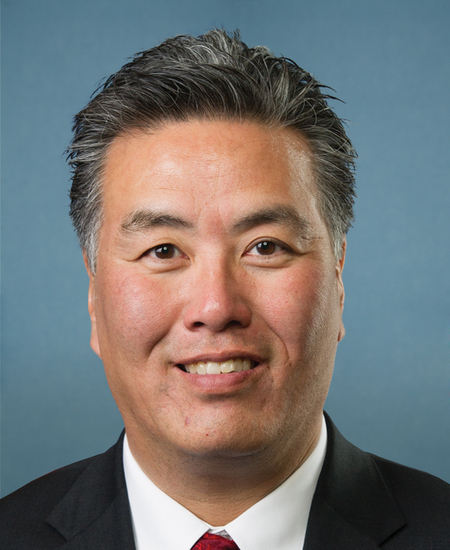
Rep. Mark Takano
Sponsored bills
Thirty-Two Hour Workweek Act This bill shortens the standard workweek under federal law from 40 hours to 32 hours over a three-year phase in period. It also requires specified overtime pay for workdays longer than eight hours.
Extinction Crisis Emergency Act of 2021 This bill requires the President to declare the global wildlife extinction crisis a national emergency and to take certain actions to restore wildlife. Specifically, the President shall direct the U.S. Fish and Wildlife Service and the National Marine Fisheries Service to review all species that are identified as critically imperiled, critically endangered, endangered, or vulnerable, and to use all authorities to propose and finalize protections for all species that may warrant protection; and establish new national wildlife refuges and new marine protected areas. The Departments of Commerce and the Interior must, after accepting public comment, conduct annual reviews of every nation's compliance with any international fishery conservation program or international program for endangered or threatened species, and take specified actions. The President must enlist all federal agencies to help fight the wildlife extinction crisis by directing each federal agency to take specified actions to prioritize the recovery of endangered species and to rebuild healthy wildlife and plant populations, including by fully integrating climate change concerns into the conservation and recovery of endangered species. The President must direct the Department of Defense to prioritize the protection of endangered species and rare habitats on U.S. military installations around the world.
Close the Medigap Act of 2021 This bill (1) expands guaranteed issue rights with respect to Medigap policies (Medicare supplemental health insurance policies), (2) eliminates certain limitations on Medigap policies for newly eligible Medicare beneficiaries, and (3) modifies other provisions related to Medigap policies. (Guaranteed issue rights require that a policy be offered to any eligible applicant without regard to health status.)
Protecting Our Students by Terminating Graduate Rates that Add to Debt Act or the POST GRAD Act This bill authorizes graduate and professional students to receive subsidized Stafford Loans. These students have been ineligible to receive subsidized Stafford Loans since July 1, 2012.
Universal School Meals Program Act of 2021 This bill revises requirements under the food and nutrition programs of the Department of Agriculture, such as the school lunch and breakfast programs. For example, the bill permanently provides free meals to all school children regardless of income. The bill increases the reimbursement rate for school food authorities participating in the food and nutrition programs. The bill also prohibits school food authorities from (1) physically segregating or otherwise discriminating against any child participating in the free breakfast program, or (2) overtly identifying a child participating in the program with a special token or announcement. Additionally, the bill expands the summer food service program by making all children eligible for participation in the program. Further, the bill revises eligibility determinations for measuring poverty to include runaway or homeless youth, foster children, migratory children, and children participating in specified programs (e.g., Head Start).
PFAS Action Act of 2021 This bill establishes requirements and incentives to limit the use of perfluoroalkyl and polyfluoroalkyl substances, commonly referred to as PFAS, and remediate PFAS in the environment. PFAS are man-made and may have adverse human health effects. A variety of products contain PFAS, such as nonstick cookware or weatherproof clothing. The bill directs the Environmental Protection Agency (EPA) to designate the PFAS perfluorooctanoic acid (PFOA) and perfluorooctanesulfonic acid (PFOS) as a hazardous substances under the Comprehensive Environmental Response, Compensation, and Liability Act of 1980, thereby requiring remediation of releases of those PFAS into the environment. Within five years, the EPA must determine whether the remaining PFAS should be designated as hazardous substances. The EPA must publish human health water quality criteria under the Clean Water Act for each measurable PFAS and class of such substances and establish standards to limit discharges of PFAS from industrial sources into waters of the United States. In addition, the EPA must issue a national primary drinking water regulation for PFAS that, at a minimum, includes standards for PFOA and PFOS. Among other requirements, the EPA must also issue a final rule adding PFOA and PFOS to the list of hazardous air pollutants, test all PFAS for toxicity to human health, and regulate the disposal of materials containing PFAS. The EPA must also require PFAS manufacturers to submit analytical reference standards for PFAS. The EPA and states may use those standards for (1) the development of information, protocols, and methodologies, and (2) activities relating to the implementation of enforcement of requirements. Finally, the bill provides incentives to address PFAS, such as grants to help community water systems treat water contaminated by PFAS and grants to schools for testing and filtrating PFAS from drinking water.
Supporting Medicaid in the U.S. Territories Act of 2021 This bill extends, increases, and otherwise modifies Medicaid funding for U.S. territories. Specifically, the bill extends (1) the temporarily increased Federal Medical Assistance Percentage (i.e., federal matching rate), and (2) a higher cap on Medicaid funding. Such provisions apply to Puerto Rico through FY2026 and to other territories through FY2029. The bill also requires Puerto Rico to implement an asset verification program and to report on its ability to comply with certain reporting requirements, procurement standards, and other Medicaid program integrity measures.
Consumer Protection and Recovery Act This bill authorizes the Federal Trade Commission (FTC) to seek monetary relief in federal court from businesses that engage in unlawful commercial practices such as false advertising, consumer fraud, and anticompetitive conduct. Specifically, the FTC may seek restitution in these cases for losses, rescission or reformation of contracts, refund of money, return of property, or disgorgement of unjust enrichment. On April 22, 2021, the Supreme Court held in AMG Capital Management, LLC v. Federal Trade Commission that the Federal Trade Commission Act does not authorize the FTC to seek, or a court to award, such relief.
Accountability for Acting Officials Act This bill makes a series of changes with respect to the appointment, tenure, and qualifications of acting officials of executive agencies. Among other things, the bill specifies that, for a position that requires an appointment by the President (by and with the advice and consent of the Senate), the first assistant to the office may temporarily fill the position only if the individual has been the first assistant for at least 30 days during the preceding year; an officer or employee of the agency who is directed by the President to temporarily fill the position may only do so if the officer or employee has served at the agency for at least the entire preceding year (rather than 90 days); and an individual who is a presidential appointee and is directed by the President to temporarily fill the position, including an acting Inspector General, must possess the requisite qualifications for the position as provided by law or regulation. The bill also limits the tenure of acting heads of agencies to no more than 120 days (rather than 210 days).