

Stop Hate Crimes Act of 2021 This bill lowers the statutory burden of proof for showing intent with respect to a federal hate crime offense. Current law makes it unlawful to willfully cause bodily injury, or attempt to do so using a dangerous weapon, because of the actual or perceived protected characteristic (e.g., race) of a person. In 2014, the U.S. Court of Appeals for the Sixth Circuit held that the because of standard requires proof that a person's actual or perceived protected characteristic was the sole motivating factor in the offense. This bill replaces the because of standard with a new standard. Specifically, willfully causing bodily injury, or attempting to do so using a dangerous weapon, is a hate crime offense if a person's actual or perceived protected characteristic was a contributory motivating factor in the offense.
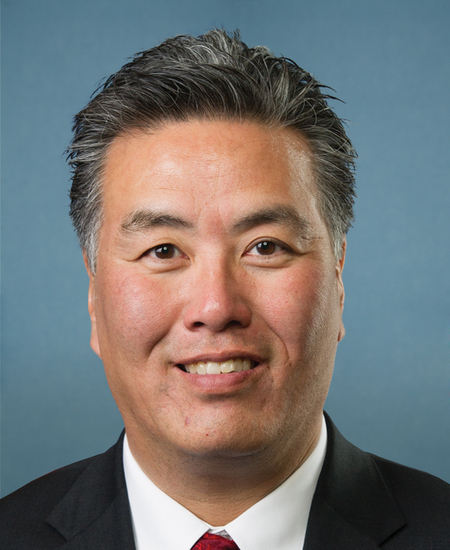
Rep. Mark Takano
Sponsored bills
Justice in Forensic Algorithms Act of 2021 This bill establishes a federal framework to govern the use of computational forensic software. The term computational forensic software means software that relies on an automated computational process to assess evidence in a criminal investigation (e.g., facial recognition technology). The framework contains various elements, including the following: requirements for the establishment of testing standards and a testing program for computational forensic software, requirements for the use of computational forensic software by federal law enforcement agencies and related entities (e.g., crime labs), a ban on the use of trade secret evidentiary privilege to prevent federal criminal defendants from accessing evidence collected using computational forensic software or information about the software (e.g., source code), and limits on the admissibility of evidence collected using computational forensic software.
Voter Empowerment Act of 2021 This bill expands voter registration and voting access. Specifically, the bill expands voter registration by requiring states to (1) make available online voter registration, (2) establish automatic voter registration systems, (3) permit same-day voter registration, and (4) accept voter registration applications from individuals under age 18. Further, the bill limits removing voters from voter rolls and prohibits interference with voter registration or voting. Next, the bill requires states to allow individuals with disabilities to use absentee registration procedures and to vote by absentee ballot in federal elections. The bill also prohibits voter caging (the practice of sending mail to addresses on voter rolls, compiling a list of the undeliverable mail, and using the list to remove registered voters from voter rolls). Next, the bill expands voting access by requiring states to allow early voting and voting by mail without additional conditions. It also requires states to provide secured drop boxes at which individuals may drop off their completed absentee ballots. In addition, the bill declares that the right of a U.S. citizen to vote in any federal election shall not be denied or abridged because that individual has been convicted of a criminal offense unless, at the time of the election, such individual is serving a felony sentence. Finally, the bill permanently reauthorizes the Election Assistance Commission (EAC). It also directs the EAC to make grants to states for specified activities, including to implement automatic voter registration systems.
Dignity for Detained Immigrants Act of 2021 This bill directs the Department of Homeland Security (DHS) to establish standards for facilities holding aliens in its custody, phases out using non-DHS facilities for such purposes, and contains other related provisions. The standards shall comply with the American Bar Association's Civil Immigration Detention Standards. The DHS Office of Inspector General (OIG) shall conduct periodic unannounced inspections of each facility and shall take various actions against noncompliant facilities, including imposing fines, cancelling contracts, and closing facilities. DHS shall report to Congress any death of an alien in its custody within 24 hours and conduct an investigation within 30 days that identifies policy changes that could reduce the likelihood of such a death. DHS is prohibited from entering into contracts for third parties to operate detention facilities or alternatives to detention programs and shall terminate existing contracts within three years of the bill's enactment. The bill establishes that OIG facility inspection reports and contracts for an outside entity to operate a detention facility are records available to the public under the Freedom of Information Act. DHS shall maintain certain information relating to detained aliens, including the alien's location and whether the alien was separated from family. The bill provides for various requirements and procedures related to detaining aliens, including (1) prohibiting DHS from detaining children, (2) imposing a presumption that an alien should be released, and (3) establishing that aliens in custody shall be subject to the least restrictive conditions. The bill also abolishes mandatory detention for asylum seekers.
Justice for Servicemembars [ sic ] Act This bill prohibits a predispute arbitration agreement from being valid or enforceable if it requires arbitration of a dispute related to the employment or reemployment rights of a uniformed service member.
Equal Access to Abortion Coverage in Health Insurance Act of 2021 or the EACH Act of 2021 This bill requires federal health care programs to provide coverage for abortion services and requires federal facilities to provide access to those services. The bill also permits qualified health plans to use funds attributable to premium tax credits and reduced cost sharing assistance to pay for abortion services.
Stop shielding Assets from Corporate Known Liability by Eliminating non-debtor Releases Act or the SACKLER Act This bill prohibits a bankruptcy court from releasing claims against non-debtors brought by states, tribes, municipalities, or the federal government. However, the bankruptcy court may issue a stay not exceeding 90 days regarding such a claim. Complex bankruptcies may involve creditor claims against non-debtors associated with the debtor, such as the debtor's officers, directors, or employees. Currently, in carrying out a bankruptcy plan, certain courts may release non-debtors from liability (there is a circuit split regarding this practice).
Help Extract Animals from Red Tape Act of 2021 or the HEART Act of 2021 This bill modifies notice requirements in a civil forfeiture proceeding that involves the seizure of an animal involved in animal fighting. Specifically, the government must notify interested parties of an animal's seizure within 30 days (currently, 60 days). The notice period may be extended only if a delay is warranted after considering certain factors, including the cost to the government of providing shelter for the animal, the health of the animal and the effect of a delay on its rehabilitation, any increased risk that a delay could necessitate the euthanasia of the animal, and any psychological harm incurred by the animal's owner due to the delay in disposition. Additionally, the bill authorizes amounts in the Department of Justice Assets Forfeiture Fund to be used to pay for costs associated with a seized animal, including transportation, shelter, care, veterinary services, and humane euthanasia.
PrEP Assistance Program Act This bill establishes a grant program to provide pre-exposure prophylaxis (PrEP) and related services to individuals at no cost. PrEP is medication given to individuals at risk of HIV to reduce their likelihood of contracting the virus. The Department of Health and Human Services must award the grants to state, tribal, and local governments; certain health clinics; and community-based organizations.
Bullying Redress And Verified Enforcement Act or the BRAVE Act This bill requires a local educational agency (LEA), in order to receive certain federal education funding, to collect and publish certain information about instances of bullying in schools. Specifically, the bill requires an LEA employee who becomes aware of bullying to report information about the bullying to an LEA-designated individual within seven business days. The LEA-designated individual must, within 60 days after receiving such a report, inform all of the LEA's employees of the acts described and the response of the LEA's employees. Additionally, the bill requires each LEA to review its policies on bullying on an annual basis, and publish and make available to students and parents a quarterly report that lists the number of bullying reports made since the previous quarterly report and informs the public of the right to file a complaint with the Office for Civil Rights (OCR) within the Department of Education (ED). The bill requires the OCR to (1) establish and publish complaint procedures; (2) investigate each complaint; (3) withhold certain federal funds from, issue a complaint against, or enter into a compliance agreement with any noncompliant LEA; and (4) make information about each complaint available on ED's website.