

Humane Cosmetics Act of 2021 This bill generally prohibits animal testing in the evaluation of cosmetic products, and it prohibits the sale or transport of cosmetics developed using animal testing, subject to civil penalties. These prohibitions begin one year after enactment. The bill specifies exceptions to these prohibitions, including if such animal testing (1) is conducted outside the United States to comply with a foreign regulatory authority; (2) is pursuant to a specified finding that there are no nonanimal alternatives to test the safety of a potentially dangerous cosmetic product or ingredient; (3) is of a product or ingredient for a drug or device subject to regulation by the Food and Drug Administration (FDA); or (4) is required for a noncosmetic purpose pursuant to a state, federal, or foreign regulatory authority. Further, no animal-testing evidence may be used to establish the safety of a cosmetic product or ingredient that is regulated by the FDA after the effective date of this bill, subject to limited exceptions.
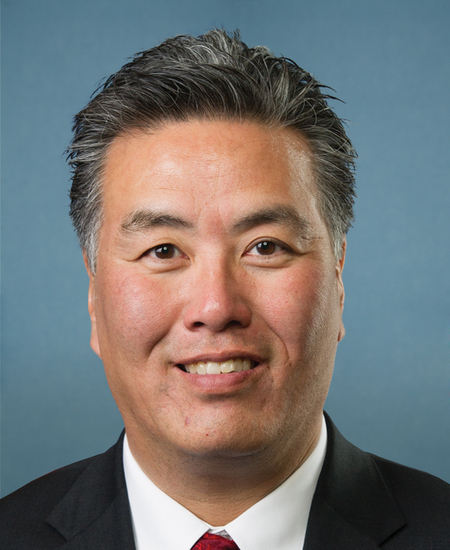
Rep. Mark Takano
Sponsored bills
Telehealth Extension Act of 2021 This bill expands and otherwise modifies coverage of telehealth services under Medicare. Specifically, the bill permanently (1) removes geographic restrictions on originating sites (i.e., the location of the beneficiary), (2) allows the home of the beneficiary to serve as the originating site for all services, and (3) allows federally qualified health centers and rural health clinics to serve as the distant site (i.e., the location of the health care practitioner). The bill also extends any Medicare telehealth flexibilities that were granted during the COVID-19 public health emergency until two years after the emergency ends and generally allows such flexibilities to be granted during any public health emergency. In addition, the bill (1) allows for Medicare payment of outpatient critical access hospital services consisting of telehealth behavioral therapy until two years after the COVID-19 public health emergency ends; and (2) after the emergency ends, conditions payment for certain high-cost laboratory tests and durable medical equipment that are ordered via telehealth on at least one in-person visit during the preceding six-month period.
Indian Buffalo Management Act This bill establishes a permanent program within the Department of the Interior to develop and promote tribal ownership and management of buffalo and buffalo habitat on Indian lands. Specifically, the bill requires Interior to (1) enter into contracts, award grants, and provide technical assistance to Indian tribes and tribal organizations for activities related to buffalo restoration or management; (2) consult with tribes and tribal organizations on initiatives that affect buffalo or buffalo habitat, including efforts to contain or eradicate diseased buffalo; and (3) develop a policy relating to buffalo and buffalo habitat management activities on Indian land. Additionally, Interior may enter into agreements with tribes or tribal organizations to transport surplus buffalo from federal land onto Indian land.
Radiation Exposure Compensation Act Amendments of 2021 This bill expands two programs that compensate individuals who were exposed to radiation during certain nuclear testing or uranium mining and subsequently developed medical conditions, including cancers. First, the bill expands and extends a program that compensates individuals who were exposed to radiation from atmospheric nuclear testing or other sources and subsequently developed specified cancers. Under current law, this program compensates individuals who were present in a designated geographic area during a period of nuclear testing and certain individuals employed in uranium mining. The bill expands the designated areas to include Colorado, Idaho, Montana, New Mexico, and Guam and additional areas in Arizona, Nevada, and Utah; makes more individuals who worked in uranium mining eligible for the program; increases the amount of compensation awarded to and provides medical benefits for eligible claimants; and extends for 19 years following the bill's enactment the fund that supports this program and the statute of limitations for filing claims (currently, the program terminates on July 10, 2022). Second, the bill makes certain individuals employed in uranium mines or mills eligible for a program that compensates workers, including Department of Energy employees and contractors, for illnesses caused by occupational exposure to radiation and hazardous substances during development and testing of the nation's nuclear weapons stockpile. The bill also establishes a grant program in the National Institute of Environmental Health Sciences for institutions of higher education to study the epidemiological impacts of uranium mining and milling among individuals without occupational exposure.
Rosie the Riveter National Historic Site Expansion Act This bill adds to the Rosie the Riveter/World War II Home Front National Historical Park in California Nystrom Elementary School--The Maritime Building and other areas as the Department of the Interior deems appropriate. Within the boundaries of the park, Interior may acquire lands, improvements, waters, or interests therein by donation, purchase, exchange, or transfer. Any lands, or interests therein, owned by California or any political subdivision of California may be acquired only by donation.
This resolution supports the designation of a National Day of 3D Printing. The resolution also recognizes the economic impact of 3D printing and its positive implications for the U.S. advanced manufacturing sector. Finally, the resolution encourages the promotion and celebration of 3D printing technology.
Making Advances Kinetic Education, Research, and Skills Act or the MAKERS Act This bill directs the National Science Foundation to award competitive grants to institutions of higher education or their consortia to support the research and development of makerspaces to assist in the formation of a workforce capable of STEM (science, technology, engineering, and mathematics). Makerspaces are community spaces that (1) provide access to tools, technology, and knowledge for learners and entrepreneurs; (2) result in prototyping or creation of physical goods, interdisciplinary learning, and educational innovation; and (3) support the development of educational opportunities for personal growth, workforce training, and early stage business ventures. Grants may be used for (1) research on the effectiveness of makerspaces in engaging students and the community in STEM skills and in teaching and learning, (2) the compilation and dissemination of best practices on the use of makerspaces for STEM learning and workforce preparedness, and (3) equipment to achieve such purposes. Funds furnished through a grant may not be used for the construction of a building or facility to hold a makerspace unless such construction is necessary for safety reasons or the use of relevant equipment.
Expanding Access to Fertility Care for Servicemembers and Dependents Act This bill entitles members of the armed forces and their dependents (including the reserve components) who are performing active service and are entitled to medical care under TRICARE to assisted reproductive technology services (e.g., in vitro fertilization). Such services must be provided, regardless of (1) whether the assisted reproductive technology service is related to the treatment of a service-connected disability; (2) whether the member has a serious illness or injury resulting from a service-connected disability; (3) the ability of the member or dependent to conceive a pregnancy or carry a pregnancy to term; or (4) the sex, gender, sexual orientation, or marital status of the member or dependent.
Strength in Diversity Act of 2021 This bill establishes a program through which the Department of Education may award planning and implementation grants to specified educational agencies (e.g., local educational agencies) to improve diversity and reduce or eliminate racial or socioeconomic isolation in publicly funded early childhood education programs, public elementary schools, or public secondary schools.
VA Transparency & Trust Act of 2021 This bill requires the Department of Veterans Affairs (VA) to submit a plan for obligating and expending covered funds, which are funds made available to the VA for response to the COVID-19 pandemic. The bill requires the VA to submit biweekly reports regarding obligations, expenditures, and planned uses of the funds until seven days after the VA has expended all covered funds. The Inspector General of the VA must submit reports examining the obligations and expenditures made using covered funds during the specified reporting period. Finally, the Government Accountability Office must submit an interim report and final report containing a review of obligations and expenditures made using covered funds.