

Global Respect Act This bill imposes visa-blocking sanctions on foreign persons responsible for or complicit in violating the human rights of individuals due to actual or perceived sexual orientation, gender identity, or sex characteristics. The President must report and periodically update a list of foreign persons responsible for such human rights violations and apply sanctions accordingly. The Department of State must designate at least one senior officer who shall be responsible for tracking violence and discrimination against individuals based on actual or perceived sexual orientation, gender identity, or sex characteristics in foreign countries.
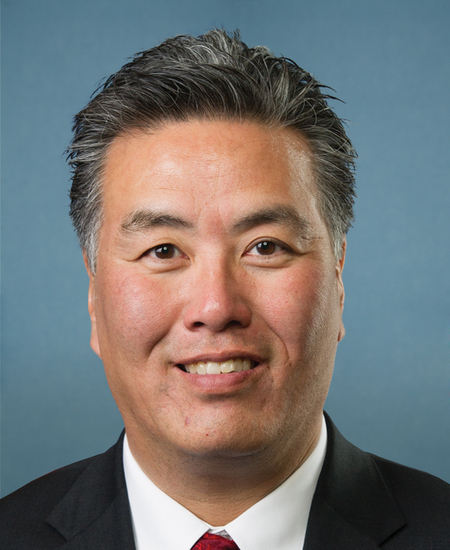
Rep. Mark Takano
Sponsored bills
Designates the facility of the United States Postal Service located at 120 4th Street in Petaluma, California, as the "Lynn C. Woolsey Post Office Building."
Maddy summaryHRES 911 is a symbolic resolution supporting National Black HIV/AIDS Awareness Day, observed annually on February 7 to address the disproportionate impact of HIV/AIDS on African American communities. It encourages state and local governments, public health agencies, and media to promote HIV testing, education, and community engagement within Black communities. The resolution commends organizations providing HIV services and aligns with the National HIV/AIDS Strategy’s goals to reduce new infections, improve care access, and address health disparities. As a non-binding resolution, it does not create new laws or funding but serves as a call to action to combat HIV/AIDS through prevention, treatment, and reducing stigma.
Keeping School Meals Flexible Act This bill extends authority through June 30, 2023, for the Department of Agriculture (USDA) to waive certain requirements for the school meal programs to address COVID-19. The bill extends the authority for USDA to issue a single waiver of child nutrition program requirements to all states under the National School Lunch Program for purposes of providing meals and snacks with appropriate safety measures with respect to COVID-19; grant waivers of requirements to allow non-congregate feeding in the Child and Adult Care Food Program for purposes of providing meals and snacks with appropriate safety measures with respect to COVID-19; and grant waivers related to the nutritional content of meals served in child nutrition programs if it determines the waiver is necessary to provide meals and snacks, and there is a food supply chain disruption due to COVID-19.
Affordable Housing Resident Services Act of 2022 This bill requires the Department of Housing and Urban Development to award competitive grants to owners of federally-assisted affordable housing for specified resident assistance activities, including obtaining health care, enhancing economic self-sufficiency, and assisting older adults and residents with disabilities.
Stop the Wait Act of 2022 This bill allows individuals with disabilities to begin receiving Social Security Disability Insurance (SSDI) benefits in the month they become eligible for the benefits. It also allows these individuals to immediately enroll in Medicare if they cannot afford minimum essential coverage. (Under current law, an individual must generally wait 5 months after the onset of disability to begin receiving SSDI benefits and an additional 24 months to become eligible for Medicare.)
Jumpstart on College Act This bill directs the Department of Education (ED) to award grants to support early-college high schools and dual- or concurrent-enrollment programs. Specifically, ED must award grants to (1) institutions of higher education in partnership with one or more local educational agencies to assist them in establishing or supporting early-college high schools or dual- or concurrent-enrollment programs, and (2) states to assist them in supporting or establishing these schools or programs.
Promoting Responsive Inclusion and Diverse Engagement Act of 2022 or the PRIDE Act of 2022 This bill requires federal banking and finance agencies to expand the efforts of their existing Offices of Minority and Women Inclusion to include individuals who are lesbian, gay, bisexual, transgender, queer, and other related identities. These offices are responsible for all matters related to such diversity in management, employment, and business activities.
Office of Technology Assessment Improvement and Enhancement Act This bill renames and revises the functions and duties of the Office of Technology Assessment which, composed of a Technology Assessment Board and a director, provides Congress with assessments of probable technology application impacts. Specifically, the bill renames the office the Congressional Office of Technology, and it requires the office to undertake additional duties, such as providing to Members of Congress (1) certain information without the need for board review, (2) certain technical assistance on legislation related to science and technology without the need for board review, and (3) objective policy options on how Members may achieve goals with respect to science and technology policy. The bill authorizes individual Members of Congress to submit to the board a request that the office undertake an assessment activity. Additionally, the bill requires the Congressional Research Service and the Government Accountability Office to coordinate technology assessment activities with the office to avoid duplication or overlapping of research activities. The bill also (1) allows the office to temporarily appoint specified technical and professional personnel to work for the office, (2) requires the office to make the findings of completed analyses publicly available, (3) revises the appointment of board members, (4) requires the board to hold an annual meeting at which Members of Congress may appear and present information regarding technology assessment activities, and (5) requires the board to report annually on the activities of the office.
Striking Workers Healthcare Protection Act This bill prohibits an employer from terminating or significantly altering the employer-provided health insurance coverage of an employee engaged in a lawful strike. An employer that violates this prohibition is subject to a maximum civil penalty of $50,000 for each violation.