Stop Taxes Against Menstrual Products Act of 2022 or the STAMP Act of 2022 This bill makes it unlawful for a state or local government to impose a tax on the retail sale of a menstrual product.
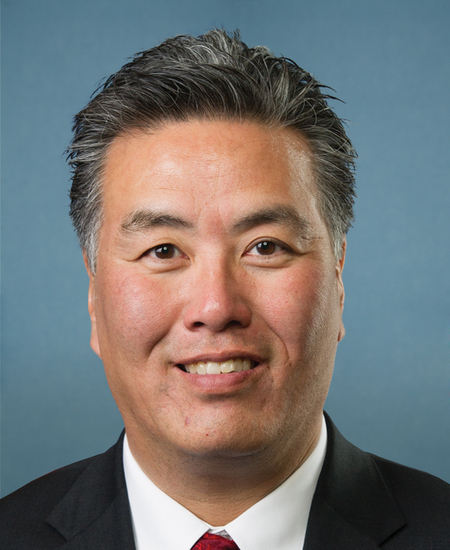
Rep. Mark Takano
Sponsored bills
Stealthing Act of 2022 This bill establishes a civil action for the nonconsensual removal of a sexual protection barrier (e.g., a condom). A person may recover compensatory and punitive damages, injunctive and declaratory relief, and such other relief as a court may deem appropriate.
Consent is Key Act This bill directs the Department of Justice to increase a state's allocation of funds under the Sexual Assault Services Program if the state has in effect a law that authorizes civil damages and equitable relief against a person who engages in the nonconsensual removal of a sexual protection barrier (e.g., a condom).
Jumpstart Our Legal Immigration System Act or the Jumpstart Act This bill makes unused employment-based and family-based immigrant visas from FY1992 through FY2021 available in subsequent fiscal years. It also makes diversity immigrant visas available to individuals who were selected for such a visa between FY2017-FY2021 but were unable to receive the visa due to certain (1) executive actions, or (2) limitations related to COVID-19. The bill also establishes supplemental fees for certain immigration-related applications.
Prohibiting Anticompetitive Mergers Act of 2022 This bill prohibits certain business mergers, modifies the procedures for reviewing mergers, and establishes procedures for reversing certain mergers. Specifically, the bill prohibits mergers that (1) are valued at more than $5 billion in total assets, (2) result in the acquiring entity having a market share of greater than 33% (or a share of a labor market as an employer of greater than 25%), or (3) result in market concentration levels that exceed specified thresholds. The bill also expands the authority of the Federal Trade Commission (FTC) and the Antitrust Division of the Department of Justice (DOJ) to review pending mergers, including whether a merger is likely to harm the competitive process and the effect of a merger on relevant labor markets. Finally, the bill authorizes the FTC and the Antitrust Division of the DOJ to retroactively unwind mergers that are prohibited under the bill or that meet certain other anticompetitive criteria such as a merger that results in a greater than 50% share of a relevant market.
Latonya Reeves Freedom Act of 2022 This bill prohibits government entities and insurance providers from denying community-based services to individuals with disabilities that require long-term service or support that would enable such individuals to live in the community and lead an independent life. Specifically, these entities may not discriminate against such individuals in the provision of community-based services by such actions as imposing prohibited eligibility criteria, cost caps, or waiting lists or failing to provide a specific community-based service. Additionally, community-based services must be offered to individuals with such disabilities prior to institutionalization. Institutionalized individuals must be notified regularly of community-based alternatives. The bill requires the Department of Justice to issue regulations requiring government entities and insurance providers to offer community-based long-term services to individuals with such disabilities who would otherwise qualify for institutional placement. Government entities must ensure sufficient availability of affordable, accessible, and integrated housing that is not a disability-specific residential setting or a setting where services are tied to tenancy. Regulations shall also (1) require government entities and insurance providers to perform self-evaluation on current services, policies, and practices and concerning compliance with requirements of this bill; and (2) require government entities to submit a transition plan. The bill provides funds for FY2022 for the Department of Health and Human Services to provide technical assistance with respect to transition plans. The bill allows civil actions by individuals subjected to, or about to be subjected to, a violation of its requirements.
Election Worker and Polling Place Protection Act This bill addresses certain protections for election workers and polling places. In particular, the bill prohibits, with enhanced penalties for certain types of threats and harms (1) intimidation of poll watchers, election officials, and election agents, vendors, and contractors involving violence or threats of harm; and (2) physical damage to or threats to physically damage a polling place, tabulation center, or other election infrastructure.
Strengthening Citizenship Services for Veterans Act This bill directs U.S. Citizenship and Immigration Services (USCIS) to ensure that various naturalization-related services are available at a U.S. port of entry, embassy, or consulate that is accessible to noncitizen veterans. Specifically, USCIS must ensure that naturalization examinations, biometric collections, and naturalization ceremonies are available at such locations for noncitizen veterans. Such services must be available to a noncitizen veteran who has been removed from the United States or is inadmissible.
Climate Resilience Workforce Act This bill sets forth provisions to establish a climate resilience workforce, a national climate resilience action plan, an Office of Climate Resilience within the White House, and related efforts and entities.
Comprehensive Addiction Resources Emergency Act of 2021 This bill establishes programs, grants, and other activities to address substance use disorders. Specifically, the Department of Health and Human Services (HHS) must establish a program for purchasing and distributing opioid overdose reversal drugs for states and Indian tribes. HHS must also award grants for and otherwise support addressing substance use, particularly in states, tribes, territories, and localities with disproportionately high drug overdose rates; increasing access to preventive, medical, recovery, and related services; developing innovative models of delivering treatment and harm reduction services; and expanding the treatment capacity of Medicaid providers. In addition, HHS must issue model standards of care for treatment services and recovery residences and may award grants for training health care professionals. The bill also supports prevention and treatment services for workers, addiction and pain management research, and data collection on substance use disorders. Further, dispensers, distributors, and manufacturers of schedule II controlled substances (e.g., oxycodone), with the exception of opioid treatment programs, must certify that they maintain effective drug diversion controls. Violators are subject to specified civil and criminal penalties. Collected penalties shall be used for the grant programs and other substance use disorder activities established under the bill.