

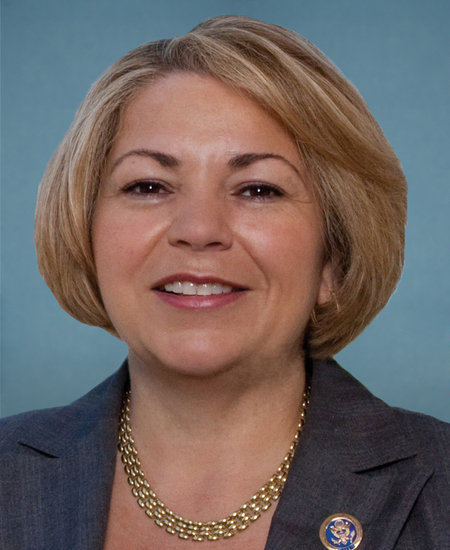
Photo of Linda T. Sánchez
D United States House · District 38 · California On the 2026 ballot

Rep. Linda T. Sánchez

Compare
Total votes
2,837
all sessions
Attendance
98%
44 missed
Near the chamber average
With party
98%
of cast votes
Higher than 89% of chamber peers
Bipartisan score
1%
crosses aisle rarely
Lower than 90% of chamber peers
Sponsored
1,401
bills & resolutions
Near the chamber average
Committees
3
assignments
1,401 bills and resolutions

Sponsored bills

Total
1,401
Primary
74
Co-sponsor
1,327
This page
1,401
matching current filters
Co-sponsor HR 3065
In committee · United States House · Co-sponsor
School Access to Naloxone Act of 2023

Maddy summaryThis bill creates federal grants for school districts to provide emergency opioid overdose treatment (like naloxone) in public and private elementary and secondary schools. It requires schools to have trained staff (such as nurses or designated personnel), maintain accessible supplies of the medication, and confirm their state has liability protections for staff using it during an emergency. The law directly affects K-12 schools by mandating specific emergency protocols for opioid overdoses. It does not change state laws but requires schools to verify existing state protections before receiving funds.

In committee May 5, 2023 1 co-sponsor
Co-sponsor HRES 337
In committee · United States House · Co-sponsor
Original Fair Housing Resolution of 2023

Original Fair Housing Resolution of 2023 This resolution expresses support for the goals and values of the 55th anniversary of the Fair Housing Act and for efforts to strengthen housing protections.

In committee Apr 28, 2023 1 co-sponsor
Co-sponsor HR 2998
In committee · United States House · Co-sponsor
Protecting America’s Workers Act

Maddy summaryThe Protecting America's Workers Act expands workplace safety protections to public employees, including those working for state and local governments who were previously excluded from some OSHA protections. It strengthens whistleblower protections by prohibiting retaliation against employees who report safety concerns, refuse to perform dangerous tasks, or report work-related injuries. The bill requires employers to promptly report work-related deaths and hospitalizations, prohibits policies that discourage injury reporting, and mandates posting of employee safety rights information. It also increases penalties for safety violations and improves access to information for victims and families during workplace investigations. These changes apply to all employers covered by OSHA, with specific implementation timelines for state and local government workplaces.

In committee Apr 28, 2023 1 co-sponsor
Co-sponsor HR 2923
In committee · United States House · Co-sponsor
Living Donor Protection Act of 2023

Maddy summaryThis bill protects living organ donors from insurance discrimination by prohibiting life, disability, and long-term care insurers from denying coverage, raising premiums, or altering policy terms solely because someone donated an organ while alive. It also updates the Family and Medical Leave Act to include recovery from organ donation surgery as a qualifying health condition, allowing donors to take protected leave for this purpose. Additionally, the bill requires the Health and Human Services Secretary to update public educational materials about living donation benefits, risks, and insurance protections within six months of enactment. These changes directly affect living organ donors, insurers, employers, and healthcare systems by ensuring fair access to insurance and workplace leave.

In committee Apr 28, 2023 1 co-sponsor
Co-sponsor HR 2878
In committee · United States House · Co-sponsor
CARE Act of 2023

Maddy summaryHR 2878 (CARE Act of 2023) requires federally funded research facilities (like those receiving NIH grants) to develop and publicly post adoption policies for dogs, cats, and rabbits no longer used in biomedical research. Key provisions mandate facilities to assess each animal’s health for adoption suitability, make reasonable efforts to place them through shelters, adoption organizations, or private arrangements, and publicly track adoption rates and outcomes. The bill directly affects over 240,000 companion animals used annually in U.S. research, ensuring transparency by requiring facilities to publish annual records on adoption numbers and euthanasia. It also provides legal immunity to facilities following these adoption policies, except for gross negligence.

In committee Apr 28, 2023 1 co-sponsor
Co-sponsor HRES 334
In committee · United States House · Co-sponsor
Recognizing the significance of "Community College Month" as a celebration of more than 1,000 institutions throughout the United States supporting access to higher education, workforce training, and more broadly sustaining and advancing the Nation's economic prosperity.

Maddy summaryHRES 334 is a symbolic resolution recognizing "Community College Month" to celebrate over 1,000 community colleges across the United States. It highlights how these institutions support accessible higher education, workforce training, and economic prosperity - serving 10.2 million students annually while charging affordable tuition (averaging $3,860 for in-district students). The resolution does not create new laws or requirements but formally acknowledges community colleges' role in strengthening local communities and the national economy. This acknowledgment applies broadly to all community colleges and their students, without imposing any obligations.

In committee Apr 27, 2023 1 co-sponsor
Co-sponsor HR 2987
In committee · United States House · Co-sponsor
Election Mail Act

Maddy summaryThe Election Mail Act (HR 2987) establishes new requirements for handling mail-in ballots in federal elections to improve reliability and accessibility. It requires the Postal Service to process absentee ballots on the same day received, place postmarks indicating mailing dates on ballot envelopes, and treat election mail as first-class mail with free postage for completed ballots. The bill also mandates states to use intelligent mail barcodes on return envelopes, affix specific tags for ballot visibility, and adopt a uniform 7-day deadline for accepting mailed ballots postmarked on or before election day. These changes apply to federal elections, with most provisions taking effect for the 2024 election cycle. The bill includes additional provisions for the Postal Service to consult with Indian Tribes about voting barriers on tribal lands.

In committee Apr 27, 2023 1 co-sponsor
Co-sponsor HR 2976
In committee · United States House · Co-sponsor
Child Care for Working Families Act

Maddy summaryThe Child Care for Working Families Act establishes a federal entitlement program providing subsidized child care for working families with children under age 6 who are not yet in kindergarten. It creates a sliding fee scale where families at or below 85% of State median income pay no copayment, while higher-income families pay up to 7% of their income based on income thresholds. The bill requires states to develop quality rating systems for child care providers and ensures providers receive sufficient funding to meet quality standards, including wages equivalent to elementary educators. It prioritizes access for underserved populations including children with disabilities, infants and toddlers, children experiencing homelessness, and families in low-income communities. The program is funded with $20 billion for fiscal year 2024 and subsequent years through 2029.

In committee Apr 27, 2023 1 co-sponsor
Co-sponsor HR 2953
In committee · United States House · Co-sponsor
FAIR Act of 2023

Forced Arbitration Injustice Repeal Act of 2023 or the FAIR Act of 2023 This bill prohibits a predispute arbitration agreement from being valid or enforceable if it requires arbitration of an employment, consumer, antitrust, or civil rights dispute.

In committee Apr 27, 2023 1 co-sponsor
Co-sponsor HR 2952
In committee · United States House · Co-sponsor
RAP Act of 2023

Maddy summaryThe RAP Act of 2023 (HR 2952) would prevent prosecutors and plaintiffs from using a defendant’s creative or artistic works - such as poems, songs, art, or films - as evidence in court, unless specific exceptions apply. It requires the government to prove by clear evidence that the work was meant literally (not figuratively), directly relates to the specific facts of the case, is relevant to disputed facts, and has unique value beyond other evidence. If admitted, courts must redact the work to limit its presentation and provide jury instructions about its restricted use. This bill directly affects defendants in both criminal and civil cases who create artistic expression, aiming to protect their creative works from being misused in legal proceedings.

In committee Apr 27, 2023 1 co-sponsor
Showing 761 to 770 of 1,401 bills
Previous 1 … 76 77 78 … 141 Next