

Maddy summaryThis bill increases per diem payments for homeless veterans receiving VA services. It raises the daily payment rate from $115 to $200 for certain housing-related services, including emergency responses. The change directly affects homeless veterans who qualify for these VA-funded housing supports. The key provision adjusts the payment rate in Section 2012(a)(2)(B) of the U.S. Code to provide higher funding for services assisting homeless veterans.
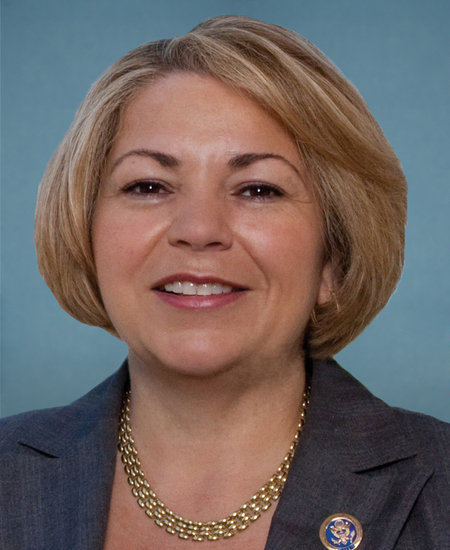
Rep. Linda T. Sánchez
Sponsored bills
Maddy summaryHR 4070, the Disaster Mitigation and Tax Parity Act of 2023, excludes certain payments received from state disaster mitigation programs from taxable income. It directly affects homeowners who get funds from state or state-regulated programs to make property improvements specifically designed to reduce damage from windstorms, earthquakes, or wildfires (like installing fire-resistant roofing or seismic upgrades). The bill adds a new tax exclusion in the Internal Revenue Code, meaning these qualified mitigation payments won't be counted as gross income for tax purposes. This change applies to payments made after December 31, 2020, with options for retroactive tax filings.
Maddy summaryHR 4021, the Fair and Open Skies Act, amends U.S. aviation law to require that the Department of Transportation consider labor standards when reviewing international air transport agreements. Specifically, it adds "preventing the undermining of labor standards" as a mandatory factor in the public interest test for approving such agreements under 49 U.S.C. § 40101. This change directly affects international airlines seeking to operate flights to or from the U.S. and the DOT, which must now evaluate whether proposed agreements could weaken U.S. labor protections. The bill updates existing provisions by replacing outdated language about "agreements with the United States Government" and explicitly including labor standards in the evaluation criteria.
Maddy summaryThe CARE Act of 2023 strengthens protections for child farmworkers by amending the Fair Labor Standards Act. It raises minimum age requirements (restricting 14-15 year olds to family farms outside school hours, and limiting 16-17 year olds to family farm work outside school hours), repeals a waiver allowing children in hand-harvest labor, and increases penalties for violations (up to $60,115 for serious injury or death). The bill requires employers to report work-related injuries or deaths of child farmworkers under 18 and mandates annual reports to Congress on child farmworker safety data. It also prohibits children under 18 from working as pesticide handlers, directly affecting an estimated 100,000+ child farmworkers in the U.S.
Maddy summaryThe GLOBE Act of 2023 requires the U.S. Department of State to document and report on violence and discrimination against LGBTQI people worldwide in annual country reports, with specific requirements to identify countries criminalizing LGBTQI status. It establishes a Special Envoy for LGBTQI Human Rights to coordinate U.S. government efforts internationally and creates targeted sanctions against foreign officials responsible for human rights violations against LGBTQI individuals, including denying visas and imposing financial penalties. The bill also includes provisions to improve U.S. foreign assistance programs to better support LGBTQI communities, reform immigration processes to better protect LGBTQI asylum seekers, and ensure inclusive policies in diplomatic and consular settings. These measures aim to advance LGBTQI rights globally through diplomatic, financial, and policy mechanisms.
Maddy summaryThis bill prohibits children under 18 from having direct contact with tobacco plants or dried tobacco leaves on farms. It amends the Fair Labor Standards Act to explicitly add "tobacco-related agriculture" to the list of occupations where minors cannot work, alongside manufacturing and mining. The law directly affects young workers in tobacco farming by banning their hands-on involvement with crops and processed tobacco. This change updates existing labor protections to specifically cover tobacco farming operations. The policy would require farms to adjust employment practices to exclude minors from these tasks.
Maddy summaryHR 3985 establishes a new Office within the U.S. Department of State to monitor and combat Islamophobia abroad. The bill requires the State Department to appoint a Special Envoy who will coordinate efforts to track Islamophobic incidents globally and mandate specific reporting in three key State Department documents. These reports must detail physical violence against Muslims or Muslim institutions, hate propaganda in media, government responses, religious freedom protections, and anti-bias education efforts in foreign countries. The provisions apply to annual human rights, foreign assistance, and religious freedom reports, requiring detailed descriptions of Islamophobia occurrences and governmental actions. The new reporting requirements become effective 180 days after the bill's enactment.
Maddy summaryThis bill requires federal agencies collecting demographic survey data to begin including questions on sexual orientation, gender identity, and variations in sex characteristics (intersex traits) within 360 days of enactment. Agencies must review existing surveys to identify gaps, develop privacy-protective methods for collecting this data (including anonymization and data destruction protocols), and incorporate it into relevant reports within three years. The law applies to all federal surveys that collect standard demographic data (like race, ethnicity, and age), such as the census or health surveys, but does not compel individuals to disclose their status. It emphasizes maintaining confidentiality, allows limited agency waivers if standards can't be met, and mandates a congressional report on implementation within two years.
Maddy summaryThe Neighborhood Homes Investment Act creates a new tax credit for developers who rehabilitate or build affordable homes in distressed communities. The credit is calculated based on the difference between rehabilitation costs and the sale price, with homes required to be sold at affordable prices to qualified homeowners with incomes up to 140% of the local median family income. The bill targets specific "qualified census tracts" defined by high poverty rates, low homeownership, and below-average home values. Developers must ensure homes are sold to qualified homeowners who use them as primary residences for at least five years, with additional safeguards to prevent program abuse and ensure fair housing practices.
Pets Belong With Families Act This bill prohibits public housing agencies from imposing breed restrictions on pets owned by residents of public housing units. The bill continues to allow public housing agencies to prohibit ownership of dangerous animals in public housing, but prohibits classification as dangerous by breed and requires that any such classification be based on specific behaviors or actions of the animal.