

Maddy summaryHR 4325, the Historically Underserved Veterans Inclusion Act of 2023, expands the Department of Veterans Affairs' Center for Minority Veterans to include "historically underserved" veterans and modifies its advisory committee. The bill broadens the definition of "covered veterans" to include veterans facing barriers based on sexual orientation, gender identity, English language proficiency, citizenship, religion, or other factors identified through a biennial review. Key provisions require the VA Secretary to conduct biennial reviews of benefit disparities and submit reports to Congress, while the expanded advisory committee must advise on improving benefits, health care, homelessness services, and outreach for these veterans. The bill directly affects veterans who experience systemic barriers in accessing VA services, aiming to make VA programs more inclusive through concrete policy adjustments.
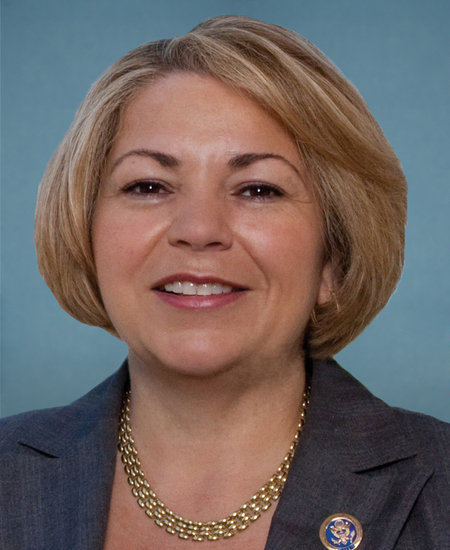
Rep. Linda T. Sánchez
Sponsored bills
Maddy summaryHR 4268, the Reproductive Health Travel Fund Act of 2023, would provide $350 million annually (2024-2028) in federal grants to nonprofit organizations that help individuals cover travel and logistical costs for accessing abortion care across state lines. The bill directly supports people living in states with abortion bans or severe restrictions who must travel for care, including expenses like transportation, lodging, childcare, meals, and lost wages. Grants may not fund abortion procedures themselves but cover related logistical barriers identified in the bill’s findings, such as increased travel times and costs post-Dobbs. Eligible organizations must provide unbiased, medically accurate assistance, with priority given to those serving individuals traveling to access abortion services.
Maddy summaryHR 3519, the Hot Foods Act of 2023, amends the Food and Nutrition Act of 2008 to allow Supplemental Nutrition Assistance Program (SNAP) benefits to be used for hot foods or hot food products ready for immediate consumption at participating retailers. This change directly affects SNAP recipients who purchase such hot foods and retailers that sell them. The key provision removes the previous exclusion of hot foods from SNAP eligibility, while adding a limit that no more than 50% of a retailer's total gross sales from SNAP can come from hot foods. The bill clarifies that hot foods can be purchased for home or immediate consumption, aligning SNAP rules with current retail practices for prepared foods.
Maddy summaryThe SAFE Act of 2023 extends a 2018 law that prohibits slaughtering animals for human consumption to include horses, donkeys, and other equine animals, such as ponies. It amends Section 12515 of the Agriculture Improvement Act of 2018 by updating the language to replace "dog or cat" with "dog, cat, or equine" in both the section title and the main prohibition. This change directly affects the livestock industry and slaughter facilities by banning the processing of equines for food. The bill modifies existing law without adding new enforcement mechanisms, closing a gap in animal protection.
Maddy summaryThis bill, the Senior Hunger Prevention Act of 2023, aims to improve access to nutrition assistance for older adults and people with disabilities through several key changes to the Supplemental Nutrition Assistance Program (SNAP) and related programs. It extends SNAP certification periods to 36 months, establishes a standard medical expense deduction for elderly/disabled participants, and creates streamlined application processes (Elderly Simplified Application Program and Combined Application Program) to reduce administrative burdens for eligible households. The bill also establishes a pilot program to improve enrollment among older adults, kinship families, and people with disabilities, and adds provisions for food delivery services for SNAP participants who are elderly or disabled and unable to shop. Additionally, it increases funding for the Seniors Farmers' Market Nutrition Program and creates infrastructure funding for farmers' markets to improve access to fresh food in underserved communities.
Maddy summaryThis bill would amend House rules to allow members to vote by proxy and remotely attend committee meetings under specific health circumstances. It directly affects House members with a serious medical condition (including pregnancy-related) or those primarily caring for a spouse or dependent with such a condition. To qualify, a member must provide a doctor’s recommendation and a signed letter designating a proxy for voting or enabling remote committee participation. Remote committee attendance would count toward quorum and not be considered an absence, while proxy voting would let the designated member cast the absent member’s vote.
Maddy summaryHR 4285, titled the Protect Vulnerable Immigrant Youth Act, would amend the Immigration and Nationality Act to remove numerical caps on certain employment-based visas. Specifically, it changes two sections to add a new visa category (J) to the list of categories exempt from annual numerical limits, allowing more employment-based visas to be issued without current restrictions. This change would directly affect employers and foreign workers seeking employment-based visas under the newly designated category (J), though the bill does not specify what the (J) category entails. The bill focuses solely on adjusting visa allocation rules rather than addressing youth protection or other aspects implied by its title.
Maddy summaryThe LGBTQI+ and Women's History Education Act of 2023 would provide $2 million annually for five years to develop educational resources about women's and LGBTQI+ history for K-12 classrooms. The bill directs the Smithsonian's National Museum of American History to create inclusive teaching materials that address historical gaps where women and LGBTQI+ individuals, particularly those of color and with disabilities, have been underrepresented. These resources would include digital content, print materials, and professional development for teachers to help implement more comprehensive curricula. The bill aims to address findings showing only 13% of named historical figures in textbooks are women and that LGBTQI+ history is often omitted or marginalized in school curricula. The program would require annual reports to Congress on how funds are used, with the program set to sunset in 2028.
Maddy summaryHJRES 76 proposes renaming the Robert E. Lee Memorial in Arlington National Cemetery to the "Arlington House National Historic Site." This procedural bill would replace all official references to the memorial with the new name and repeal two prior resolutions (1955 and 1972) that established the memorial. The change affects how the site is identified in federal laws, documents, and records but does not alter its management or historical significance. The bill focuses solely on the official designation, not on policy changes or historical interpretation.
Maddy summaryThe Ending Homelessness Act of 2023 would expand housing assistance for low-income families by creating a new entitlement program for housing choice vouchers starting in 2028, with 500,000 new vouchers in 2024 and 1,000,000 annually through 2027. It would provide $1 billion annually for emergency relief grants to address unmet needs of homeless populations, prioritizing jurisdictions with the highest need and local policies that decriminalize homelessness. The bill prohibits housing discrimination based on source of income, including rental vouchers and Social Security benefits, and repeals current ineligibility criteria for housing programs. It also permanently authorizes funding for McKinney-Vento Homeless Assistance Act grants and expands eligibility for private nonprofit and faith-based organizations to receive housing assistance. The bill directly affects extremely low-income families, homeless individuals, and housing providers by increasing access to affordable housing and reducing barriers to housing stability.