

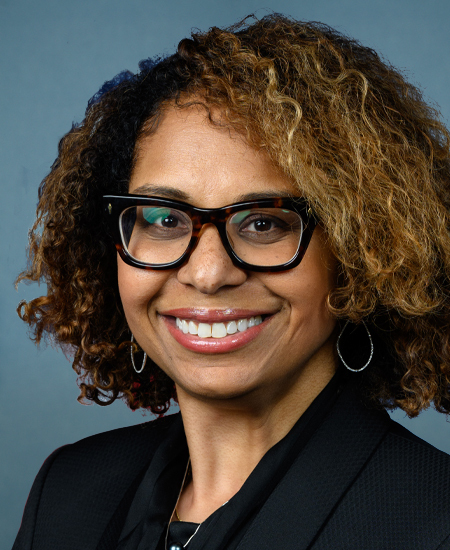
Photo of Sydney Kamlager-Dove
D United States House · District 37 · California On the 2026 ballot

Rep. Sydney Kamlager-Dove

Compare
Total votes
1,879
all sessions
Attendance
96%
66 missed
Near the chamber average
With party
96%
of cast votes
Near the chamber average
Bipartisan score
2%
crosses aisle rarely
Near the chamber average
Sponsored
952
bills & resolutions
Higher than 75% of chamber peers
Committees
6
assignments
952 bills and resolutions

Sponsored bills

Total
952
Primary
73
Co-sponsor
879
This page
952
matching current filters
Co-sponsor HR 9051
In committee · United States House · Co-sponsor
Compassionate Assault Response and Empathy Act of 2024

Maddy summaryHR 9051, the Compassionate Assault Response and Empathy Act of 2024, requires state, tribal, and local law enforcement agencies to implement trauma-informed training for officers handling sexual assault cases. The bill provides federal grants to fund this training, mandating at least eight hours for new officers during academy training and four hours annually for existing officers. Training must focus on preventing retraumatization, supporting victims, and include diverse trainers with inclusive representation. Agencies must report annually to Congress on grant usage and program effectiveness, with the Department of Health and Human Services maintaining an online directory of qualified trainers.

In committee Jul 15, 2024 1 co-sponsor
Co-sponsor HR 8926
In committee · United States House · Co-sponsor
DFC Modernization and Reauthorization Act of 2024

Maddy summaryThe DFC Modernization and Reauthorization Act of 2024 updates the United States International Development Finance Corporation (DFC) framework by redefining country classifications (including "less developed country" and "wealthy country"), prioritizing support for less developed countries, and increasing the DFC's maximum contingent liability from $60 billion to $120 billion. The bill allows the DFC to accept subordinate creditor status (meaning it would be a lower priority for repayment than other creditors), reduces the board size from 5 to 3 members, and creates a new Vice President for Foreign Policy and National Security position. It also repeals the European Energy Security and Diversification Act of 2019. These changes aim to modernize the DFC's operations to better align development financing with U.S. foreign policy goals. The bill directly affects how the DFC operates and where it provides financing for development projects.

In committee Jul 11, 2024 1 co-sponsor
Co-sponsor HR 3042
In committee · United States House · Co-sponsor
Millennium Challenge Corporation Candidate Country Reform Act

Maddy summaryHR 3042 updates the eligibility rules for countries seeking to become "candidate countries" under the Millennium Challenge Corporation (MCC) program. It revises the income threshold to align with World Bank graduation standards and clarifies that U.S. waivers or suspensions of foreign aid restrictions no longer disqualify countries. The bill specifies that the MCC Board will make the final determination on candidate country status. This directly affects countries aiming to qualify for U.S. economic aid through the MCC program.

In committee Jul 11, 2024 1 co-sponsor
Co-sponsor HRES 1355
In committee · United States House · Co-sponsor
Expressing support for the designation of July 10th as Journeyman Lineworkers Recognition Day.

Maddy summaryHRES 1355 is a non-binding resolution supporting the designation of July 10 as Journeyman Lineworkers Recognition Day. It honors lineworkers who maintain electrical infrastructure under hazardous conditions, including during disasters, and commemorates Henry Miller, the first president of the International Brotherhood of Electrical Workers, who died on July 10, 1896, while troubleshooting an electrical outage. The resolution encourages public recognition of these workers' contributions but does not create new laws or policies.

In committee Jul 10, 2024 1 co-sponsor
Co-sponsor HRES 1349
In committee · United States House · Co-sponsor
Recognizing the continued success of the Food for Peace Act.

Maddy summaryHRES 1349 is a symbolic House resolution recognizing the success of the Food for Peace Act, which provides U.S. humanitarian food aid to global populations facing hunger. It does not create new policy or funding but formally acknowledges the program’s impact - such as reaching 53 million people with emergency aid in 2022 - and highlights global hunger statistics (e.g., 783 million people hungry in 2022). The resolution urges continued U.S. funding prioritization for the program but has no binding effect or direct policy changes. It directly affects no new groups, as it solely expresses congressional support for an existing aid program.

In committee Jul 10, 2024 1 co-sponsor
Co-sponsor HCONRES 118
In committee · United States House · Co-sponsor
Recognizing the significance of equal pay and the disparity in wages paid to men and to Black women.

Maddy summaryHCONRES 118 is a symbolic congressional resolution recognizing the wage disparity faced by Black women in the U.S. It specifically highlights that Black women earn 69 cents for every dollar earned by White, non-Hispanic men, as noted in Census Bureau data. The resolution marks July 9, 2024, as Black Women’s Equal Pay Day to symbolize how long into 2024 Black women must work to earn what White men earned in 2023. It does not create new laws or policies but formally acknowledges this disparity and reaffirms congressional support for equal pay for equal work.

In committee Jul 9, 2024 1 co-sponsor
Primary HR 8943
In committee · United States House · Lead sponsor
Equitable Arts Education Enhancement Act

Maddy summaryHR 8943, the Equitable Arts Education Enhancement Act, would provide federal grants to minority-serving institutions (MSIs) to expand arts education access for underrepresented students. The bill directs grant funds toward specific uses, including student financial aid, outreach programs, exhibitions of BIPOC artists' work, mentorship initiatives, and preserving minority art collections. It requires MSIs to prioritize funding that directly benefits minority students in arts education programs. The legislation aims to address documented diversity gaps in arts leadership and funding shortfalls for arts departments, as highlighted in congressional findings.

In committee Jul 8, 2024 0 co-sponsors
Co-sponsor HR 8925
In committee · United States House · Co-sponsor
Campus Housing Affordability Act of 2024

Maddy summaryThis bill removes a prohibition that previously blocked federal housing assistance for college students. It creates a new waiver allowing housing authorities to provide tenant-based housing assistance to students in foster care or court-emancipated minors living in on-campus housing at eligible colleges. The assistance won't count as income for financial aid, work-study programs, or child support calculations, directly supporting vulnerable students facing housing costs.

In committee Jul 2, 2024 1 co-sponsor
Co-sponsor HRES 1332
In committee · United States House · Co-sponsor
Original LGBTQIA+ Pride Month Resolution of 2024

Maddy summaryHRES 1332 is a symbolic resolution recognizing June as LGBTQIA+ Pride Month. It encourages the celebration of Pride Month to honor the historical struggles and achievements of LGBTQIA+ people in the United States, while acknowledging the ongoing challenges they face. This resolution does not create new laws or policies, but serves as a formal recognition of LGBTQIA+ rights as human rights and highlights their integral role in American history. The resolution was introduced by multiple members of Congress and passed by the House of Representatives.

In committee Jun 28, 2024 1 co-sponsor
Co-sponsor HR 8875
In committee · United States House · Co-sponsor
Texture Positive Act of 2024

Maddy summaryThe Texture Positive Act of 2024 provides federal grants to states to fund subgrants for eligible entities (such as minority- or women-owned businesses with 5+ years of experience) to integrate textured hair training into cosmetology school curricula. It requires these entities to offer students hands-on education in shampooing, deep conditioning, braiding, twisting, and styling naturally coiled, curly, or wavy hair, including developing training materials and hiring specialized instructors. States must report annually on participation numbers, instructor training, and cosmetology schools served. The program runs for 4 years for state grants (renewable) and 6 months for subgrants (renewable based on performance reports).

In committee Jun 27, 2024 1 co-sponsor
Showing 541 to 550 of 952 bills
Previous 1 … 54 55 56 … 96 Next