

Maddy summaryHR 549, the Metastatic Breast Cancer Access to Care Act, removes waiting periods for disability and Medicare coverage for people diagnosed with metastatic breast cancer. Specifically, it amends Social Security Act sections to allow immediate eligibility for disability insurance benefits (eliminating the standard waiting period) and immediate Medicare coverage (waiving the 24-month waiting period) for these patients. The bill directly affects individuals with metastatic breast cancer who would otherwise face delays in accessing critical benefits. These changes apply to applications filed or benefits beginning after the bill's enactment date. The law makes no other policy changes beyond these specific eligibility adjustments.
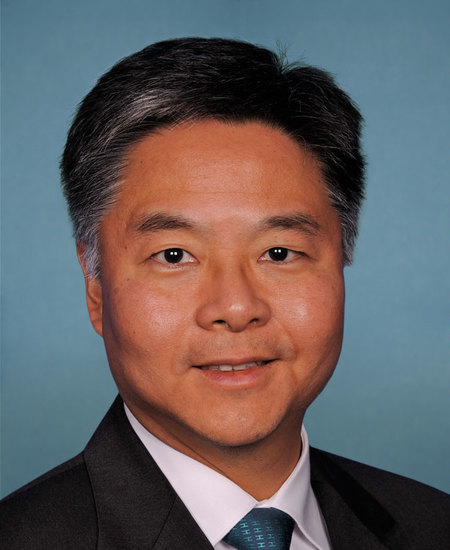
Rep. Ted Lieu
Sponsored bills
Maddy summaryThe EACH Act of 2023 would require federal health programs - including Medicaid, Medicare, the Indian Health Service, and TRICARE - to cover abortion services without restrictions. It repeals a provision in the Affordable Care Act that allowed states to limit abortion coverage in health insurance plans sold through state marketplaces. The bill also prohibits the federal government from restricting abortion coverage in private health insurance plans. This would directly affect millions of people, particularly low-income individuals and people of color, who are disproportionately enrolled in Medicaid and currently face barriers to abortion care due to coverage restrictions.
Maddy summaryHR 244, the Medicare Hearing Aid Coverage Act of 2023, removes Medicare's exclusion of hearing aids and related examinations from coverage under the Social Security Act. This change will directly affect Medicare beneficiaries with hearing loss, allowing them to receive coverage for hearing aids and necessary exams starting January 1, 2024. The bill amends Section 1862(a)(7) of the Social Security Act to eliminate the specific exclusion. Additionally, it requires the Government Accountability Office (GAO) to study existing hearing aid programs and report to Congress within 18 months of the coverage change, including recommendations for improving access. This is a concrete policy change that expands Medicare benefits for a specific healthcare need.
Maddy summaryHR 33 would expand Medicare to cover dental, vision, and hearing services for beneficiaries, which are currently not covered under Medicare. The bill provides 100% coverage for preventive dental services in 2024, with basic dental services gradually increasing to 80% coverage by 2027. Vision coverage would include routine eye exams and corrective lenses at 80% coverage, while hearing services would cover hearing exams and hearing aids at 80% coverage. The bill includes specific limitations, such as two dental cleanings per year and one pair of glasses every 24 months, with the Secretary of Health and Human Services having authority to apply additional limitations or modify coverage based on medical recommendations. The changes would take effect on January 1, 2024.
Maddy summaryThis bill bans the use of hydrofluoric acid (HF) at U.S. petroleum refineries to prevent mass casualty incidents. It prohibits new refineries from using HF starting immediately and requires existing refineries (currently using HF at ~40 facilities) to switch to safer alternatives within 5 years. The law includes a $37,500 civil penalty for violations and explicitly blocks the EPA from granting waivers. This directly affects refineries using HF and protects communities within 25 miles of these facilities, where over 14 million people live near HF-using refineries.
Maddy summaryThe ProTECT Act of 2024 bans the hunting, taking, or importing of hunting trophies from species listed as "threatened" under the Endangered Species Act. It directly affects hunters, importers, and businesses involved in trading trophies of threatened species, which currently face fewer protections than endangered species. The bill extends existing prohibitions - previously limited to endangered species - to explicitly cover threatened species, including banning permits for such activities and defining "trophy" to include processed animal parts. This creates a uniform ban on trophy hunting and trade for all listed threatened species, closing a gap in current law.
Maddy summaryThis bill provides tax relief for individuals affected by specific disasters by excluding certain compensation payments from taxable income. It covers wildfire relief payments for losses incurred in federally declared wildfires after 2014 (including expenses like repairs, lost wages, and emotional distress), and payments related to the February 2023 East Palestine, Ohio, train derailment (covering property damage, closing costs, and inconvenience). Payments already covered by insurance or other sources are excluded from this tax benefit. The relief applies to payments received during 2020-2025 for wildfires and from February 2023 onward for the East Palestine incident, with extended deadlines for related tax claims.
Maddy summaryHR 7438 directs the U.S. Treasury to mint commemorative coins for the 2026 FIFA World Cup, including 100,000 $5 gold coins, 500,000 $1 silver coins, and 750,000 half-dollar coins. The coins will be sold to the public at face value plus surcharges ($35, $10, and $5 per coin, respectively), with all surcharge revenue paid to FWC2026 US, Inc. for U.S. soccer programs. These funds must support soccer initiatives, particularly in underserved communities and youth development, as specified in the bill. The coins are legal tender but will only be issued during 2026, with no net cost to the U.S. government.
Maddy summaryThis bill extends funding for the existing Public Health Service Act program focused on raising public awareness about Alzheimer's disease and related dementias. It authorizes $33 million annually for fiscal years 2025 through 2029 to support public health education and outreach initiatives. The program directly affects public health organizations and community groups that develop and distribute educational materials about Alzheimer's prevention, diagnosis, and care. The key provision is the multi-year funding extension, ensuring continued support for nationwide awareness efforts without altering the program's core structure.
Maddy summaryThe Trafficking Survivors Relief Act of 2024 enables victims of human trafficking to seek to vacate certain convictions or expunge arrests related to offenses they committed as a direct result of being trafficked. It establishes a court process where victims can file motions showing their criminal activity was trafficking-related, with courts required to find by preponderance of evidence that the offense was directly tied to trafficking. If granted, the court must expunge all related records, return any fines paid, and treat the individual as if the offense never occurred. The bill also adds a "human trafficking defense" that creates a presumption of duress for trafficking victims in prosecutions. It requires reports on implementation and training for U.S. attorneys on trafficking indicators.