

Maddy summaryHR 965, the Housing Unhoused Disabled Veterans Act, amends the U.S. Housing Act of 1937 to exclude certain disability benefits from income calculations for housing assistance. Specifically, it removes benefits received under Chapters 11 or 15 of Title 38 (veterans' disability compensation) from income counts for the Section 8 supported housing program and eligibility for other housing assistance. This change directly helps disabled veterans receiving these benefits by making them more likely to qualify for HUD-administered housing programs. The bill applies to veterans renting residential units on Department property under HUD housing assistance programs established after the bill's enactment.
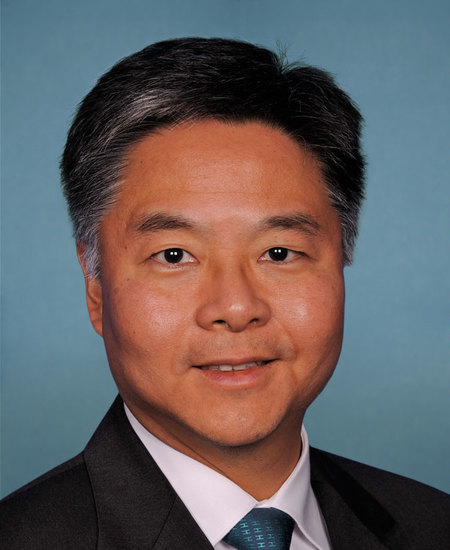
Rep. Ted Lieu
Sponsored bills
Maddy summaryThis proposed bill (HR 220) would expand VA healthcare benefits to cover infertility treatments like in vitro fertilization (IVF) and fertility preservation services for veterans with infertility or at risk of infertility (e.g., due to medical treatments), and their partners. It limits VA coverage to three successful IVF cycles or ten attempts, requires consent from veterans, partners, and donors, and allows use of donated eggs or embryos. Partners would receive travel reimbursement as if they were veterans, and temporary rules during implementation will immediately allow partners to access care without marriage requirements. The bill clarifies VA isn’t required to cover maternity care beyond existing rules and defers full implementation until VA issues final regulations within one year of enactment.
Maddy summaryThis bill requires the Comptroller General to study and report on menopause care provided by the Department of Veterans Affairs (VA) to women veterans experiencing perimenopause, menopause, or genitourinary syndrome of menopause. The study will examine current VA protocols for diagnosis, treatment, provider training, veteran access to care, outreach efforts, and quality of care, including veteran feedback. The VA Secretary must then develop a strategic plan within six months of the report's release to improve menopause care access and quality for women veterans under VA healthcare programs.
Maddy summaryHR 1164, the Fair Disaster Assistance Act of 2025, prevents FEMA from sending applicants a notice denying disaster assistance before an insurance claim for their damaged property is finalized. It requires the FEMA Administrator to issue regulations ensuring that applicants with insurance on their damaged home or facility do not receive such denial notices until after their insurance claim is approved or denied. This applies directly to homeowners and business owners who have filed for disaster aid under the Robert T. Stafford Act and hold insurance for their property. The bill changes the timing of notification procedures but does not alter eligibility or funding for disaster assistance.
Maddy summaryThe Space Infrastructure Act requires the Secretary of Homeland Security to designate space systems, services, and technology as a critical infrastructure sector within 30 days of enactment. It mandates that the Secretary issue detailed guidance within 180 days, defining the scope (including satellites, launch facilities, and related infrastructure), appointing a Sector-Specific Agency, and establishing coordinating committees. This procedural bill affects federal agencies managing critical infrastructure and the space industry by formally integrating space systems into existing national security frameworks under the Homeland Security Act.
Maddy summaryThe SAFE Act requires Medicare to cover falls risk assessments and fall prevention services for seniors aged 65+ who have fallen in the previous year. These services, provided by physical or occupational therapists, will be included in Medicare's annual wellness visits and initial preventive physical exams starting January 1, 2026. The bill also mandates annual reports to Congress beginning in 2027 on falls among seniors aged 65+ that required treatment for fall-related injuries. This policy directly affects Medicare beneficiaries with a documented history of falls by adding targeted preventive care to their covered benefits.
Maddy summaryThe Polluters Pay Climate Fund Act of 2025 imposes a tax on major fossil fuel companies for historical carbon dioxide emissions exceeding 1 billion metric tons during 2000-2023, with payments due by September 2026. The tax revenue will fund a new Climate Fund that must be used for climate resilience, adaptation, and disaster response programs, with 40% specifically directed to environmental justice communities. The bill requires at least $15 billion annually for FEMA climate programs and $6 billion for Clean Air Act climate resilience grants. It explicitly states the fund does not affect existing legal claims against polluters for climate-related harms.
Maddy summaryThis bill creates a new grant program to fund high-quality workforce development programs at community colleges. It directs the Secretary of Labor to award competitive grants to community colleges that partner with employers in high-skill, high-wage, or in-demand industries to develop programs leading to nationally or regionally portable postsecondary credentials. The grants require evidence-based program design, employer engagement, and tracking of outcomes like program completion rates and job advancement for participants. Funded at $65 million annually from 2026-2031, the program prioritizes serving individuals with employment barriers, incumbent workers, and new workforce entrants through community college partnerships.
Maddy summaryThis bill expands 529 college savings account flexibility by allowing funds to cover costs for industry-recognized postsecondary credentials, not just traditional degrees. It defines "qualified expenses" to include tuition/fees for recognized credential programs (like certifications or apprenticeships), required testing fees, and continuing education needed to maintain credentials. To qualify, programs must meet specific criteria, such as appearing on state lists under the Workforce Innovation and Opportunity Act or being listed in VA or Defense directories. The change applies to 529 distributions made after the law's enactment, giving families more options to use these accounts for job-focused training.
Maddy summaryThe Department of Peacebuilding Act of 2025 would establish a new federal department within the executive branch dedicated to promoting peacebuilding, nonviolent conflict resolution, and violence prevention both domestically and internationally. The department would include seven specialized offices focused on peace education, domestic peacebuilding, international peacebuilding, technology for peace, arms control, research, and human rights. It would develop new policies to address violence in communities, create a Peace Academy for training peacebuilders, and establish grant programs for schools and community organizations to implement peacebuilding initiatives. The bill requires the department to consult with other federal agencies on matters related to conflict prevention and mandates that at least 85% of funds would support domestic peace programs. The department would also research and report on violence prevention metrics and develop peace education curricula for schools.