

Maddy summaryThis bill (HJRES 63) would rename the Robert E. Lee Memorial, a National Park Service site in Arlington, Virginia, to "Arlington House National Historic Site." It directly affects the National Park Service, which manages the site, and all federal government documents, maps, and records referencing the location. The key provision updates all official references to the site to the new name and repeals two prior resolutions that established the memorial. As a procedural renaming bill, it does not create new policies or funding but changes the site's official designation.
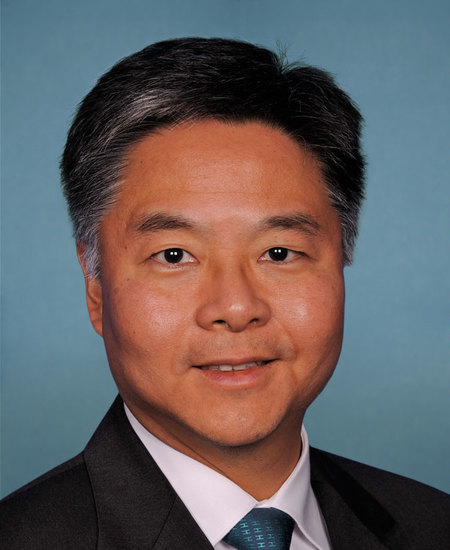
Rep. Ted Lieu
Sponsored bills
Maddy summaryThis resolution urges the European Union to formally designate Iran's Islamic Revolutionary Guard Corps (IRGC) as a terrorist organization under the EU's Common Position 931 framework, which allows for such designations. It cites the U.S. (2019) and Canada (2024) as precedents for designating the IRGC, noting the EU has only sanctioned individual IRGC members, not the entity itself. The resolution emphasizes the IRGC's documented ties to terrorism, human rights abuses in Iran, support for proxy groups like Hamas and Hezbollah, and its role in supplying drones to Russia for its war in Ukraine. The House requests the EU expedite this designation and encourages U.S. diplomatic efforts to prioritize it.
Maddy summaryHR 1667, the Acupuncture for Our Seniors Act of 2025, would expand Medicare coverage to include acupuncture services provided by qualified practitioners. It adds "qualified acupuncturist services" to Medicare’s coverage under Section 1861 of the Social Security Act, defining a qualified acupuncturist as a state-licensed practitioner or a physician legally authorized to perform acupuncture. The bill establishes payment rules by including these services in the physician fee schedule and adjusting hospital billing procedures to allow separate billing for acupuncture in inpatient settings. This change would directly affect Medicare beneficiaries receiving acupuncture, as well as acupuncturists and healthcare providers who would now bill Medicare for these services. The provisions would take effect 270 days after the bill’s enactment.
Maddy summaryThe MEME Act prohibits federal officials - including the president, vice president, members of Congress, and their immediate family - from issuing, sponsoring, or promoting financial assets (such as cryptocurrencies, meme coins, or securities) for personal financial gain. It applies during their term of service and for 180 days before/after, targeting misuse of public office for private profit. Violations carry civil penalties up to $250,000, require disgorgement of profits, and allow private lawsuits for harm caused. The bill specifically defines "covered assets" to include digital assets like meme coins, aiming to prevent conflicts of interest and corruption through financial exploitation.
Maddy summaryHR 1657, the Humane Cosmetics Act of 2025, prohibits cosmetic companies from conducting or contracting animal testing for products sold in the U.S. beginning one year after the law takes effect. It also bans the sale or transport of cosmetics developed using such testing after that date, with limited exemptions (e.g., for foreign regulatory requirements or when no non-animal safety alternatives exist). The bill directly affects cosmetic manufacturers, retailers, and distributors by requiring them to shift to non-animal testing methods. The Food and Drug Administration (FDA) will enforce the law, including reviewing records and imposing civil penalties for violations.
Maddy summaryThe PAST Act of 2025 amends the Horse Protection Act to ban harmful practices known as "soring," which deliberately cause pain to horses to exaggerate their gait for shows. It specifically prohibits devices like action devices (e.g., boots causing friction) and weighted shoes on Tennessee Walking Horses, Racking Horses, and Spotted Saddle Horses at events. The bill increases penalties, including escalating disqualifications for repeat offenses (180 days → 1 year → 3 years) and raises fines for violations to $5,000 per offense. It also requires stricter licensing for inspectors and mandates public posting of violation records to help event organizers enforce rules.
Maddy summaryThe American Dream and Promise Act of 2025 would create pathways to permanent residency for certain immigrant youth who entered the U.S. as children (Dream Act component) and for individuals from countries with Temporary Protected Status or Deferred Enforced Departure (American Promise Act component). To qualify, applicants must meet continuous physical presence requirements (since January 1, 2021 for Dream Act applicants, and for 3+ years for American Promise applicants), pass background checks, and satisfy educational or employment criteria. Conditional permanent resident status would be granted initially, with the option to convert to full permanent residency after meeting additional requirements like earning a degree, serving in the military for two years, or demonstrating three years of earned income. The bill includes fee exemptions for low-income applicants, establishes a grant program to assist applicants with legal help, and creates specific procedures for background checks and appeals.
Maddy summaryThis bill awards a Congressional Gold Medal to the 761st Tank Battalion (known as the "Black Panthers"), the first predominantly Black armored unit in World War II's European Theater. It recognizes their combat service from 1944-1946, including key roles in the Battle of the Bulge and breaking the Siegfried Line, despite facing racial prejudice during and after the war. The medal will be displayed at the National Museum of African American History and Culture, with bronze duplicates available for sale to cover costs. The bill commemorates the battalion's 130,000 enemy casualties inflicted, 50% casualty rate, and their 1978 Presidential Unit Citation. It does not create new laws or affect current policies.
Maddy summaryHR 1637, the Protect Veteran Jobs Act, allows veterans who were involuntarily dismissed without cause from federal civil service positions between January 20, 2025, and the bill’s enactment date to seek reinstatement to their former role or a qualified position. It directly affects eligible veterans dismissed during this period and requires federal agencies to report quarterly on veteran removals, including the number and reasons for each dismissal. Agencies must submit these reports to specified congressional committees until January 20, 2029, when the reporting requirement ends. The bill aims to restore employment opportunities for affected veterans while increasing transparency around federal hiring and dismissal practices.
Maddy summaryHR 1591, the Security Clearance Review Act, requires the FBI Director to approve security clearances and access to classified information for political appointees and special government employees working in the Executive Office of the President. It prohibits these individuals from holding such clearances or accessing classified information without the FBI Director’s specific authorization. If the FBI denies or revokes clearance, the Director must immediately notify the President and Congress; if the President overrides this decision, they must provide written justification to Congress within 30 days. The bill directly affects high-level political appointees and special government employees in the White House and its immediate offices, altering the clearance process for this specific group.