

Maddy summaryThis bill makes technical corrections to the Camp Lejeune Justice Act of 2022 to streamline claims for individuals harmed by water contamination at Camp Lejeune. It clarifies the evidence required (30+ days at the base plus a link between contaminants and health harm), specifies that cases must be handled in North Carolina courts (with limited transfer options), and sets attorney fee caps (20% before suit, 25% after). These changes directly affect veterans and civilians who lived at Camp Lejeune and filed claims under the 2022 law. The bill does not create new eligibility but aims to improve the legal process for existing cases.
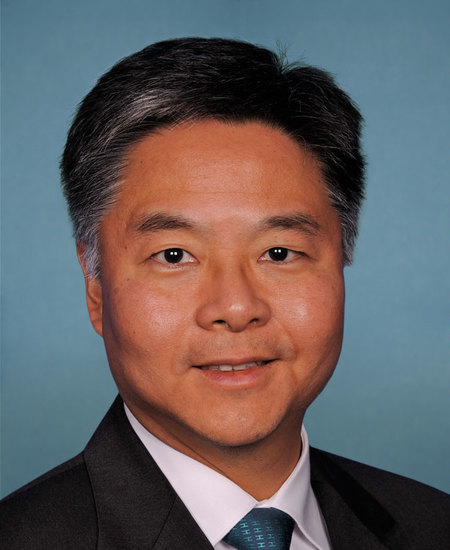
Rep. Ted Lieu
Sponsored bills
Maddy summaryThe Women's Health Protection Act of 2025 would protect access to abortion services across the United States by prohibiting states from imposing restrictions that are more burdensome than those on comparable medical procedures. The bill directly affects people seeking abortion care and health care providers by banning restrictions such as mandatory in-person visits, requirements for specific tests, limitations on telemedicine, and rules based on a patient's reason for seeking abortion. It prohibits state laws that single out abortion for unnecessary restrictions while allowing post-viability abortions when necessary to protect a patient's life or health. The bill preempts conflicting state laws and provides enforcement mechanisms through private lawsuits and actions by the Attorney General.
Maddy summaryHR 4108, the Refuge From Cruel Trapping Act, bans the possession or use of body-gripping traps (traps that kill or severely injure wildlife) in National Wildlife Refuges. It directly affects visitors, hunters, and trappers using such traps within refuge boundaries, with limited exceptions for federal agencies managing invasive species or endangered wildlife, dismantling traps, Alaska-specific use, and tribal subsistence hunting. The bill includes penalties of up to $500 per trap, potential jail time, and forfeiture of traps or captured wildlife for violations. It requires the Secretary of the Interior to issue implementing regulations within 120 days but takes effect 120 days after enactment.
Maddy summaryHR 4104 would expand access to Medicaid, CHIP, and Affordable Care Act (ACA) health coverage for immigrants lawfully present in the U.S., including those with deferred action or pending immigration applications. It removes state-level barriers to Medicaid/CHIP eligibility for lawfully present individuals, treats Federally authorized presence as "lawfully present" for ACA subsidies, and allows states to choose to cover undocumented individuals through Medicaid or CHIP. The bill also extends these changes to Medicare Part A and Part B, ensuring lawfully present immigrants qualify for coverage and subsidies under existing programs. These provisions apply to all federally funded health programs and take effect in 2026 for most ACA-related changes.
Maddy summaryThis bill creates federal funding for community-based violence intervention programs in high-violence areas, targeting communities with 35+ homicides annually or 20+ homicides with rates double the national average. It establishes grants for community organizations to implement trauma-informed violence interruption strategies, hospital-based programs for injured patients, and job training for "opportunity youth" (16-25 year olds not in school or work). The legislation authorizes $300 million in 2026, increasing to $700 million annually through 2033, with requirements for evidence-based approaches that reduce violence without contributing to mass incarceration. It creates a National Community Violence Response Center to coordinate data collection, research, and best practices for these programs. The focus is on prevention through economic opportunity, trauma care, and community-driven interventions rather than traditional law enforcement approaches.
Maddy summaryHR 910, the Taiwan Non-Discrimination Act of 2025, directs the U.S. Governor at the International Monetary Fund (IMF) to actively support Taiwan's membership application and participation. The bill requires the U.S. to use its IMF voting influence to back Taiwan's admission, its economic policy consultations, employment opportunities for Taiwanese staff, and technical assistance - without restricting Taiwan's participation due to its non-state status. It mandates annual reports on U.S. efforts to advance Taiwan's IMF involvement and expires if Taiwan gains membership or after 10 years. The bill does not alter IMF membership rules but directs U.S. policy to align with historical U.S. support for Taiwan's meaningful engagement in international financial institutions.
Maddy summaryHRES 533 is a non-binding House resolution calling on the President to lift the indefinite suspension of U.S. refugee admissions, which has left over 100,000 refugees stranded in limbo since January 2025. It specifically references Executive Order 14163 (2025) that halted refugee arrivals, citing the plight of refugees conditionally approved for resettlement, including Afghans, Rohingya, and Sudanese. The resolution reaffirms U.S. commitments under the Refugee Act of 1980 and international obligations, urging restoration of the U.S. Refugee Admissions Program to protect vulnerable refugees. It also calls for increased international cooperation, support for frontline host countries, and meeting global refugee protection pledges. The resolution does not create new law but expresses congressional intent to address the refugee crisis.
Maddy summaryHR 4083, the Marshall “Major” Taylor Congressional Gold Medal Act, authorizes the posthumous presentation of a Congressional Gold Medal to honor cyclist Marshall Walter "Major" Taylor (1878-1932), recognizing his pioneering achievements as a Black athlete who broke racial barriers in professional cycling during the late 19th and early 20th centuries. The bill directs the Secretary of the Treasury to strike the medal with his name and image, to be presented to Taylor’s great-granddaughter, Karen Donovan. It also permits the sale of bronze duplicates to cover costs, classifying all medals as national commemorative items under U.S. law. This is a ceremonial bill with no policy changes, solely focused on commemorating Taylor’s legacy.
Maddy summaryHR 4074, the Optimizing Postpartum Outcomes Act of 2025, requires the Health and Human Services Secretary to issue guidance within one year on improving Medicaid and CHIP coverage for pelvic health services during pregnancy and the postpartum period (defined as up to 6 months after birth or during lactation). The bill directs the GAO to study coverage gaps for these services and mandates a new CDC-led education campaign to train healthcare providers and inform postpartum women about pelvic floor exams and physical therapy. Key provisions include standardizing terminology for pelvic health conditions, sharing state best practices for payment models, and authorizing $2 million annually for the education program through 2030. This bill directly affects postpartum women covered by Medicaid or CHIP by aiming to increase access to evidence-based pelvic health care.
Maddy summaryThe Insurrection Act of 2025 would clarify and limit when the President can deploy military forces domestically to address insurrections, rebellions, or widespread violence. It requires state and local authorities to be unable to handle the situation, with specific circumstances including obstruction of voting rights or Federal law, and mandates the state governor's request for assistance. The bill requires the President to consult Congress, issue a proclamation ordering lawbreakers to disperse, and submit a detailed report before deployment, with military action limited to 7 days unless Congress passes a joint resolution approving it for up to 14 days. The bill explicitly prohibits using National Guard members on training duty for these purposes and provides for judicial review of deployments.