

Maddy summaryThe Cell-Site Simulator Warrant Act of 2025 requires law enforcement agencies to obtain warrants before using cell-site simulators (devices that mimic cell towers to track or intercept phone communications), with strict requirements for demonstrating necessity and minimizing disruption to communications. The bill prohibits most uses of these devices without a warrant, including the use of evidence obtained through unauthorized surveillance, and establishes specific procedures for emergency use with subsequent warrant applications within 48 hours. It requires transparency about potential disruption to emergency services (including 911 calls) and mandates regular reporting on usage to Congress. The law applies to federal and state law enforcement, with specific exceptions for intelligence gathering, research, and correctional facility contraband interdiction systems.
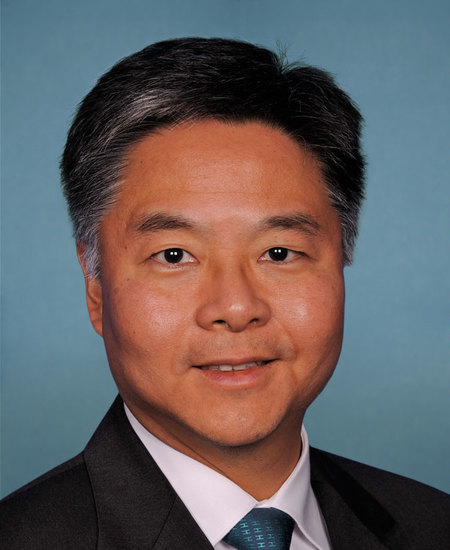
Rep. Ted Lieu
Sponsored bills
Maddy summaryHR 4796, the Restoring Essential Healthcare Act, repeals a provision that blocked Medicaid payments to certain healthcare providers during a specific period. It directly affects Medicaid beneficiaries who received care from these providers between the enactment of the prior law (Public Law 119-21) and this bill's enactment. The key provision retroactively restores Medicaid payments for services already provided during that blocked period, treating the payment restriction as if it never existed. This change ensures eligible individuals and providers receive reimbursement for covered care delivered during the prohibited timeframe.
Maddy summaryHR 4763, the PTO Act, requires most employers to provide employees with at least 1 hour of paid annual leave for every 25 hours worked, with a maximum of 80 hours per year. It applies to private-sector workers and certain government employees, protecting their right to use paid leave for any purpose without disclosing the reason. The bill mandates employers to maintain health benefits during leave, allow carryover of up to 40 hours of unused leave, and pay out unused leave upon separation. It also prohibits employers from discriminating against employees for using paid leave or requiring them to find replacements while on leave. The law includes enforcement mechanisms, allowing employees to file complaints with the Department of Labor or pursue private lawsuits.
Maddy summaryThis bill requires a 3-business-day waiting period before someone can receive a handgun from another person who isn't a licensed gun seller. It applies to most private handgun transfers but includes exceptions for law enforcement, family loans (like between spouses or parents and children), temporary transfers to prevent imminent harm, and transfers for shooting or hunting under specific conditions. The waiting period begins when the recipient first offers to take possession of the gun. The law would take effect 90 days after enactment.
Maddy summaryThe RAP Act of 2025 amends federal evidence rules to generally prohibit the use of a defendant's creative or artistic expression (such as music, poetry, or visual art) as evidence in criminal or civil trials. It directly affects defendants whose artistic works might otherwise be presented against them, making such evidence inadmissible unless the government proves specific conditions by "clear and convincing evidence." These conditions require showing the expression was intended literally, directly relates to the specific facts of the case, is uniquely relevant, and has distinct probative value not available through other admissible evidence. If admitted under the exception, courts must redact the evidence and provide special jury instructions. The law aims to protect artistic expression from being misused in legal proceedings.
Resident Physician Shortage Reduction Act of 2025 This bill increases the number of residency positions eligible for graduate medical education payments under Medicare for qualifying hospitals, including hospitals in rural areas and health professional shortage areas. The bill provides for an additional increase of 2,000 positions per fiscal year from FY2026-FY2032; during this period, each hospital may receive up to 75 additional positions in total under the bill and current law. Additionally, one-third of the positions that are made available under the bill must be allocated to hospitals that are already operating above applicable resident limits. The bill also requires the Government Accountability Office to report on strategies to increase the diversity of the health professional workforce, including with respect to representation from rural, low-income, and minority communities.
Maddy summaryThe Facial Recognition Act of 2025 regulates law enforcement use of facial recognition technology by requiring court orders for most searches of reference photo databases, with limited exceptions for emergencies or specific situations like identifying victims or those in AMBER alerts. The bill mandates annual accuracy and bias testing of facial recognition systems by the National Institute of Standards and Technology, requires removal of photos from arrest databases for certain individuals (like minors or those not charged), and establishes detailed reporting requirements for all facial recognition use. It prohibits using facial recognition for immigration enforcement or to track people's constitutional rights, and creates civil remedies for violations. The bill applies to federal, state, and local law enforcement agencies, with potential funding reductions for states that fail to comply with its requirements.
Maddy summaryH.J. Res. 108 proposes a constitutional amendment to remove legal immunity for federal officials, including the President, from criminal prosecution for actions taken while performing official duties. It would prohibit the President from granting pardons to themselves and eliminate the defense that "official authority" excuses violations of federal or state law (with limited exceptions for certain congressional actions). If ratified, this amendment would require Congress to pass implementing laws to enforce these changes. The proposal is currently in the House Judiciary Committee and requires approval by three-fourths of state legislatures to become part of the Constitution.
Maddy summaryHR 4599, the Protections and Transparency in the Workplace Act, requires publicly traded companies to publicly report annual data on workplace discrimination and harassment claims. It mandates disclosures including the number of claims received, resolved, settled, or resulting in court judgments, along with settlement amounts and investigation outcomes across all company entities. The bill also requires companies to use third-party investigators for such claims (not company staff), implement annual employee training on preventing discrimination/harassment (including bystander intervention), and conduct yearly workplace safety surveys. These requirements apply to all "covered issuers" under securities law, defined as companies with publicly traded securities. The law aims to increase transparency around workplace misconduct without altering existing anti-discrimination legal standards.
Maddy summaryHR 4606, the Ally’s Act, requires private health insurance plans (including employer-sponsored plans and individual coverage) to cover hearing implants and related services. It directly affects people with hearing loss who need cochlear implants, bone conduction devices, or external sound processors, as determined by a physician or audiologist. The bill mandates coverage for devices, maintenance, repairs, upgrades every 5 years, hearing assessments, surgery, and rehabilitation - without separate cost-sharing or stricter limits than other medical services. Insurers cannot deny coverage if a provider deems the service medically necessary. The law applies to all applicable health plans and takes effect for plan years beginning January 1, 2026.