

Maddy summaryHR 6391, the Save Oak Flat from Foreign Mining Act, repeals Section 3003 of the 2014 National Defense Authorization Act that would have transferred Oak Flat (2,422 acres in Arizona’s Tonto National Forest) to Resolution Copper for mining. The bill withdraws Oak Flat from all public land use, preventing the foreign-owned mining venture (Rio Tinto/BHP) from extracting copper beneath the site for export to China. It directly protects the area, which is a sacred site for Indigenous peoples and a National Register Historic Property, from a mine projected to consume 250 billion gallons of groundwater over 40 years and cause significant land subsidence. The bill halts a process that would have allowed foreign corporations to mine copper from public land without requiring domestic smelting or benefiting U.S. consumers.
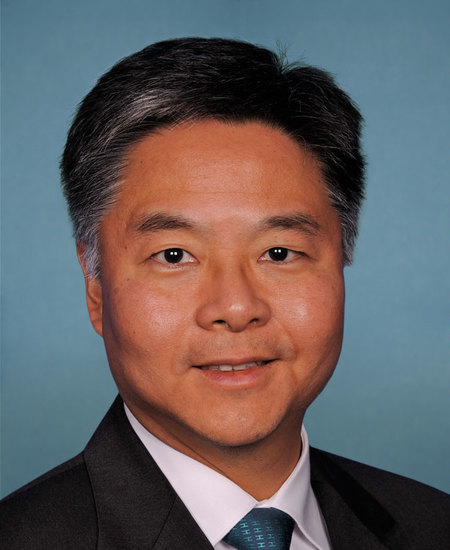
Rep. Ted Lieu
Sponsored bills
Building Resources and Access for Veterans' Mental Health Engagement Act of 2025 or the BRAVE Act of 2025 This bill addresses mental health services and care provided by the Department of Veterans Affairs (VA), including matters related to personnel, Vet Center administration, care for women veterans, and access to care. The bill authorizes the VA to waive the licensure or certification requirement for individual licensed professional mental health counselor appointees for a reasonable period of time. The bill also extends the Staff Sergeant Parker Gordon Fox Suicide Prevention Grant Program and increases the maximum annual grant amount. The VA must provide Vet Centers with guidance for assessing outreach activities and implement processes to periodically assess the extent to which (1) veterans and eligible members of the Armed Forces experience barriers to obtaining services at Vet Centers, and (2) Vet Center staff may encounter barriers to providing services. Among other requirements, the VA must also survey and host listening sessions with women veterans to gauge the effectiveness of the VA’s suicide prevention, lethal-means safety, and mental health resources and messaging campaigns; initiate efforts to modify the Recovery Engagement and Coordination for Health-Veterans Enhanced Treatment (REACH VET) program to incorporate risk factors weighted for women; annually offer a mental health consultation to veterans who are receiving compensation for a service-connected disability relating to a mental health diagnosis; and implement a pilot program to provide access to mental health residential treatment programs for veterans with a spinal cord injury or disorder.
Maddy summaryHR 5021, the American Decade of Sports Act, requires the U.S. Department of State to create a formal 5-year strategy (updated every 5 years) for using major international sporting events hosted in the U.S. between 2024 and 2034 - including the 2026 World Cup and 2028 Olympics - to strengthen diplomatic ties and promote U.S. soft power. It mandates renaming the State Department’s sports diplomacy division as the Office of Sports Diplomacy, adding at least 3 dedicated staff members, and coordinating with host cities, sports leagues, and visa agencies to streamline international visitor access. The strategy must detail diplomatic goals, partnerships with local communities and the sports industry, and plans for cultural exchange, while requiring annual progress reports to Congress until 2034. This bill directly affects the State Department, host cities, international athletes, and diplomatic engagement efforts.
Maddy summaryHR 6358, the Veteran Education Empowerment Act, creates a federal grant program to help colleges establish or improve dedicated Student Veteran Centers. These centers provide veterans, active-duty service members, and their families with lounge space, benefits counseling, academic support, and mental health services. Institutions must serve significant numbers of veterans and have sustainability plans to qualify for grants, with funding capped at $500,000 per institution over four years. The bill directly affects colleges serving veterans and aims to address challenges like isolation and transition difficulties through centralized campus support.
Maddy summaryHR 1512, the Taiwan Assurance Implementation Act, requires the U.S. Department of State to conduct a comprehensive review of its Taiwan-related guidelines every five years and submit updated reports to Congress within 90 days of each review. This amendment to the 2020 Taiwan Assurance Act mandates that the State Department’s reports include all information required under existing rules and explain how updated guidelines align with prior policy goals. The bill directly affects the Department of State (which must conduct reviews) and Congress (which receives the reports for oversight). It does not change U.S. policy toward Taiwan but establishes a formal, recurring process for updating and reporting on State Department guidance governing U.S.-Taiwan relations.
Give Kids a Chance Act of 2025 This bill expands the Food and Drug Administration’s (FDA’s) authority with respect to research on rare pediatric diseases, including by permitting the FDA to take enforcement action against drug sponsors that fail to satisfy pediatric study requirements and by reauthorizing programs that support pediatric research. Specifically, the bill modifies requirements relating to molecularly targeted pediatric cancer investigations to permit research on new drugs in combination with active ingredients that have already been approved, provided certain conditions are met; permits the FDA to take enforcement action against drug sponsors that fail to comply with pediatric study requirements, if such sponsors demonstrated a lack of due diligence in satisfying the requirement; renews the FDA’s authority to award priority review vouchers to sponsors of new products intended to treat rare pediatric diseases through September 30, 2029; and reauthorizes through FY2027 certain funding for the National Institutes of Health to support priority pediatric research. The bill also provides statutory authority for the FDA’s interpretation of the orphan drug exclusivity period. The bill specifies, consistent with FDA regulations, that the seven-year market exclusivity period for drugs for rare diseases or conditions (i.e., orphan drugs) prohibits the approval of the same drug for the same approved use or indication with respect to the disease or condition. (In Catalyst Pharmaceuticals, Inc. v. Becerra , a court rejected the FDA’s interpretation and held that orphan drug exclusivity extends to all uses or indications for the disease or condition.)
Maddy summaryThis bill establishes a federal program to help low-income households pay for drinking water and wastewater services. It provides $500 million annually (2026-2030) in grants to states and tribes that already administer energy assistance programs, allowing them to cover past-due bills or other costs for households meeting specific income criteria (e.g., receiving certain federal benefits or earning ≤150% of the poverty level). The program prohibits using these funds to replace existing assistance and requires technical help to streamline eligibility. It directly affects low-income households in participating states and tribes, particularly those facing water affordability challenges.
Maddy summaryHR 6306, the AI Fraud Deterrence Act, increases penalties for fraud crimes when artificial intelligence is used to impersonate federal officials. The bill amends existing laws (mail fraud, wire fraud, bank fraud, and money laundering) to add $1 million fines or up to 20 years in prison for AI-assisted fraud, and specifically targets impersonation of government officials with $1 million fines or up to 3 years in prison when AI is used. It defines "artificial intelligence" using the 2020 National AI Initiative Act and includes a First Amendment protection for satire or parody with clear disclosure. The law directly affects scammers using AI to mimic government officials, as highlighted by recent incidents involving impersonated White House and State Department communications.
Maddy summaryHR 6268, the LEAD Act of 2025, requires the use of non-lead ammunition on all lands and waters managed by the U.S. Fish and Wildlife Service (USFWS), effective one year after enactment. It directly affects hunters and recreational shooters using USFWS lands, with exceptions for law enforcement, military personnel, and government officials performing official duties. The bill mandates the USFWS to establish a list of certified non-lead ammunition (defined as containing ≤1% lead by weight) and imposes civil penalties of up to $500 for first violations and $1,000-$5,000 for repeat offenses. This policy aims to protect wildlife, human health, and food safety by reducing lead exposure from spent ammunition, which the bill cites as a documented risk to ecosystems and consumers.
Maddy summaryThis bill directs the U.S. Secretary of State to develop a strategy advocating for Taiwan's membership or observer status in Interpol and to formally request it on Taiwan's behalf. It requires the U.S. to work with Interpol member states to support Taiwan's participation, addressing Taiwan's current lack of access to Interpol's global communications system (I-24/7) for crime-fighting coordination. The bill mandates a 90-day report to Congress detailing this strategy and the U.S. efforts to secure Taiwan's inclusion in Interpol and other international organizations.