

Title IX Take Responsibility Act of 2021 This bill establishes statutory standards of liability for sexual harassment and a private right of action under Title IX of the Education Amendments of 1972, which prohibits discrimination on the basis of sex in federally funded education programs or activities. Currently, Title IX does not expressly provide for a private right of action for violations, prohibit sexual harassment, or establish standards of liability with respect to such conduct. The Supreme Court has interpreted the statute to cover sexual harassment and has determined that it provides an implied private right of action; the Court has also delineated standards of liability that generally require actual knowledge on the part of educational institutions with respect to such conduct. The bill specifically sets out standards of liability for sexual harassment with respect to covered entities under Title IX. Among other provisions, the bill specifies that a covered entity is liable for sexual harassment committed by an employee against a student that is enabled by the employee's authority and results in a hostile environment, regardless of whether the entity knew or should have known about such conduct. The bill also allows any person aggrieved by the failure of a covered entity to comply with Title IX to bring a civil action for damages.
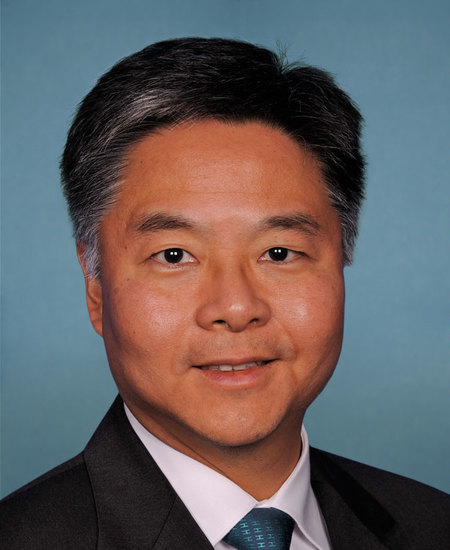
Rep. Ted Lieu
Sponsored bills
This resolution recognizes the achievements and goals of institutions of higher education that are designated as Asian American and Native American Pacific Islander-Serving Institutions on Asian American and Native American Pacific Islander-Serving Institutions Week and encourages eligible institutions to obtain the designation.
Valley-Wide Noise Relief Act of 2021 This bill permits airports to implement partial or total mandatory nighttime curfews if they had a voluntary curfew in place before the passage of the Airport Noise and Capacity Act of 1990 and meet other requirements. (That act imposes stringent requirements on airports seeking to implement night curfews and other types of noise rules or restrictions.)
Tyler Clementi Higher Education Anti-Harassment Act of 2021 This bill addresses harassment at institutions of higher education (IHEs). Specifically, the bill requires each IHE to include in its annual security report a statement of policy regarding harassment on the basis of a student's actual or perceived race, color, national origin, sex (including sexual orientation, gender identity, pregnancy, childbirth, a medical condition related to pregnancy or childbirth, and a sex stereotype), disability, or religion. In addition, the Department of Education may award grants to IHEs to initiate, expand, or improve programs to (1) prevent the harassment of students; (2) provide counseling or redress services to students who have been harassed or accused of subjecting other students to harassment; or (3) educate and train students, faculty, or staff to prevent harassment or address harassment if it occurs.
Keeping Renters Safe Act of 2021 This bill expressly authorizes the Department of Health and Human Services (HHS) to place a moratorium on residential evictions to prevent the spread of communicable diseases. The bill also requires HHS to implement a moratorium nationwide to reduce the spread of COVID-19. This moratorium must remain in effect for at least 60 days following the termination of the COVID-19 public health emergency. Current law authorizes HHS to take measures to prevent the spread of communicable diseases. As part of the COVID-19 response, HHS delegated this authority to the Centers for Disease Control and Prevention (CDC), which then issued (and extended) several orders banning residential evictions. Whether these orders exceed the CDC's statutory and constitutional authority has been the subject of multiple legal challenges; the Supreme Court blocked enforcement of the most recent order on August 26, 2021.
Securing the Rights our Veterans Earned Act or the SERVE Act This bill provides eligibility for specified Department of Veterans Affairs benefits to former members of the Armed Forces who were separated or discharged (honorably or otherwise) by reason of sexual orientation or gender identity.
U.S.-Israel Military Technology Cooperation Act This bill modifies the required actions of the United States-Israel Defense Acquisition Advisory Group and requires the establishment of the United States-Israel Operations-Technology Working Group to address such operations and technology matters required of the group.
This resolution expresses the sense of the House of Representatives that Canada should not allow construction of a nuclear waste repository within the Great Lakes Basin and that the President and the Department of State should work with Canada to prevent such construction and craft a long-term solution for nuclear waste storage that does not threaten the Great Lakes.
Accountability in Assignment Restrictions Act This bill sets out a process through which Department of State employees may appeal assignment restrictions. These are restrictions on an employee's security clearance that preclude the employee from serving in certain diplomatic posts or working on certain issues in the United States to (1) prevent potential targeting and harassment by foreign intelligence services, and (2) lessen foreign influence or foreign preference security concerns. Specifically, the bill establishes the Assignment Restriction Appeals Panel to hear assignment restriction appeals from Foreign Service and civil service employees. Additionally, the State Department must annually report to Congress on its use of assignment restrictions, including the rationale for the restrictions, data about employees subject to restrictions in the previous year, and information about the appeals process.
John R. Lewis Voting Rights Advancement Act of 2021 This bill establishes new criteria for determining which states and political subdivisions must obtain preclearance before changes to voting practices may take effect. Preclearance is the process of receiving preapproval from the Department of Justice (DOJ) or the U.S. District Court for the District of Columbia before making legal changes that would affect voting rights. A state and all of its political subdivisions shall be subject to preclearance of voting practice changes for a 10-year period if 15 or more voting rights violations occurred in the state during the previous 25 years; 10 or more violations occurred during the previous 25 years, at least 1 of which was committed by the state itself; or 3 or more violations occurred during the previous 25 years and the state administers the elections. A political subdivision as a separate unit shall also be subject to preclearance for a 10-year period if three or more voting rights violations occurred there during the previous 25 years. States and political subdivisions that meet certain thresholds regarding minority groups must preclear covered practices before implementation, such as changes to methods of election and redistricting. Further, states and political subdivisions must notify the public of changes to voting practices. Next, the bill authorizes DOJ to require states or political subdivisions to provide certain documents or answers to questions for enforcing voting rights. The bill also outlines factors courts must consider when hearing challenges to voting practices, such as the extent of any history of official voting discrimination in the state or political subdivision.