

Bring Animals Relief and Kibble Act of 2021 or as the BARK Act of 2021 This bill extends federal protection from civil and criminal liability that applies to donations of food or grocery products for needy individuals to the donation of pet food or supplies.
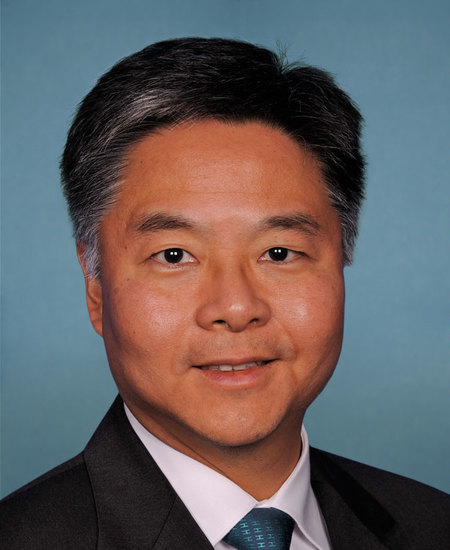
Rep. Ted Lieu
Sponsored bills
This concurrent resolution recognizes the disparity between wages paid to Latina women, and its impact on women, families, and the nation and reaffirms Congress' commitment to supporting equal pay and to narrowing the gender wage gap.
This resolution expresses solidarity with the Lebanese people following the explosions at the Port of Beirut on August 4, 2020, and supports their right to peacefully demonstrate to achieve political goals and anti-corruption reforms.
This resolution strongly disapproves of the escalation of political tensions between the government of Ethiopia and the Tigray People's Liberation Front into armed conflict, and it calls for the immediate cessation of hostilities in the Tigray region as well as an end to violence throughout Ethiopia. Further, the resolution urges all parties to work to protect human rights, and it calls on relevant U.S. agencies to take specified actions that encourage an end to the conflict and that provide humanitarian support.
United States Cadet Nurse Corps Service Recognition Act of 2021 This bill recognizes service as a member of the U.S. Cadet Nurse Corps between July 1, 1943, and December 31, 1948, as active duty service. The active duty designation entitles qualifying individuals to certain benefits afforded to veterans, such as burial benefits (not including interment or inurnment at Arlington National Cemetery) and honorary veteran status. Under the bill, the Department of Defense (DOD) must issue individuals who served in the corps during the specified period a discharge from their service under honorable conditions if such a discharge is warranted based on the duration and nature of the service. Such individuals are not entitled to Department of Veterans Affairs benefits aside from those related to burials and memorials. The bill also authorizes DOD to produce a service medal or other commendation, memorial plaque, or grave marker to honor the individuals.
This resolution calls for the creation of a Green New Deal with the goals of achieving greenhouse gas and toxic emissions reductions needed to stay under 1.5 degrees Celsius of warming; establishing millions of high-wage union jobs and ensuring economic security for all; investing in infrastructure and industry; securing clean air and water, climate and community resiliency, healthy food, access to nature, and a sustainable environment for all; and promoting justice and equality. The resolution calls for accomplishment of these goals through a 10-year national mobilization effort. The resolution also enumerates the goals and projects of the mobilization effort, including building smart power grids (i.e., power grids that enable customers to reduce their power use during peak demand periods); upgrading all existing buildings and constructing new buildings to achieve maximum energy and water efficiency; removing pollution and greenhouse gas emissions from the transportation and agricultural sectors; cleaning up existing hazardous waste and abandoned sites; ensuring businesspersons are free from unfair competition; and providing higher education, high-quality health care, and affordable, safe, and adequate housing to all.
Safeguarding Human Rights in Arms Exports Act of 2021 or the SAFEGUARD Act of 2021 This bill establishes specified measures to prevent the sale, export, or transfer of defense articles or defense services to foreign countries for use in violation of international humanitarian law or internationally recognized human rights. These measures include (1) prohibiting arms sales to countries committing genocide or war crimes, (2) requiring a consideration of human rights practices and democratization in any foreign country to which an arms sale is contemplated, and (3) providing for congressional oversight of arms exports to foreign countries wherein certain human rights violations have occurred.
Jaime's Law This bill establishes background check requirements for the sale and transfer of ammunition. Specifically, the bill prohibits a licensed importer, manufacturer, or dealer from transferring ammunition to an unlicensed individual prior to submitting a background check through the National Instant Criminal Background Check System. It also establishes penalties for violations. (Currently, background checks are required under these circumstances for the transfer of firearms, but not for ammunition.) Additionally, it prohibits an ammunition transfer between private parties (i.e., unlicensed individuals) unless a licensed importer, manufacturer, or dealer first takes possession of the ammunition to conduct a background check. However, this prohibition does not apply to certain ammunition transfers, such as a gift between spouses in good faith.
Green New Deals for Cities Act of 2021 This bill authorizes the Department of Housing and Urban Development to provide funding to states, local governments, or Native American nations to carry out Green New Deal projects, such as projects to clean up pollution, climate adaptation measures, or conservation projects on family farms. In order to receive such funding, a state, local government, or Native American nation must have a local Green New Deal program proposal and meet other requirements as specified by the bill. A proposal must contain certain commitments, including a commitment to zero greenhouse gas emissions by 2030 through a fair and just transition for all communities and workers.
Maddy summaryHR 2584, the Judiciary Act of 2021, would change the structure of the U.S. Supreme Court by increasing the number of associate justices from eight to twelve. This bill directly affects the Supreme Court's composition and operations, requiring a quorum of eight justices instead of six to conduct business. The key provision amends Title 28 of the U.S. Code to reflect these numerical changes to the Court's membership and quorum requirements. This is a procedural change to the Court's statutory structure, not a policy affecting the public.