

Maddy summaryHRES 924 is a symbolic resolution designating February 2022 as "National Teen Dating Violence Awareness and Prevention Month." It does not create new laws or allocate funding but expresses congressional support for raising awareness about teen dating violence, which the resolution cites as affecting teens through physical, sexual, psychological, and stalking behaviors. The resolution references CDC data showing high rates of teen dating violence (e.g., 44.3% of teens experienced violence, 15.6% experienced two types) and calls on schools, communities, and families to observe the month with awareness activities. It focuses on promoting existing prevention efforts like education and healthy relationship programs without proposing new policy changes.
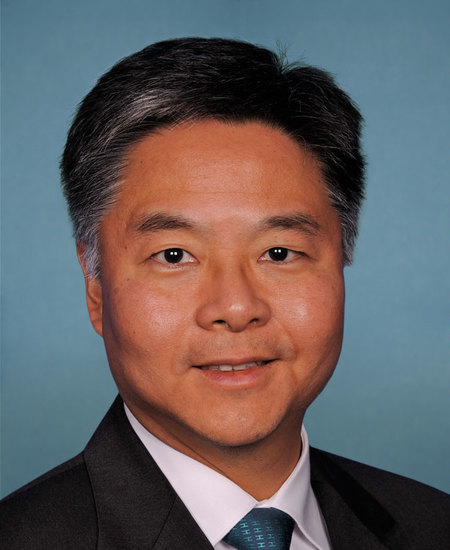
Rep. Ted Lieu
Sponsored bills
This resolution expresses the sense of the House of Representatives that the proposed constitutional amendment known as the Equal Rights Amendment has been duly proposed by Congress and ratified by the states and is therefore valid as the Twenty-Eighth Amendment to the Constitution. (The proposed amendment prohibits the United States or any state from denying or abridging equal rights under the law on account of sex.)
This resolution recognizes the annual celebration of Dia de los Muertos. The resolution urges the United States and the Department of Homeland Security to promote policies that uphold the human dignity of each migrant person and put an end to migrant deaths along the U.S.-Mexico border. Finally, this resolution calls on the United States and the Department of Health and Human Services to promote policies focused on COVID-19 protections and ensure that all communities have equal access to these to put an end to COVID-19 related deaths.
Maddy summaryHRES 490 is a symbolic House resolution (not a law) passed on June 22, 2021, that reaffirms the U.S. commitment to supporting refugees and displaced persons globally. It highlights the scale of the global displacement crisis (over 82 million forcibly displaced people in 2020) and emphasizes the importance of the U.S. refugee resettlement program as a tool for security, diplomacy, and humanitarian aid. The resolution calls on the Secretary of State to continue robust funding, uphold U.S. leadership in refugee protection, support host countries, and meet refugee admissions goals. It directly affects U.S. foreign policy implementation and international humanitarian efforts, though it does not create new legal requirements or allocate funds.
This resolution expresses the sense of the House of Representatives that (1) lesbian, gay, bisexual, transgender, queer, intersex, and asexual (LGBTQIA+) rights are human rights and protected by the U.S. Constitution; (2) LGBTQIA+ Pride Month should be celebrated; and (3) all Americans should be treated equally regardless of sexual orientation or gender identity.
Student Borrower Bankruptcy Relief Act of 2022 This bill allows student loans to be discharged in bankruptcy. Under current law, these loans are only dischargeable if such debt imposes an undue hardship on the debtor.
Maddy summaryThe Facial Recognition Act of 2022 regulates how law enforcement agencies can use facial recognition technology. It requires law enforcement to obtain court orders before using facial recognition with reference photo databases (with limited emergency exceptions), mandates removal of photos from arrest databases for people who weren't convicted, and requires annual accuracy and bias testing of facial recognition systems. The bill prohibits use for tracking constitutional rights, enforcing immigration laws, or using body camera footage, and establishes reporting requirements for agencies. It also provides individuals with the right to sue if their rights are violated by improper use of facial recognition.
Bridging Agency Data Gaps and Ensuring Safety for Native Communities Act or the BADGES for Native Communities Act This bill revises federal policies and procedures related to information sharing, reporting, and investigating cases of missing, unidentified, or murdered Indians. Among other elements, the bill requires the Department of Justice to (1) establish a grant program for specified entities (e.g., tribes) to implement changes to enhance their responses to missing person cases and death investigations of interest to tribes, and (2) work with the Department of Health and Human Services to ensure that federal training resources and culturally appropriate mental health and wellness programs are available to tribal and Bureau of Indian Affairs (BIA) law enforcement officers experiencing occupational stress. The Department of the Interior must establish a five-year demonstration program for the purpose of conducting or adjudicating personnel background investigations for applicants for law enforcement positions in the BIA. The bill also requires the Government Accountability Office to conduct specified studies, including a study on the evidence collection, handling, and processing procedures and practices of federal law enforcement agencies.
Tracking and Reporting Absent Community-Members Everywhere Act or the TRACE Act This bill requires the National Institute of Justice to include additional data categories in the National Missing and Unidentified Persons System (NamUs), including information about persons who go missing on federal land. It also requires the Departments of Agriculture, Interior, and Defense to report existing missing persons cases on their federal land to NamUs.
Providing Real Opportunities and Lifelong Investments For Everyone Act of 2022 or the PRO-LIFE Act of 2022 This bill establishes new, and modifies existing, programs related to maternal and child health, tax credits and other benefits for parents and caregivers, and support for childcare infrastructure. The bill requires multi-agency efforts to improve maternal health and reduce maternal mortality, particularly among racial and ethnic minority groups, veterans, and other vulnerable populations, by addressing both health-related factors and the social determinants of health (i.e., nonmedical factors that influence health outcomes, such as housing, food security, transportation, and environmental conditions). Additionally, the bill permanently extends the Children's Health Insurance Program (CHIP) and related measures. Further, the bill (1) sets up a family medical leave insurance benefit that entitles employees to a monthly benefit payment for a period of qualified caregiving; and (2) imposes a tax on employers, employees, and self-employed individuals to fund the benefits. The bill also increases the amount of the child tax credit and makes the credit fully refundable and payable in advance on a monthly basis. In addition, the Department of Labor must carry out a program to certify and recognize employers that implement family-friendly workplace programs (e.g., providing paid family and sick leave or subsidizing childcare). The bill also requires support for childcare infrastructure, for example by establishing grants for childcare facilities and scholarship and loan repayment programs for childcare educators.