

Maddy summaryHR 1244 authorizes Congress to award a gold medal collectively to Africans and their descendants who were enslaved in the U.S. from 1619 to 1865, recognizing their contributions to America's economic foundation. The bill directs the Treasury Secretary to design and strike the medal, which will be permanently displayed at the Smithsonian's National Museum of African American History & Culture. It also permits the sale of bronze duplicates to cover costs, with proceeds going to the U.S. Mint. This is a commemorative measure, not a policy change, focusing on symbolic recognition of historical contributions.
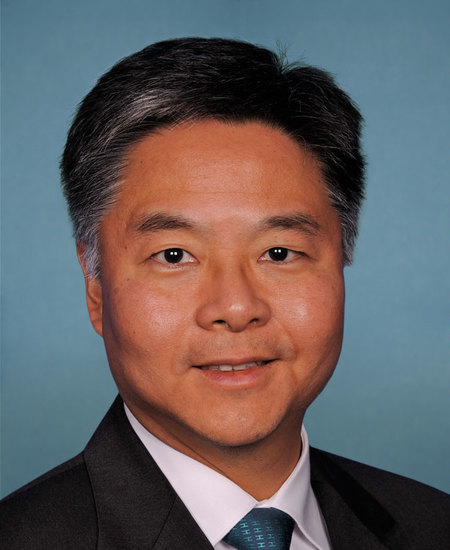
Rep. Ted Lieu
Sponsored bills
Maddy summaryThe Richard L. Trumka Protecting the Right to Organize Act of 2023 strengthens workers' rights to organize unions by making it harder for employers to interfere with organizing efforts. Key provisions include changing the definition of "employee" to make it more difficult to classify workers as independent contractors, prohibiting employers from threatening to permanently replace striking workers, and requiring employers to provide voter lists for union elections. The bill also creates a new electronic voting system for union elections, strengthens whistleblower protections for workers reporting labor violations, and increases penalties for unfair labor practices. These changes directly affect workers seeking to form unions, employers who may interfere with organizing, and labor organizations. The bill aims to make it easier for workers to exercise their right to collective bargaining under the National Labor Relations Act.
Maddy summaryHR 1204, the Protect Access to Justice for Veterans Act, limits attorney fees for veterans pursuing claims related to water contamination at Camp Lejeune, North Carolina. It caps fees at 20% for claims resolved within 180 days and 33.3% for later settlements or judgments. All settlement funds must be placed into a trust account for the veteran, with attorneys required to notify the veteran and deliver their share promptly before receiving payment. Violations, such as charging excessive fees, can result in fines up to $5,000.
Disclosure; and Encouragement of Verification, Innovation, Cleaning, and Efficiency Act of 2023 or the DEVICE Act of 2023 This bill addresses design changes and reprocessing of medical devices. (Reprocessing of medical devices is the process for cleaning and sterilizing or disinfecting devices for reuse.) Specifically, medical device manufacturers must notify the Food and Drug Administration (1) before making changes to the design or reprocessing instructions of a device, and (2) no more than five days after widely disseminating to health care providers in a foreign country communications regarding changes to the design or reprocessing instructions of a device or regarding a safety concern about a device. A device may not be sold if the manufacturer violates these notification requirements.
Maddy summaryThe Aviation Noise and Emissions Mitigation Act creates two grant programs to address noise and pollution from airports. The first program funds 3-year pilots for communities near airports to measure noise and emissions (including greenhouse gases and particulate matter) using technology that traces sources to specific aircraft and neighborhoods, with a focus on identifying disproportionately impacted areas. The second program provides grants to community groups, health departments, and local governments to implement mitigation strategies - such as noise-reducing building upgrades, health services, and environmental programs - prioritizing low-income and disadvantaged communities identified through the monitoring. Both programs require regular community engagement, public reporting, and alignment with environmental justice goals.
United States-Taiwan Advanced Research Partnership Act of 2023 This bill authorizes the Department of Homeland Security to enter into cooperative research activities with Taiwan to strengthen preparedness against cyber threats and enhance capabilities in cybersecurity.
Maddy summaryHRES 150 is a ceremonial House resolution honoring the late civil rights leader John Robert Lewis (1940-2020). It formally recognizes his lifelong commitment to nonviolent activism, including his leadership in the Civil Rights Movement, the 1965 Selma voting rights march ("Bloody Sunday"), and his 30+ years serving as a U.S. Representative from Georgia. The resolution specifically commends his "towering achievements in the nonviolent struggle for civil rights" and his dedication to building the "Beloved Community" through justice and equality. As a commemorative resolution, it has no policy impact but serves as an official tribute to Lewis's legacy for the public and Congress.
Transparent and Accessible Sanctions Coordinating Office Act or the TASCO Act This bill requires the President to ensure that all materials related to the imposition of sanctions are available in a consolidated, machine-readable database. The bill also establishes the Transparent and Accessible Sanctions Coordinating Office (TASCO) within the executive branch. TASCO must set up a publicly available database of individuals and entities subject to U.S. sanctions. The database must include sanctions data from various federal agencies, including the Department of the Treasury, Department of Commerce, and Department of State.
Maddy summaryThe Department of Peacebuilding Act of 2023 would establish a new Cabinet-level Department of Peacebuilding within the executive branch of the U.S. government. The department would include multiple offices focused on domestic and international peacebuilding, violence prevention, peace education, and conflict resolution, with specific offices dedicated to areas like peace education, domestic activities, international activities, technology, arms control, and human rights. It would create a Secretary of Peacebuilding position and require the department to develop policies addressing root causes of violence, promote nonviolent conflict resolution, and collaborate with existing federal agencies. The bill would mandate annual reports on progress toward peace in the United States and require consultation with other departments on matters related to conflict prevention and peacebuilding.
Maddy summaryThe RISEE Act of 2023 creates a National Oceans and Coastal Security Fund to support coastal communities and ecosystems. It allocates 37.5% of offshore wind revenue directly to eligible coastal states using a formula based on tidal shoreline length, coastal population density, and distance from offshore wind projects. States must use these funds for coastal protection, habitat restoration, infrastructure, or fisheries research, with strict annual reporting requirements to the Department of the Interior. The bill prohibits using these funds for litigation or creating marine monuments, ensuring resources directly support coastal community needs.