

Marine Mammal Climate Change Protection Act This bill establishes requirements to protect marine mammals adversely affected by climate change, including by establishing a program within the National Oceanic and Atmospheric Administration (NOAA) to monitor the adverse impacts of climate change on marine mammals. In addition, it also requires NOAA's National Marine Fisheries Service (NMFS) and the U.S. Fish and Wildlife Service (USFWS) to issue regulations that list marine mammal species in waters under U.S. jurisdiction for which climate change is more likely than not to result in a decline in population abundance, an impeded population recovery, or a reduced carrying capacity (i.e., the maximum population of a marine mammal species that an area will support without undergoing deterioration). The NMFS and the USFWS must update the list at least once every five years and issue regulations that include climate impact management plans for species on such list. The bill also directs the NMFS and the USFWS to review agreements with foreign governments concerning the management of marine mammals that are or may be affected by climate change. The Department of State must initiate amendments to such agreements or negotiate the development of such agreements in a manner consistent with the goals of the bill.
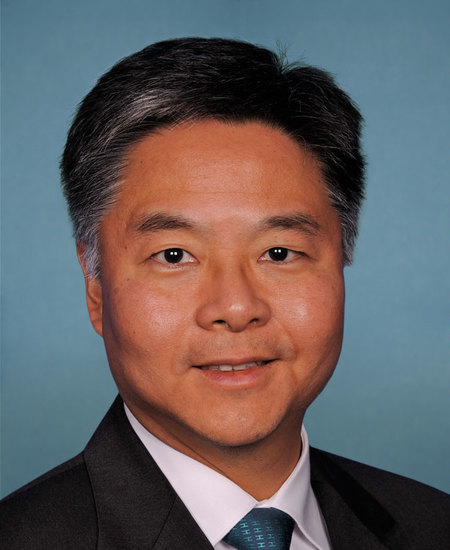
Rep. Ted Lieu
Sponsored bills
Maddy summaryThe Outdoors for All Act establishes a federal grant program to fund outdoor recreation projects in underserved communities. It authorizes the Secretary of the Interior to award grants to eligible entities (like states, cities, tribal organizations, or nonprofits) for acquiring land, developing parks, or renovating outdoor facilities in qualifying urban areas (population 25,000+ or tribal lands) or low-income communities (where 30%+ of residents have incomes at or below 80% of local median income or 200% of the federal poverty line). Grants require a 100% cash or in-kind match (with limited waivers), prohibit funding for indoor facilities or maintenance, and prioritize projects enhancing park access, engaging youth, creating jobs, or improving environmental benefits like reducing urban heat islands. The program mandates annual reporting and focuses on concrete community outcomes rather than speculative results.
Correcting Guam's History in the PACT Act This bill expands eligibility for a presumption of service-connection for specified diseases associated with exposure to certain herbicide agents. Under a presumption of service-connection, specific conditions diagnosed in certain veterans are presumed to have been caused by the circumstances of their military service. Health care benefits and disability compensation may then be awarded. Under the bill, service performed in Guam or its territorial waters between August 15, 1958, and July 31, 1980, provides a veteran who has a specified disease that is associated with exposure to certain herbicide agents with eligibility for a presumption of service-connection. (Under current law, the eligible time frame for service in Guam is between January 9, 1962, and July 31, 1980.)
Maddy summaryHR 1619 requires schools participating in the National School Lunch Program to provide fluid milk substitutes (like soy or almond milk) upon request by a student or their parent/guardian. The bill removes the previous requirement that substitutions needed a medical authority's written statement for most dietary needs, instead allowing requests based on the student's or parent's request alone. It aligns the definition of acceptable substitutes with current Dietary Guidelines for Americans. This change directly affects students with dietary restrictions, making it simpler for schools to accommodate their needs without extra medical documentation.
Maddy summaryThe HCBS Access Act requires states to cover home and community-based services (HCBS) under Medicaid for eligible individuals with disabilities or older adults who need these services to live in the community rather than in institutions. The bill establishes a 5-year implementation timeline for states to develop plans including individualized assessments to determine service needs and addressing workforce shortages for direct care professionals. Key provisions include expanding Medicaid coverage for HCBS, making permanent certain Medicaid provisions (spousal impoverishment protection and Money Follows the Person), and creating a grant program for states to implement these services. The bill directly affects over 53 million unpaid family caregivers and nearly 2.6 million direct care professionals by improving service access and addressing workforce challenges. It requires data collection on service access by demographics to address disparities and improve quality of care for vulnerable populations.
Maddy summaryThis bill creates a new definition for "currently accepted medical use with severe restrictions" under the Controlled Substances Act, specifically for certain investigational drugs. It applies to drugs designated as breakthrough therapies by the FDA or authorized for expanded patient access under specific emergency protocols for serious diseases with no other treatment options. The definition excludes drugs that are already fully approved under standard FDA pathways or that lose their expanded access status. If a drug no longer meets these strict criteria, the Attorney General must reclassify it into the highest restriction category (Schedule I) within 90 days of notification from the Health Secretary. This changes how certain experimental treatments are classified under federal drug laws.
Maddy summaryThis bill authorizes a Congressional Gold Medal to honor the "Hello Girls" - female telephone operators who served in the Army Signal Corps during World War I. They provided critical battlefield communications in France (connecting 26 million calls), wore military uniforms, and faced combat risks, but were denied veteran benefits for 60 years due to being classified as civilian contractors. The medal recognizes their pioneering service, devotion, and the decades-long struggle to gain military recognition. The award follows similar recognition for other WWII women veterans and aims to correct the historical injustice they faced.
Maddy summaryThe SVB Act (HR 1602) repeals Title IV of the 2018 Economic Growth, Regulatory Relief, and Consumer Protection Act, which had relaxed banking regulations. It directly affects banks previously subject to those relaxed rules, particularly smaller institutions that benefited from the 2018 changes. The bill’s key mechanism is restoring the pre-2018 regulatory framework, reversing the specific provisions that eased oversight. This returns banking oversight to the structure that existed before the 2018 law took effect, without creating new rules.
Mental Health in International Development and Humanitarian Settings Act or the MINDS Act This bill authorizes and requires certain actions by the U.S. Agency for International Development (USAID) to integrate mental health and psychosocial support (MHPSS) activities across U.S. development and humanitarian assistance programs. The bill authorizes USAID to designate an MHPSS coordinator. The coordinator's duties include (1) guiding, overseeing, and directing MHPSS programming and integration across U.S. development and humanitarian assistance programs; and (2) promoting best practices, coordination, and reporting in MHPSS across such programs. Focus populations for the coordinator include adult caretakers, children separated from a family unit, and displaced populations. In addition, the bill establishes a working group comprised of representatives from relevant USAID bureaus, the Department of State, and other federal agencies. The purpose of the working group is to ensure continuity and integration of MHPSS across U.S. development and humanitarian assistance programs. The provisions of the bill expire five years after enactment.
Maddy summaryHR 1499, the Good Jobs for Good Airports Act, requires airports receiving federal funding to pay covered service workers a minimum wage of at least $15 per hour (or higher if state/local laws or federal standards require it) and provide minimum fringe benefits. It directly affects workers in specific airport roles like security, ticketing, concessions, cleaning, and ramp services at small, medium, or large hub airports. The bill mandates annual certification from airport operators to verify compliance with these wage and benefit standards, tied to eligibility for federal airport grants under the Infrastructure Investment and Jobs Act. It does not override stricter state or local laws but ensures minimum standards for workers supporting airport operations.