

Maddy summaryHR 3601, the Student Veteran Work Study Modernization Act, expands eligibility for a Veterans Affairs work-study allowance to veterans enrolled at least half-time in rehabilitation, education, or training programs - lowering the previous requirement from three-quarter-time. The bill establishes a five-year pilot program to test this change, requiring the VA to apply the same allowance rules to these veterans as to other participants, except for the enrollment threshold. It also mandates annual reports to Congress tracking participation numbers, four-year degree completion rates, and full-time VA employment outcomes for participants. The policy directly affects veterans seeking education benefits while balancing academic and personal responsibilities.
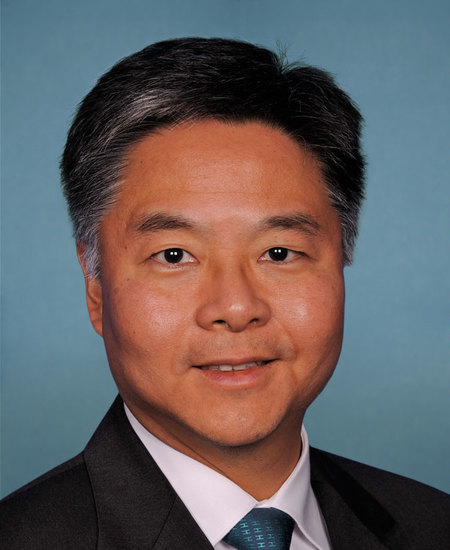
Rep. Ted Lieu
Sponsored bills
Maddy summaryThe TREES Act of 2023 establishes a federal grant program to fund tree planting projects that reduce residential energy use. It provides 90% federal funding (up to $50 million annually) for projects in neighborhoods with high energy burdens, low tree canopy, or vulnerable populations like seniors and low-income households. Eligible applicants - including state/local governments, tribes, nonprofits, and power companies - must demonstrate how planting specific tree species will cut cooling and heating costs through shade and wind protection. The program aims to plant at least 300,000 trees yearly, prioritizing projects that maximize energy savings for households spending a high percentage of income on energy bills.
Maddy summary# Summary of the Government Surveillance Reform Act of 2023 This comprehensive legislative proposal aims to reform government surveillance practices in the United States with a strong emphasis on privacy protections, judicial oversight, and government transparency. The key components include: 1. **Cell Site Simulator Restrictions**: - Comprehensive ban on cell-site simulators (stingrays) except under specific circumstances requiring warrants - Requires judicial approval for most uses, with strict limitations on scope, duration, and minimization of incidental collection - Mandates disclosures about potential disruptions to emergency services - Includes detailed reporting requirements for government agencies 2. **Vehicle Data Protections**: - Prohibits warrantless access to vehicle data (including telematics and onboard sensors) - Requires warrants for most access, with specific exceptions for consent and emergencies - Creates detailed definitions and procedures for consent requirements 3. **Enhanced Foreign Intelligence Surveillance Oversight**: - Requires more detailed reporting by the Foreign Intelligence Surveillance Court - Mandates annual reports on accuracy and completeness of applications - Increases transparency around Section 702 collection - Requires reporting on queries targeting U.S. persons 4. **Data Broker and Service Provider Protections**: - Strengthens privacy protections for data held by data brokers - Requires court orders for government access to certain data - Includes minimization requirements for handling collected data - Prohibits warrantless use of data obtained through cell site simulators 5. **Transparency Requirements**: - Mandates detailed public reporting on surveillance activities - Requires annual reports on accuracy of applications - Increases granular reporting on targets and queries - Requires public disclosure of statistics on surveillance use The legislation represents a significant shift toward greater privacy protections and government accountability in surveillance practices, with detailed technical requirements for compliance and enhanced reporting obligations for government agencies. It would significantly impact how law enforcement and intelligence agencies conduct surveillance operations while attempting to balance public safety needs with constitutional privacy rights.
Maddy summaryHR 6121, the Filipino Veterans Fairness Act of 2023, expands U.S. veterans benefits for individuals who served in the Philippine Army, Philippine Scouts, or recognized guerrilla forces during World War II. It directly affects Filipino veterans who previously faced challenges proving service due to limited documentation. The bill allows the Secretary of Veterans Affairs to consider alternative records beyond the National Personnel Records Center rosters when determining eligibility, requires annual reports to Congress on applications and approvals, and clarifies that the Filipino Veterans Equity Compensation Fund does not apply to these veterans. These changes aim to streamline access to benefits for this specific group of veterans.
Maddy summaryHR 6301, the Cancer Drug Parity Act of 2023, requires group health plans to ensure that out-of-pocket costs for oral anticancer drugs (taken by patients at home) are no higher than for intravenous or injected anticancer drugs. It applies to patients prescribed oral anticancer medications approved by the FDA and deemed medically necessary or clinically appropriate by their physician. The law prohibits insurers from increasing patient costs for oral drugs through benefit changes, such as higher copays or stricter coverage limits, and allows prior authorization for all chemotherapy. The law takes effect for 2024 plan years, and the GAO will study its impact on patient costs within two years.
Maddy summaryThis bill codifies the Young African Leaders Initiative (YALI) as a formal U.S. government program. It authorizes annual fellowships for African leaders aged 25-35 to participate in U.S.-based leadership training (including the Mandela Washington Fellowship) and establishes at least four regional leadership centers across sub-Saharan Africa for ongoing professional development in business, civic engagement, and public administration. The program requires annual congressional reports on progress and impacts, with implementation ending after five years. Directly affecting young African leaders (ages 18-35 for regional centers) in business, civic leadership, and governance, it provides structured training, networking, and technical assistance to strengthen U.S.-Africa partnerships.
Maddy summaryThis bill would authorize the U.S. government to confiscate Russian sovereign assets held in U.S. jurisdiction and use those funds to support Ukraine's reconstruction and humanitarian needs following Russia's invasion. It prohibits releasing these blocked assets until Russia fully compensates Ukraine or agrees to an international compensation mechanism. The bill establishes a "Ukraine Support Fund" to hold confiscated assets and requires regular congressional reporting on how these funds are allocated for Ukraine's recovery. It also includes provisions for international coordination with allies on sanctions and asset management related to Russia's invasion of Ukraine.
Maddy summaryThe SHIP Act imposes sanctions on foreign entities that knowingly handle Iranian petroleum, targeting those involved in port operations, transportation, refining, or ship-to-ship transfers of Iranian oil. Starting 90 days after enactment, the President must block assets, deny visas, and impose penalties on individuals or companies engaging in these activities, including family members or owners of sanctioned entities. It requires annual reports tracking Iran's oil exports, revenues, and key players like shipping companies and ports. The sanctions terminate if the President certifies Iran has stopped supporting terrorism and dismantled weapons programs.
Maddy summaryThe Cell-Site Simulator Warrant Act of 2023 requires law enforcement agencies to obtain a court warrant before using cell-site simulators (devices that mimic cell towers to track or intercept mobile device communications) in most situations. The bill sets strict warrant requirements, including demonstrating that other investigative methods have failed, specifying the narrowest possible area and time frame for use, and disclosing potential disruptions to emergency communications like 911 calls. It limits warrant authorization to 30 days with possible 30-day extensions, requires minimizing disruption to non-targeted communications, and mandates destruction of information about people not under investigation. Exceptions include emergency situations (with 48-hour warrant application requirement), intelligence community activities under existing laws, research, and correctional facility contraband interdiction systems.
Maddy summaryHR 6105, the No Toxics in Food Packaging Act of 2023, prohibits the use of specific chemicals in food packaging by deeming them unsafe under existing law. It directly bans ortho-phthalates (like DEHP and DBP), PFAS, certain bisphenols (including BPA), styrene, and antimony trioxide in all food contact materials. The bill requires the FDA to consider vulnerable populations - such as infants, pregnant women, and workers - when evaluating alternative substances. The ban takes effect two years after the bill's enactment. This law primarily affects food manufacturers, packaging producers, and the FDA's regulatory oversight of food contact substances.