

Providing Real Opportunities and Lifelong Investments For Everyone Act of 2022 or the PRO-LIFE Act of 2022 This bill establishes new, and modifies existing, programs related to maternal and child health, tax credits and other benefits for parents and caregivers, and support for childcare infrastructure. The bill requires multi-agency efforts to improve maternal health and reduce maternal mortality, particularly among racial and ethnic minority groups, veterans, and other vulnerable populations, by addressing both health-related factors and the social determinants of health (i.e., nonmedical factors that influence health outcomes, such as housing, food security, transportation, and environmental conditions). Additionally, the bill permanently extends the Children's Health Insurance Program (CHIP) and related measures. Further, the bill (1) sets up a family medical leave insurance benefit that entitles employees to a monthly benefit payment for a period of qualified caregiving; and (2) imposes a tax on employers, employees, and self-employed individuals to fund the benefits. The bill also increases the amount of the child tax credit and makes the credit fully refundable and payable in advance on a monthly basis. In addition, the Department of Labor must carry out a program to certify and recognize employers that implement family-friendly workplace programs (e.g., providing paid family and sick leave or subsidizing childcare). The bill also requires support for childcare infrastructure, for example by establishing grants for childcare facilities and scholarship and loan repayment programs for childcare educators.
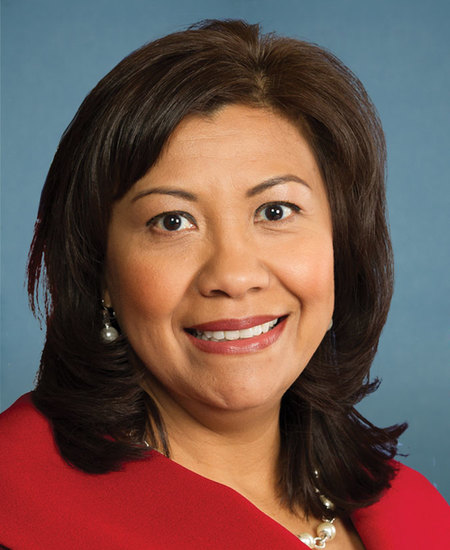
Rep. Norma J. Torres
Sponsored bills
Renewing Immigration Provisions of the Immigration Act of 1929 This bill expands eligibility for a program that authorizes the Department of Homeland Security to, at its discretion, provide lawful permanent resident status to certain long-term residents of the United States, including individuals who are unlawfully present. Currently, this program, sometimes referred to as the Registry program, is only available to eligible non-U.S. nationals ( aliens under federal law) who entered the United States before January 1, 1972. The bill removes this entry cutoff date and opens up the program to eligible individuals who have resided in the United States for at least seven years. Existing requirements (e.g., the individual must not be inadmissible or deportable due to certain grounds related to crime or terrorism) continue to apply.
Stealthing Act of 2022 This bill establishes a civil action for the nonconsensual removal of a sexual protection barrier (e.g., a condom). A person may recover compensatory and punitive damages, injunctive and declaratory relief, and such other relief as a court may deem appropriate.
Consent is Key Act This bill directs the Department of Justice to increase a state's allocation of funds under the Sexual Assault Services Program if the state has in effect a law that authorizes civil damages and equitable relief against a person who engages in the nonconsensual removal of a sexual protection barrier (e.g., a condom).
Multiple Firearm Sales Reporting Modernization Act of 2022 This bill expands reporting requirements with respect to sales or dispositions of multiple firearms. Currently, a federal firearms licensee (e.g., a gun dealer) must report multiple sales or dispositions of pistols or revolvers to the same person within five business days. This bill requires a federal firearms licensee to report multiple sales or dispositions of any firearms to the same person within five business days.
Jumpstart Our Legal Immigration System Act or the Jumpstart Act This bill makes unused employment-based and family-based immigrant visas from FY1992 through FY2021 available in subsequent fiscal years. It also makes diversity immigrant visas available to individuals who were selected for such a visa between FY2017-FY2021 but were unable to receive the visa due to certain (1) executive actions, or (2) limitations related to COVID-19. The bill also establishes supplemental fees for certain immigration-related applications.
Bringing an End to Harassment by Enhancing Accountability and Rejecting Discrimination in the Workplace Act or the BE HEARD in the Workplace Act This bill expands protections against discrimination and harassment in the workplace and raises the minimum wage for tipped employees. Specifically, the bill (1) makes it an unlawful employment practice to discriminate against an individual in the workplace based on sexual orientation, gender identity, pregnancy, childbirth, a medical condition related to pregnancy or childbirth, or a sex stereotype; and (2) provides a statutory definition for what constitutes workplace harassment. Further, these protections apply to all workplaces, regardless of size, and to all workers, including independent contractors, interns, volunteers, and trainees. The bill prohibits employers from entering into contracts or agreements with workers that contain certain nondisparagement or nondisclosure clauses and prohibits certain predispute arbitration agreements and postdispute agreements. It also establishes grant programs to (1) prevent and respond to workplace discrimination and harassment, (2) provide legal assistance for low-income workers, and (3) establish a system of legal advocacy in states to protect the rights of workers. The bill further provides employees the right to retain their tips and it increases, in specified annual increments, the minimum wage for tipped employees to match the federal minimum wage for nontipped employees. Additionally, the bill requires the Equal Employment Opportunity Commission to provide specified training and resource materials, establish and convene a harassment prevention task force, and establish an Office of Education and Outreach with regard to prohibited discrimination and harassment in employment. The bill also requires specified studies, reports, and research on prohibited workplace harassment.
Reduce Financial Barriers to Immigration and Citizenship Act of 2021 This bill prohibits the Department of Homeland Security (DHS) from charging fees for certain immigration applications (or petitions), requires DHS to provide fee waivers to certain applicants, and addresses related issues. DHS may not impose fees for certain applications for or related to (1) asylum or refugee status, (2) special immigrant juvenile status, (3) U or T non-immigrant visas (victims of certain crimes such as human trafficking), (4) the Violence Against Women Act, (5) special immigrant status for Afghan or Iraqi nationals employed by the U.S. government, or (6) immigration-related fee waivers. DHS must also waive immigration-related application fees for an applicant who receives a means-tested benefit or meets certain conditions related to financial hardship. However, DHS is not required to provide fee waivers for applications for certain employment-based immigration benefits. Receipt of a fee waiver may not be used as a factor (1) for determining whether an alien should be considered a public charge, or (2) when considering an affidavit of support filed by a sponsor. The bill also requires all collected immigration-related adjudication fees to be used only to fund the adjudication and administration of immigration benefits and naturalization.
Lifting Immigrant Families Through Benefits Access Restoration Act of 2021 or the LIFT the BAR Act of 2021 This bill repeals certain limits on the eligibility of noncitizens who lawfully reside in the United States for federal means-tested programs, including Medicaid, the Children's Health Insurance Program (CHIP), programs funded through Temporary Assistance for Needy Families (TANF) grants, Supplemental Security Income (SSI), and certain nutrition and housing programs.
Frank Harrison, Elizabeth Peratrovich, and Miguel Trujillo Native American Voting Rights Act of 2021 This bill addresses the voting rights of Native American and Alaska Native voters and voting access on tribal lands. The bill includes provisions expanding the types of facilities that can be used as voter registration agencies; increasing polling site accessibility, including by expanding early in-person voting and providing ballot drop boxes; providing enforcement power to citizens and attorneys general; requiring approval for actions like moving a polling place; validating certain tribal identification for voting or registering to vote; permitting voters to designate another individual to return a ballot on their behalf; and expanding requirements for bilingual voting accessibility. In addition, the bill establishes a Native American voting task force grant program for the purpose of increasing voter outreach, education, registration, turnout, and accessibility for Native American communities. The bill also directs the Government Accountability Office to study and report on (1) the prevalence of nontraditional or nonexistent mailing addresses among Indians, members of tribes, and individuals residing on Indian lands; and (2) the alternatives for removing barriers to voter registration, receipt of voter information and materials, and receipt of ballots.