

Maddy summaryHR 666, the Access to Counsel Act, requires U.S. immigration officers to provide certain travelers a meaningful opportunity to consult with legal counsel within one hour of starting secondary inspection at ports of entry. It directly affects travelers including U.S. citizens, lawful permanent residents returning from abroad, visa holders, refugees, and parolees seeking entry. Key provisions mandate phone access to counsel, allow advocates to present evidence to officers, and require in-person meetings when possible. Lawful permanent residents cannot abandon their status without first consulting a lawyer unless they waive this right in writing. The bill takes effect 180 days after enactment.
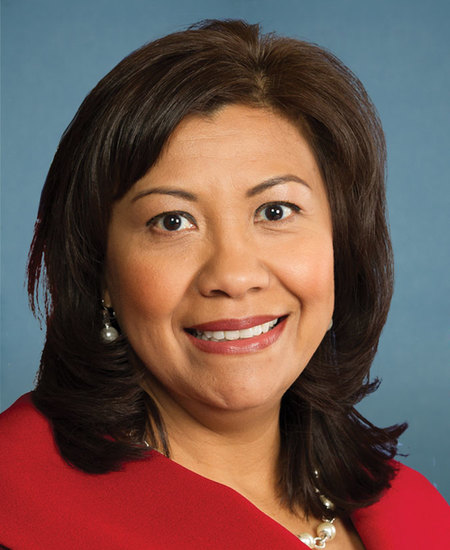
Rep. Norma J. Torres
Sponsored bills
Maddy summaryHRES 49 is a symbolic House resolution recognizing the cultural and historical significance of Lunar New Year in 2023. It formally acknowledges Lunar New Year's origins in China over 4,000 years ago, its celebration across East and Southeast Asia (including the Year of the Rabbit in Chinese tradition and Year of the Cat in Vietnamese tradition), and its observance by millions of Asian Americans and others in the U.S. The resolution expresses respect for Asian Americans and all global communities celebrating this holiday and extends well-wishes for a prosperous new year. As a ceremonial resolution, it has no legal effect or policy changes - it solely serves to affirm cultural recognition.
Maddy summaryHR 286, the Health Care Providers Safety Act of 2023, provides federal grants to healthcare providers to improve security at their facilities. The bill authorizes the Secretary to fund security services and physical/cyber security enhancements, including video surveillance, data privacy measures, and structural improvements. These grants directly help healthcare facilities, personnel, and patients by addressing safety concerns. The law specifies that funds must be used for necessary security costs to ensure safe access to healthcare services. It does not create new mandates but offers financial support for security upgrades.
Maddy summaryHR 396, the Closing the Bump Stock Loophole Act of 2023, defines "bump stock" as any device or modification that increases the firing rate of a semi-automatic weapon to mimic a machine gun. The bill amends federal tax and firearms laws to classify bump stocks as prohibited devices under the National Firearms Act, requiring existing owners to register them within one year of enactment. It directly affects individuals who currently own bump stocks by mandating registration to avoid future possession prohibitions. The law takes effect immediately for new sales but provides a one-year grace period for existing owners to comply with registration requirements.
Maddy summaryHRES 36 is a symbolic resolution supporting Korean American Day, introduced by multiple House members on January 13, 2023. It honors the 120th anniversary of the 1903 arrival of the first large wave of Korean immigrants to the U.S. and recognizes Korean Americans' contributions to U.S. society, economy, and the U.S.-South Korea alliance. The resolution urges all Americans to observe Korean American Day to appreciate these contributions but does not create new laws or affect any specific group through policy changes. It is a commemorative measure without binding requirements.
Maddy summaryHRES 30 is a ceremonial House resolution recognizing two milestones: the 94th anniversary of Dr. Martin Luther King, Jr.'s birth (January 15, 1929) and the 40th anniversary of the federal Martin Luther King, Jr. Holiday (observed January 16, 2023). It contains no policy changes or binding requirements, as it is purely commemorative. The resolution urges the House to observe both dates and encourages the public to honor Dr. King’s legacy and his vision of equality. It does not affect any individuals, groups, or government programs.
Capitol Remembrance Act This bill requires the Architect of the Capitol (AOC) to design and install in a prominent location in the U.S. Capitol a permanent exhibit that depicts the January 6, 2021, attack on the Capitol. To the extent possible, the AOC must preserve property that was damaged during the attack and include it in the exhibit. The AOC must also include (1) existing photographic records relating to the attack; and (2) a plaque to honor the U.S. Capitol Police and other law enforcement agencies that protected the Capitol, the individuals who died or sustained injuries to protect the Capitol, and the staff who helped restore the Capitol complex after the attack.
This resolution condemns all acts of political violence, as well as attacks on health care facilities, health care personnel, and patients. The resolution also states that all people have the freedom to access reproductive health care services and medical advice without fear of violence, intimidation, or harassment. Finally, the resolution calls on the Biden Administration to use all appropriate authorities to uphold public safety, protect health care facilities, and safeguard health care personnel and patients.
Maddy summaryH.J.Res. 14 proposes amending the U.S. Code to require the President to issue an annual proclamation designating a day as "Democracy Day." The proclamation would call on state and local governments, educational institutions, and the public to observe the day with programs and activities promoting democratic values. It does not fix a specific date (though the preamble references January 6 as a potential day), leaving the annual designation to the President's discretion. The bill directly affects the President and state/local authorities by establishing a formal mechanism for nationwide civic observance of democracy.
This joint resolution proposes a constitutional amendment authorizing Congress and the states to (1) regulate and impose reasonable viewpoint-neutral limitations on the raising and spending of money by candidates and others to influence elections; and (2) regulate and enact public campaign financing systems, including those designed to restrict the influence of private wealth by offsetting the raising and spending of money by candidates and others with increased public funding. The amendment grants Congress and the states the power to implement and enforce this amendment by legislation. They are allowed to distinguish between natural persons and corporations or other artificial entities created by law, including by prohibiting such entities from spending money to influence elections.