

Maddy summaryHR 6081 amends the short title of the Lake Tahoe Restoration Act (Public Law 106-506) to honor Senator Dianne Feinstein, renaming it the "Dianne Feinstein Lake Tahoe Restoration Act." This change applies to all federal references in laws, maps, regulations, documents, or records that previously cited the original title. The bill does not alter the Act's policies or funding but updates its official name and all related references. It directly affects federal agencies and documents that reference the legislation. This is a purely procedural renaming with no substantive policy changes.
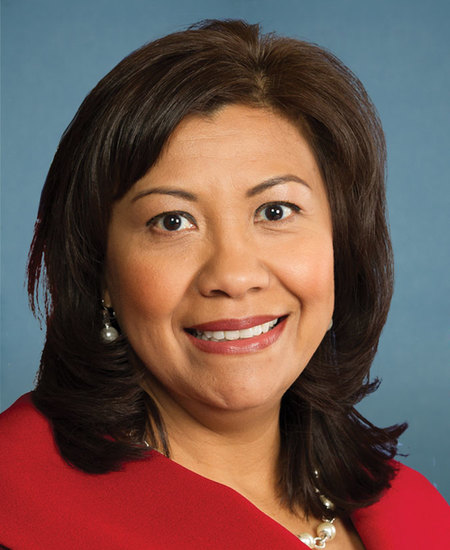
Rep. Norma J. Torres
Sponsored bills
Maddy summaryThis bill creates a federal grant program to help animal shelters cover essential costs like food, veterinary care, staff training, and facility maintenance. It authorizes the Secretary of Agriculture to award multi-year grants (up to 3 years, renewable) to eligible shelters, requiring grantees to report annually on animal intake/outcomes and fund usage. The Secretary must also submit yearly reports to Congress detailing how funds improved shelter operations. The program directly affects animal shelters receiving these grants under the Animal Welfare Act.
Maddy summaryHRES 963 is a symbolic resolution honoring Korean American Day, which commemorates the January 13, 1903 arrival of the first large wave of Korean immigrants to the U.S. It recognizes Korean Americans' contributions to U.S. society, including their economic, cultural, and military impacts, and marks the 121st anniversary of this historic migration. The resolution urges all Americans to observe Korean American Day to appreciate these contributions. As a commemorative measure, it does not create new policies or affect specific groups beyond this ceremonial recognition.
Maddy summaryThe Affordable Connectivity Program Extension Act of 2024 allocates $7 billion in funding for the Affordable Connectivity Program (ACP) during fiscal year 2024. The ACP provides subsidies to low-income households to help cover the cost of internet service and connected devices like laptops or tablets. This funding ensures the program can continue supporting eligible households throughout the year, with the money remaining available until fully spent. The bill extends existing program funding without changing eligibility criteria or service requirements.
Maddy summaryThis resolution urges the Biden administration to facilitate the safe, timely, and sufficient delivery of humanitarian aid to civilians in Gaza. It specifically calls for expanding aid convoys, opening additional border crossings, providing fuel to aid organizations, establishing safe shelters, and renewing humanitarian pauses to address the severe crisis. The resolution directly affects civilians in Gaza, where infrastructure damage, contaminated water, and shortages of medical supplies have created a dire humanitarian situation. It does not create new laws but expresses Congress's position on improving aid access.
Maddy summaryThe ARMAS Act of 2023 transfers regulatory control of certain firearm exports from the Department of Commerce to the Department of State. It designates Mexico, Guatemala, Honduras, El Salvador, Haiti, Jamaica, and other Caribbean nations as "covered countries" requiring special oversight for firearm exports. The bill requires the State Department to develop strategies to disrupt illegal firearm trafficking to these countries, implement tracking systems for firearms, and submit annual reports on exports. It establishes certification requirements for exports to covered countries, including detailed reporting to Congress about proposed exports. The law aims to improve tracking of firearms used in violence and reduce illegal trafficking that fuels crime and violence in the region.
Maddy summaryThis bill reauthorizes the Never Again Education program, which funds Holocaust education initiatives in schools. It extends the program's funding authorization period from ending after four fiscal years to continuing annually through fiscal year 2030. The bill modifies the existing law (Public Law 116-141) by updating the funding timeline without changing program requirements or eligibility. It directly affects the existing grant program supporting educational materials and teacher training on the Holocaust. The change ensures continued federal funding for these specific educational efforts until 2030.
Maddy summaryHRES 793 is a resolution passed by the U.S. House of Representatives calling on Hamas to immediately release all 199 hostages taken during Hamas' October 7, 2023 attack on Israel. The resolution condemns Hamas for the attack, the taking of hostages, and threats against hostages, while stating that holding hostages violates international humanitarian law under the Geneva Conventions. It demands the immediate release of all hostages and expresses sympathy for victims and their families. As a symbolic resolution, it does not create legal obligations but formally expresses the House's position.
Maddy summaryHRES 114 is a resolution proposing to expel Representative George Santos from the U.S. House of Representatives, citing constitutional authority under Article I, Section 5, Clause 2. It directly targets Santos, who was a sitting member of the House at the time of introduction. The resolution follows the House's constitutional power to expel members for misconduct, though it does not specify the alleged violations. This procedural resolution was referred to the Committee on Ethics for review.
Maddy summaryHR 6451, the Mental Health Justice Act of 2023, provides $250 million in federal grants to states, tribes, and localities to hire mental health professionals as first responders for specific emergencies. It directs these professionals to replace police in situations involving mental health crises, substance use, or intellectual/developmental disabilities - such as when a 911 caller describes a mental health emergency or a first responder identifies someone needing mental health support. The bill requires grantees to train responders in de-escalation techniques, link individuals to community-based services (not incarceration), and report on outcomes like reduced arrests or use of force. It also mandates data collection on demographics and prevents funneling people into institutional settings, with annual reports to Congress on program effectiveness.