

Maddy summaryThe Thriving Communities Act of 2024 establishes a federal grant program to provide technical assistance and funding for infrastructure projects in underserved communities. It directs the Transportation and Housing and Urban Development secretaries to jointly administer the program, with $100 million annually for Transportation and $5.5 million for HUD coordination. The bill requires annual reports detailing how projects promote transit-oriented development, interagency coordination, and the equity metrics used to distribute funds. This directly affects low-income and historically marginalized communities seeking to build sustainable, accessible infrastructure.
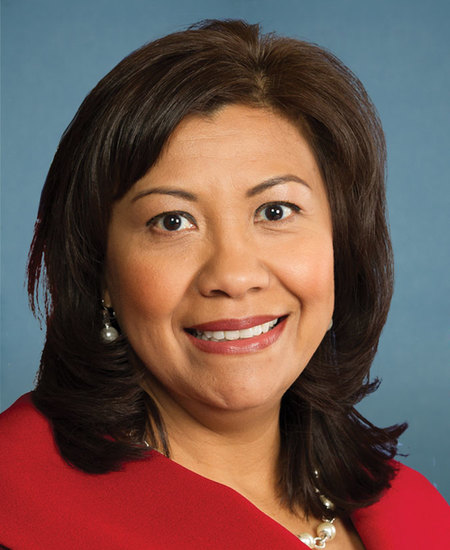
Rep. Norma J. Torres
Sponsored bills
Maddy summaryHR 5754 renames the U.S. courthouse at 350 W. 1st Street, Los Angeles, California, as the "Felicitas and Gonzalo Mendez United States Courthouse." The bill updates all federal references - such as legal documents, maps, and records - to use the new name. This is a ceremonial designation with no policy changes or direct impact on citizens or laws. The bill solely affects the courthouse's official name and related federal paperwork.
Maddy summaryThe READ Act Reauthorization Act of 2023 extends the authorization period for the Reinforcing Education Accountability in Development Act (commonly known as the READ Act) from five to ten fiscal years. This change allows U.S. international education programs, administered by agencies like USAID, to operate without annual reauthorization for a longer period. The bill directly affects programs providing educational support in developing countries, such as teacher training and literacy initiatives. The key mechanism is amending Section 4(a) of the existing law to adjust the funding duration, ensuring continued program stability.
Maddy summaryThis bill authorizes the placement of a memorial honoring women who contributed to World War II efforts on the National Mall or adjacent federal land in Washington, D.C. It specifically removes a location restriction (under 40 U.S.C. § 8908) to allow the memorial - previously authorized by the 2023 Consolidated Appropriations Act - to be situated within Area I of the National Mall or the National Mall Reserve. The memorial would commemorate over 18 million women who worked as pilots, engineers, mechanics, and codebreakers during the war. The bill directly affects the Women Who Worked on the Home Front Foundation, which is tasked with establishing the memorial.
Maddy summaryThis bill names a specific United States Postal Service facility at 24355 Creekside Road in Santa Clarita, California, as the "William L. Reynolds Post Office Building." It directly affects the physical location of this post office by changing its official designation. The key provision is a simple name change, with all existing references to the building in federal documents automatically updated to reflect the new name. This is a ceremonial designation with no policy or funding changes.
Maddy summaryHRES 1202 is a symbolic resolution expressing the U.S. House of Representatives' support for designating May 5-11, 2024, as Wildfire Preparedness Week. It encourages public education on fire safety, evacuation planning, and preventive measures like vegetation management and reducing human-caused ignitions (e.g., fireworks). The resolution does not create new laws or allocate funding but aims to raise awareness about wildfire risks, citing statistics on recent fires and health impacts from smoke exposure. It directly supports communities in wildfire-prone areas by promoting existing preparedness resources and educational initiatives. The resolution was introduced by Representatives Torres, Huffman, and Jacobs and referred to the Committee on Natural Resources.
Maddy summaryHR 8231, the James Earl Jones Congressional Gold Medal Act, authorizes a Congressional Gold Medal to be awarded to actor James Earl Jones in recognition of his distinguished career in theater and film, and his role in advancing inclusion and equal opportunities for people of all backgrounds in the entertainment industry. The Treasury will strike the medal with an image and inscription of Jones, and may produce and sell bronze duplicates to cover costs, with proceeds deposited into the U.S. Mint's public enterprise fund. This bill serves as a ceremonial honor with no new legal requirements or policy changes.
Maddy summaryThis bill increases federal funding for states that have laws allowing civil lawsuits against people who remove sexual protection barriers (like condoms or dental dams) without consent during sexual activity. States with such laws can receive up to a 20% increase in their annual Violence Against Women Act (VAWA) Sexual Assault Services Program funding for a 4-year period, with a maximum of four such increases. The bill authorizes $5 million annually from 2025-2029 to cover these funding increases. It directly affects states that implement the required legal provisions, tying federal grant support to their enforcement of consent protections during sexual contact. The policy change focuses on incentivizing state-level legal frameworks addressing nonconsensual barrier removal through federal funding mechanisms.
Maddy summaryHR 8188, the Stealthing Act of 2024, creates a federal civil remedy allowing victims of non-consensual condom or sexual barrier removal (known as "stealthing") to sue perpetrators in court. The bill directly affects individuals who experience this non-consensual act, which the bill defines as removing a condom or barrier without consent during sexual contact. Key provisions establish federal jurisdiction for such civil actions when the conduct involves interstate commerce, payments, communications, or occurs within U.S. territories. Victims may seek compensatory damages, punitive damages, and other court-ordered relief. This legislation does not criminalize the act but provides a legal pathway for victims to pursue civil remedies under specific federal jurisdictional conditions.
Maddy summaryThis resolution symbolically recognizes April 11-17, 2024, as the seventh annual "Black Maternal Health Week." It highlights the disproportionately high maternal mortality and morbidity rates faced by Black women in the U.S., citing data showing Black women are 2-3 times more likely to die from pregnancy-related causes than White women. The resolution emphasizes systemic racism, healthcare inequities, and barriers like limited access to care as key factors contributing to these disparities. It calls for policy action - including support for the Black Maternal Health Momnibus Act - but does not create new laws or allocate funding.