

Maddy summaryThis House resolution (HRES 1471) condemns disinformation campaigns by foreign actors like Russia, China, and Venezuela in Latin America and the Caribbean, and calls for multi-stakeholder action to protect democratic governance and human rights. It directly urges social media companies to improve Spanish-language content moderation, boost fact-checking partnerships, and increase transparency, while requesting regional governments strengthen independent media and coordinate anti-disinformation efforts. The resolution also asks U.S. agencies to expand support for media literacy, public diplomacy, and cross-platform cooperation to counter disinformation, without creating new laws or imposing penalties. It focuses on concrete policy steps like better detection of non-English disinformation and bolstering local fact-checking initiatives.
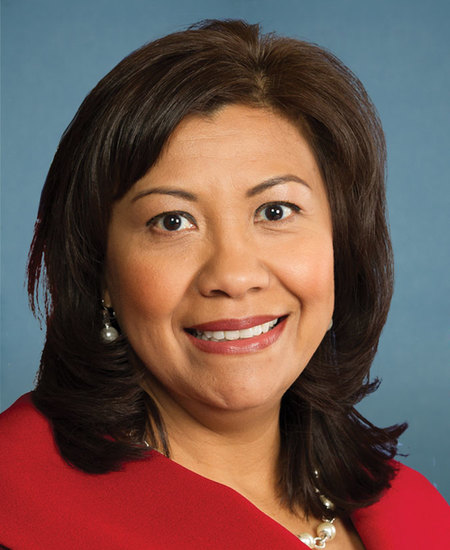
Rep. Norma J. Torres
Sponsored bills
Maddy summaryHRES 1473 is a non-binding resolution passed by the U.S. House of Representatives that condemns racism, bigotry, and misinformation targeting Haitian people and their descendants. It celebrates the historical contributions of Haitian Americans to U.S. society, including founding cities (like Chicago via Jean Baptiste Point du Sable), advancing civil rights (W.E.B. Du Bois), and enriching healthcare, education, and culture. The resolution specifically calls on all Americans to reject racist tropes and misinformation, and urges elected officials to promote inclusivity and responsible communication. It was introduced in response to recent false claims that fueled threats against Haitian communities, such as the bomb threats in Springfield, Ohio.
Maddy summaryThe Judiciary Accountability Act of 2024 establishes new protections for employees in the federal judiciary by extending workplace rights under existing civil rights laws (Title VII, ADA, ADEA, Rehabilitation Act, GINA) to all judicial branch employees. It creates an Office of Judicial Integrity with a Board of Directors to handle complaints about discrimination, harassment, and workplace misconduct through a process of preliminary review, mediation, and hearings. The bill also establishes an Office of Employee Advocacy to provide confidential legal assistance to employees, and requires judges who commit misconduct to reimburse the Office for certain settlements or awards. The law applies to all employees of federal courts, judges' offices, and judicial branch agencies, with annual reporting requirements to Congress.
Maddy summaryHR 6319 (the 911 SAVES Act of 2023) requires the Office of Management and Budget to reclassify public safety telecommunicators as "Protective Service Occupations" within 30 days of enactment. This change corrects their current misclassification in the federal Standard Occupational Classification (SOC) system, which is used for statistical data on jobs. The bill directly affects how these professionals - critical in emergency calls involving missing children, active threats, and officer safety - are officially categorized in government workforce data. It does not create new benefits or funding but aims to better recognize their lifesaving role through accurate federal job classification.
Maddy summaryHRES 1468 is a non-binding resolution recognizing the significant pay disparity faced by disabled women in the U.S. workforce. It cites data showing disabled women earn, on average, 50 cents for every dollar earned by nondisabled men, with even starker gaps for disabled women of color (e.g., 44 cents for disabled Latinas). The resolution highlights systemic barriers like occupational segregation, the subminimum wage, and lack of support services contributing to these inequities. It does not create new laws or affect any group directly, but formally acknowledges these disparities and reaffirms the House’s commitment to addressing wage gaps. This is a symbolic recognition, not a policy change.
Maddy summaryThe BASIC Act (HR 9669) creates a system to help college students access federal assistance programs that address basic needs like food, housing, and healthcare. It requires federal agencies to share data to identify students who might qualify for programs like SNAP, Medicaid, or housing assistance, and mandates that colleges provide students with information about these programs. The bill authorizes $1 billion in funding for planning grants (up to $75,000 per institution for 2 years) and implementation grants (up to $1 million per institution for 5 years) to help colleges develop and carry out strategies to address student food insecurity, housing insecurity, and other basic needs. Community colleges, historically Black colleges, and other minority-serving institutions receive priority for funding, with at least 25% of funds reserved for each category.
Maddy summaryHRES 1448 is a non-binding House resolution stating that the House believes every person has the right to emergency health care, including abortion care, during medical emergencies. It specifically addresses concerns that abortion restrictions force medical providers to choose between treating patients in life-threatening situations or risking criminal charges. The resolution highlights that such restrictions disproportionately harm Black, Indigenous, people of color, immigrants, low-income individuals, and LGBTQI+ patients. It does not change existing laws but expresses congressional support for ensuring access to emergency care without legal barriers. The resolution was introduced by multiple House members and referred to the Energy and Commerce Committee.
Maddy summaryHRES 1437 is a ceremonial resolution designating the week beginning September 9, 2024, as "National Hispanic-Serving Institutions Week." It recognizes Hispanic-serving institutions (HSIs) - colleges and universities with at least 25% Hispanic enrollment - and their role in educating low-income students, advancing economic mobility, and serving 31.7% of all undergraduate students. The resolution calls for the public and organizations to observe this week with ceremonies and activities during Hispanic Heritage Month. It does not create new laws, allocate funding, or change existing policies - it is purely a symbolic gesture of recognition.
Maddy summaryThis bill designates the U.S. Postal Service facility at 130 South Patterson Avenue in Santa Barbara, California, as the "Brigadier General Frederick R. Lopez Post Office Building." It updates all official U.S. government references to the building to reflect this new name, with no policy changes or funding impacts.
Maddy summaryHRES 1432 designates September 10, 2024, as "National Firearm Suicide Prevention Day" to raise public awareness about firearm suicides and promote safe storage practices. The resolution encourages healthcare professionals to discuss safe firearm storage with patients and supports the day's goals of reducing firearm suicides through education. It directly affects the general public and healthcare providers by highlighting evidence that safe storage lowers suicide risk, referencing statistics like 54.6% of U.S. suicides in 2022 involving firearms. The bill is symbolic, with no new legal requirements, and aligns with existing awareness efforts like Firearm Suicide Prevention Day.