

Maddy summaryHR 3112, the Better CARE for Animals Act of 2025, strengthens enforcement of the federal Animal Welfare Act by requiring dealers and exhibitors to hold valid licenses for animal sales or transport (Section 4). It expands enforcement authority by allowing the Attorney General to sue violators for up to $10,000 per day, seize animals, and seek injunctions (Section 20), while clarifying that courts can address violations of related rules and regulations. The bill directly affects animal dealers, exhibitors, the USDA, and the Department of Justice, creating clearer pathways for holding violators accountable. Key provisions include updating definitions, broadening inspection powers to cover all regulations, and directing penalty funds toward temporary animal care costs during legal proceedings.
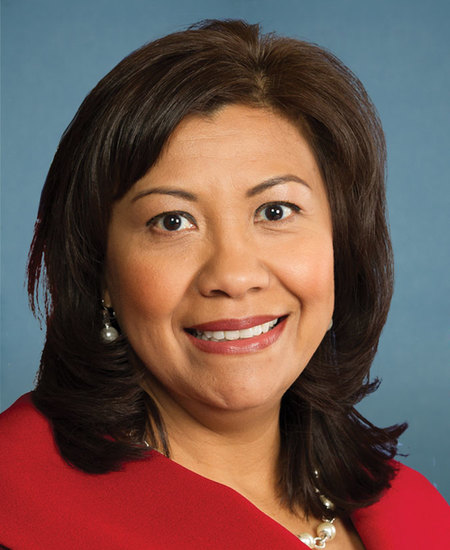
Rep. Norma J. Torres
Sponsored bills
Assault Weapons Ban of 2025 This bill makes it a crime to knowingly import, sell, manufacture, transfer, or possess a semiautomatic assault weapon (SAW) or large capacity ammunition feeding device (LCAFD). The prohibition does not apply to a firearm that is (1) manually operated by bolt, pump, lever, or slide action, except for certain shotguns; (2) permanently inoperable; (3) an antique; (4) only capable of firing rimfire ammunition; or (5) a rifle or shotgun specifically identified by make and model. The bill also exempts from the prohibition the following, with respect to a SAW or LCAFD: importation, sale, manufacture, transfer, or possession related to certain law enforcement efforts, or authorized tests or experiments; importation, sale, transfer, or possession related to securing nuclear materials; and possession by a retired law enforcement officer. The bill permits continued possession, sale, or transfer of a grandfathered SAW, which must be securely stored. A licensed gun dealer must conduct a background check prior to the sale or transfer of a grandfathered SAW between private parties. The bill permits continued possession of, but prohibits sale or transfer of, a grandfathered LCAFD. Newly manufactured LCAFDs must display serial number identification. Newly manufactured SAWs and LCAFDs must display the date of manufacture. The bill also allows a state or local government to use Edward Byrne Memorial Justice Assistance Grant Program funds to compensate individuals who surrender a SAW or LCAFD under a buy-back program.
Fairness to Freedom Act of 2025 This bill establishes a right to legal representation in certain immigration proceedings (e.g., removal and immigration bond hearings) at the government's expense for individuals who cannot afford representation. The bill also establishes various entities to facilitate such legal representation. Currently, individuals in these immigration proceedings may be represented by counsel but not at government expense. The bill addresses various issues related to such legal representation, including (1) the scope of the representation, (2) criteria for determining whether the individual is financially unable to afford representation, and (3) requirements relating to allowing the individual to meet with their lawyer and receiving relevant documents. Immigration proceedings may not commence until counsel has been appointed. The bill also establishes the Office of Immigration Representation to ensure that qualified individuals who cannot afford legal representation receive the representation as required by this bill. The office's duties shall include establishing (1) administrative regions throughout the United States, and (2) a local immigration representation board for each region. The local boards must, subject to the office's approval, develop and implement plans for providing legal representation under this bill. To provide such legal representation, the local boards may (1) establish one or more immigrant public defender organizations, (2) contract with existing community defender organizations, and (3) establish a panel attorney system. The bill establishes minimum funding requirements for the office.
Maddy summaryThe SHIELD Act (HR 3101) would create a federal grant program to expand legal representation for immigrants facing deportation. It authorizes $100 million annually for fiscal years 2026-2027 to fund workforce development, training, and infrastructure for legal services organizations. Eligible recipients include states, local governments, community organizations, and educational institutions that provide immigration legal services. Funds would support recruitment and training of legal staff, technical assistance, and coordination of services to better serve immigrants in deportation proceedings, addressing the current shortage of representation that affects most immigrants in deportation cases who cannot afford attorneys.
Maddy summaryThis bill requires the U.S. Postal Service to assess and improve its fleet vehicle distribution, focusing on underserved areas like rural communities, regions with outdated vehicles, counties with excessive mail delivery delays, high-poverty neighborhoods, and tribal lands. It mandates a strategic plan to increase vehicle availability nationwide and modernize the fleet with fuel-efficient vehicles as soon as practicable. The Postal Service must submit annual reports to Congress detailing vehicle distribution by state, progress on underserved areas, and improvement recommendations using specific definitions for "underserved areas" established in the bill. These reports will track metrics like vehicle age in postal regions and delivery delay comparisons to national averages.
Maddy summaryThe Equality Act (HR 15) amends federal civil rights laws to explicitly prohibit discrimination based on sexual orientation and gender identity in employment, housing, public accommodations, credit, and jury service. It expands existing protections under the Civil Rights Act of 1964 by adding sexual orientation and gender identity as protected characteristics under sex discrimination prohibitions. The bill clarifies that discrimination against LGBTQ people is a form of sex discrimination, consistent with the Supreme Court's Bostock decision, and adds specific definitions for gender identity and sexual orientation. This legislation directly affects businesses, employers, housing providers, financial institutions, and government entities that serve the public. The bill creates a more comprehensive legal framework to address discrimination that LGBTQ people face in multiple aspects of daily life.
Maddy summaryHR 3084, the Stealthing Act of 2025, creates a federal civil remedy for victims of non-consensual condom removal during sexual activity. It allows individuals to file lawsuits in federal court if the act occurred in a situation involving interstate commerce (e.g., using online communication, payment methods, or travel across state lines). Victims may seek compensatory damages, punitive damages, and other court-ordered relief. The bill specifically defines "stealthing" as removing a condom or similar barrier without consent, directly affecting individuals who experience this violation and those who commit it under federal jurisdiction.
Maddy summaryThis bill provides federal funding incentives to states that enact laws prohibiting nonconsensual removal of sexual protection barriers (like condoms or dental dams) during sexual activity. States with such laws can receive up to a 20% increase in funding for their Sexual Assault Services Program grants under the Violence Against Women Act. The funding increase applies for a 4-year period and cannot be awarded more than four times per state. It directly affects states that pass qualifying laws and the federal grant program supporting sexual assault services. The bill does not create new federal penalties but ties existing grant funding to state-level legal protections.
Maddy summaryHR 3045, the West Bank Violence Prevention Act of 2025, imposes U.S. sanctions on foreign individuals and entities responsible for violence, displacement, or property destruction in the West Bank. It targets those directly involved in attacks on civilians, forced displacement, or property seizures, including settler leaders or officials of groups engaged in such activities. Key provisions require freezing assets of sanctioned individuals within U.S. jurisdiction and blocking their entry into the United States via visa restrictions. The law applies to foreign nationals meeting specific criteria outlined in the bill, not U.S. citizens or entities.
Maddy summaryThis bill requires the reinstatement of Cybersecurity and Infrastructure Security Agency (CISA) employees who were involuntarily removed between January 25 and March 1, 2025, with backpay. It also prohibits future involuntary removals or transfers of CISA staff without new congressional authorization, and bans federal funding for Department of Government Efficiency (DOGE) employees working at CISA. The law directly affects CISA employees who were removed during the specified period and prevents DOGE personnel from being funded at CISA. It creates concrete staffing protections for CISA while blocking a specific external agency (DOGE) from staffing CISA roles.