

Universal School Meals Program Act of 2021 This bill revises requirements under the food and nutrition programs of the Department of Agriculture, such as the school lunch and breakfast programs. For example, the bill permanently provides free meals to all school children regardless of income. The bill increases the reimbursement rate for school food authorities participating in the food and nutrition programs. The bill also prohibits school food authorities from (1) physically segregating or otherwise discriminating against any child participating in the free breakfast program, or (2) overtly identifying a child participating in the program with a special token or announcement. Additionally, the bill expands the summer food service program by making all children eligible for participation in the program. Further, the bill revises eligibility determinations for measuring poverty to include runaway or homeless youth, foster children, migratory children, and children participating in specified programs (e.g., Head Start).
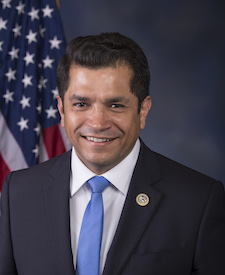
Rep. Jimmy Gomez
Sponsored bills
This resolution supports the designation of a Muslim-American Heritage Month. The resolution also honors the contributions and integral role of Muslim Americans in the economy, culture, and identity of the United States.
Divided Families Reunification Act This bill directs the Department of State to periodically report to Congress on its consultations with South Korea on potential opportunities to reunite Korean Americans with family in North Korea. The State Department's Special Envoy on North Korean Human Rights Issues shall periodically report to Congress on its consultations with representatives of Korean Americans with family in North Korea on reunification efforts.
End Double Taxation of Successful Consumer Claims Act This bill allows a deduction from gross income (above-the-line deduction) for attorney fees and court costs in connection with a claim of a consumer protection violation.
Green New Deal for Public Schools Act of 2021 This bill provides environmental and educational resources to public elementary and secondary schools and Bureau of Indian Education (BIE) schools. Specifically, the bill requires the Department of Energy's (DOE's) Office of Energy Efficiency and Renewable Energy to provide climate capital facilities grants to eligible entities (e.g., public schools and BIE schools). Grant recipients must use these funds to construct new, or convert existing facilities into, healthy zero-carbon schools. Healthy zero-carbon school refers to a school with highly energy-efficient facilities that produce or procure sufficient carbon-free and pollution-free renewable energy to meet the school's needs. Next, the bill directs the Department of Education (ED) to award resource block grants to qualified local educational agencies (LEAs) to hire and retain educators and support staff in high-need schools. ED must award grants to eligible consortia of LEAs for educational equity planning and implementation. In addition, ED must establish the Climate Change Resiliency Program to increase the resiliency of public and BIE schools during climate change-related events, natural disasters, and public health crises. Further, ED must establish a related grant program for state educational agencies. Grant recipients must use these funds for certain activities (e.g., green infrastructure projects). The bill establishes the Office of Sustainable Schools within ED to (1) administer the resource block grant and educational equity grant programs, and (2) coordinate with DOE and the White House Office of Domestic Climate Policy on climate capital facilities grants and the Climate Change Resiliency Program.
Pathways to Health Careers Act This bill provides funding for, reauthorizes through FY2026, and makes a variety of changes to certain grants administered by the Department of Health and Human Services that provide education and training to low-income individuals for health care occupations, including by establishing a new competitive grant for projects designed to train low-income individuals in allied health professions.
Allowing Steady Savings by Eliminating Tests Act or the ASSET Act This bill prohibits the use of asset tests or resource limits in certain means-tested public assistance programs and increases the resource limits to qualify for Supplemental Security Income (SSI). SSI is a federal income supplement program designed to help aged, blind, and disabled individuals with limited income and resources meet basic needs. Under the bill, states may not use asset or resource limits to determine eligibility for (1) programs funded by Temporary Assistance for Needy Families grants, (2) the Supplemental Nutrition Assistance Program, or (3) the Low-Income Home Energy Assistance Program. In addition, an individual may have up to $10,000 in certain resources (or up to $20,000 for a couple) and qualify for SSI. Under current law, the limit is $2,000 for an individual (or $3,000 for a couple).
This resolution expresses support for the designation of Journeyman Lineworkers Recognition Day. (A journeyman lineworker is a person who builds and maintains electrical power systems.)
Safe Schools Improvement Act of 2021 This bill requires states to direct their local educational agencies (LEAs) to establish policies that prevent and prohibit bullying and harassment of elementary and secondary school students. In particular, these policies must prohibit bullying and harassment based on race, color, national origin, sex, sexual orientation, gender identity, disability, or religion. Further, LEAs must provide (1) students, parents, and educational professionals with annual notice of the conduct prohibited in their disciplinary policies; (2) students and parents with grievance procedures that target such conduct; and (3) the public with annual data on the incidence and frequency of that conduct at the school and LEA level. The Department of Education must conduct and report on an independent biennial evaluation of programs and policies to combat bullying and harassment in elementary and secondary schools. The National Center for Education Statistics must collect state data to determine the incidence and frequency of the conduct prohibited by LEA disciplinary policies.
Tribal Healthcare Careers Act This bill requires the Department of Health and Human Services (HHS) to reserve a portion of Health Profession Opportunity Grants for Indian tribes, tribal organizations, and tribal colleges and universities. HHS must award at least 10 grants to tribal applicants.