

Maddy summaryHR 3776, the Family Stability and Opportunity Vouchers Act of 2023, creates a new housing voucher program targeting families with young children facing instability. It provides up to 50,000 incremental vouchers annually (2024-2029) for families who either have a child under 6, will welcome a minor child within 300 days, and are homeless, unstably housed, living in high-poverty areas, or at risk of displacement from neighborhoods with high-performing schools. Public housing agencies receiving funds must offer mobility services to help these families relocate to areas with quality schools or childcare, without requiring participation as a voucher condition. The bill defines key terms like "opportunity area for children" and mandates evidence-based services to support family transitions. This policy directly affects low-income families with young children in unstable housing situations seeking better educational opportunities.
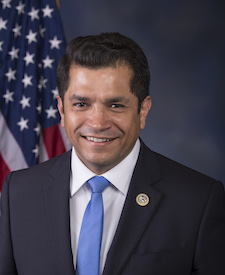
Rep. Jimmy Gomez
Sponsored bills
Maddy summaryHR 3713 creates federal grants to fund comprehensive school-based mental health programs for students in grades K-12, including those in Bureau of Indian Education schools. It requires partnerships between schools and community mental health providers to deliver trauma-informed, culturally appropriate services addressing suicide risk, grief, violence, and trauma exposure. The bill authorizes $300 million annually (2024-2027) for these programs, mandating privacy protections under HIPAA and FERPA, and requires annual reporting on program effectiveness.
Maddy summaryThe Real Education and Access for Healthy Youth Act of 2023 would provide federal grants to support comprehensive sex education and sexual health services for young people ages 10-29, with specific focus on marginalized communities including Black, Indigenous, Latine, Asian American, Native Hawaiian, Pacific Islander, and LGBTQ+ youth. The bill authorizes $100 million annually for 2024-2029 to fund programs through grants for elementary/secondary schools (section 4), colleges (section 5), educator training (section 6), and youth-friendly sexual health services for marginalized young people (section 7). These programs must be evidence-informed, medically accurate, culturally responsive, age-appropriate, and trauma-informed, while addressing racial and gender inequities in current sex education approaches. The bill also repeals the "abstinence-only-until-marriage" program and redirects its funding to support this comprehensive approach, requiring grantees to report on implementation and impact.
Maddy summaryThis bill creates a new tax credit for expenses related to "qualified access technology for the blind" under the Internal Revenue Code. It allows taxpayers to claim a credit of up to $2,000 per year (adjusted for inflation) for costs paid for hardware, software, or IT that converts visual information into formats usable by blind individuals, covering the taxpayer, their spouse, or a dependent who is blind. The credit is limited to $2,000 over any three consecutive tax years per blind individual and expires after 2028. It directly affects blind individuals and their families who purchase qualifying assistive technology. The credit cannot be claimed for expenses already covered by other tax deductions or credits.
Maddy summaryHRES 439 is a non-binding resolution expressing the House of Representatives' support for keeping the U.S. Postal Service (USPS) as an independent federal agency, not subject to privatization. It highlights USPS's constitutional role, self-sustaining nature (relying on service revenue, not taxpayer funds), and its importance to rural communities, e-commerce, and over 600,000 employees. The resolution urges Congress to take action to preserve USPS's independence, emphasizing that privatization could raise prices, reduce services, and harm the nation's mail infrastructure. As a procedural resolution, it does not change law but formally states the House's position.
This resolution supports (1) the goals of Wildfire Preparedness Week; and (2) resources and educational initiatives that communicate how affected communities can take preventative measures such as instituting early warning systems and reducing unplanned human ignitions, as well as how to safely and efficiently evacuate people and their animals.
Maddy summaryThis bill renames a U.S. Postal Service facility at 300 Long Beach Boulevard in Long Beach, California, as the "Alan S. Lowenthal Post Office Building." It directly affects the postal facility and all federal documents, maps, or records referencing it. The key provision updates every official reference to the building to use the new name, ensuring consistency in government records. The bill does not change postal services, funding, or policy - only the building's official designation.
Maddy summaryThis bill designates the U.S. Postal Service facility at 7911 Imperial Highway in Downey, California, as the "Lucille Roybal-Allard Post Office Building." It updates all official references in federal laws, documents, and records to use this new name for the specific post office location. The change affects the facility's official identification but does not alter its operations or services.
Maddy summaryThe EVs for All Act of 2023 establishes a Department of Energy grant program to fund electric vehicle (EV) sharing services at public housing projects. Eligible entities - like public housing agencies, local governments, and partner nonprofits - can apply for grants to purchase used EVs, install charging equipment, and run community outreach. Grants prioritize projects in historically marginalized communities with high pollution or limited transportation access, require fair labor practices, and mandate affordable, non-discriminatory charging fees. The program requires grantees to report on usage, emissions reductions, and service costs while ensuring EVs meet domestic content and worker protection standards.
Maddy summaryThis bill requires that AM radio receivers be included as standard equipment in all new motor vehicles (such as cars and trucks) sold in the United States, with a rule to be issued by the Department of Transportation within one year. The rule must ensure AM radio is easily accessible on the dashboard and allows manufacturers to use digital AM radio technology instead of traditional AM. During the one-year period between the bill's enactment and the rule's effective date, manufacturers must clearly label vehicles without AM radio. The bill also directs a study to evaluate whether an alternative system could deliver emergency alerts as reliably as AM radio across the country, especially during crises.