

Maddy summaryHRES 1588 is a House resolution supporting Transgender Day of Remembrance (TDoR) by recognizing the epidemic of violence against transgender people and memorializing those killed between October 1, 2023, and September 30, 2024. It specifically honors 38 transgender or gender-nonconforming individuals whose lives were lost to violence during that period, highlighting that transgender women of color face disproportionate risks. The resolution acknowledges systemic issues like underreporting, barriers to healthcare, and higher rates of homelessness and suicide within the community. It calls for the U.S. government to prioritize solutions to this violence while affirming transgender people's right to dignity and safety. As a symbolic resolution, it does not create new laws or policies but formally recognizes these issues for congressional record.
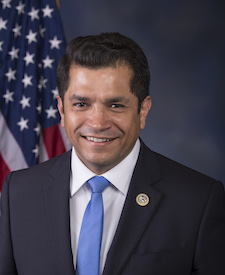
Rep. Jimmy Gomez
Sponsored bills
Maddy summaryThe Half-Century Update for Water Access and Affordability Act establishes a federal program to provide financial assistance to low-income households struggling to pay water bills. It requires states and water utilities to implement programs that offer direct bill discounts, debt relief, water efficiency upgrades, and crisis assistance to households earning up to 200% of the poverty level or 80% of local median income. The bill prohibits disconnections for non-payment, allows automatic enrollment for households already receiving other federal assistance, and mandates data collection to track program impacts on water service access. The legislation authorizes $20 billion annually from 2025-2035 to fund this assistance, with specific requirements to ensure universal access and prevent discrimination in program implementation.
Maddy summaryThis bill increases the cap on project-based housing assistance units from 20% to 30% of a public housing agency's inventory under the Housing Act of 1937. It specifically allows agencies to use these units for homeless individuals and families, requiring Secretary approval for additional units beyond the standard limit. The Secretary of Housing and Urban Development must issue implementing rules within 90 days of enactment, with the changes taking effect in the first fiscal year after the bill passes. The legislation directly affects public housing agencies managing federally assisted housing, expanding their capacity to serve homeless populations through modified funding rules.
Maddy summaryThe American Homeownership Opportunity Act of 2024 creates two new tax credits to support homebuyers. It provides a first-time homebuyer credit of up to $25,000 (increased to $50,000 for first-generation homebuyers) for down payments on principal residences, with income limits ($150,000 individual/$225,000 head of household/$300,000 joint). It also establishes a starter home construction credit of 15% (30% for first-time buyers) of qualified costs for new homes under 1,200 square feet priced below 80% of local median home values. The credits are refundable, subject to recapture if the home is sold within five years (with exceptions for new purchases, death, or military service), and adjust for inflation annually. This directly affects first-time homebuyers and new construction buyers meeting specific income and ownership criteria.
Maddy summaryThe VA Employee Fairness Act of 2024 modifies collective bargaining rules for employees of the Veterans Health Administration (VHA). It removes existing subsections (b), (c), and (d) from the law governing VHA employee bargaining and renumbers the remaining provision. This change streamlines the collective bargaining framework but does not alter the Secretary of Veterans Affairs' existing authorities over incentive pay and expedited hiring. The bill directly affects VHA employees by changing how their collective bargaining rights are structured under federal law. The law remains neutral, focusing solely on procedural adjustments to the existing bargaining framework.
Maddy summaryThe Child Safety and Well-Being Act of 2024 (HR 9875) establishes a Children's Commission to represent children's interests in federal policymaking. The Commission, composed of 15 diverse members including experts, youth with lived experience, and representatives from various backgrounds, will advise Congress and federal agencies on policies affecting children, particularly marginalized youth defined as those experiencing systemic barriers. The Commission will review agency actions, receive complaints about how children are treated, and publish annual reports with recommendations to improve child well-being policies. It is authorized $5 million annually for operations and must study the feasibility of requiring agencies to create "child impact statements" assessing how policies affect children.
Maddy summaryHCONRES 131 is a symbolic resolution recognizing the wage gap between Latina women and White, non-Hispanic men in the U.S. workforce. It highlights that Latina women working full-time earn 58 cents for every dollar earned by White, non-Hispanic men, with an average lifetime earnings loss of over $1.2 million. The resolution designates October 3, 2024, as "Latina Equal Pay Day" to draw attention to this disparity, citing Bureau of Census data showing the gap has persisted for decades. It does not create new laws or policies but formally acknowledges the economic impact on Latina women and their families.
Maddy summaryThis resolution formally censures Representative Glen Clay Higgins (LA-03) for a September 25, 2024, social media post containing racist remarks and false claims about Haitians. The bill requires Higgins to appear in the House chamber to receive the censure, with the resolution publicly read by the Speaker. It specifically references his post describing Haiti as "the nastiest country," falsely accusing Haitians of eating pets, and labeling them "slapstick gangsters and thugs." The censure is a formal disciplinary action by the House, not a policy change.
Maddy summaryHRES 1504 designates October 2024 as Filipino American History Month to celebrate the history, culture, and contributions of Filipino Americans to the United States. The resolution urges the American public to observe the month through educational programs and activities highlighting the community's early settlements, military service (including World War II veterans' contributions), and roles in healthcare, labor movements, and other fields. As a non-binding congressional resolution, it formally recognizes Filipino American heritage without creating new legal obligations or policy changes.
Maddy summaryThis bill creates two programs to support early childhood educators. The first provides loan repayment assistance (up to $6,000 annually) for educators who work 5 years at qualifying childcare providers (like centers receiving federal child care vouchers). The second offers grants ($4,000 per academic year) to students in early childhood education programs, requiring them to work in licensed early learning settings for at least one year per grant year. Both programs require service commitments, with failure to comply treated as a loan requiring repayment under specific income-based terms. The programs directly affect early childhood educators, students pursuing relevant degrees, and childcare providers participating in federal child care programs.