

Closing the Meal Gap Act of 202 1 This bill revises the requirements for calculating Supplemental Nutrition Assistance Program (SNAP) benefits. The bill increases the minimum SNAP benefit and requires benefits to be calculated using the value of a low-cost food plan. The Department of Agriculture (USDA) must determine the requirements for the low-cost food plan, which is the diet required to feed a family of four, consisting of a man and a woman 19-50 years of age, a child 6-8 years of age, and a child 9-11 years of age. USDA must (1) reevaluate and publish the market baskets of the plan by January 1, 2027, and every five years thereafter, based on current food prices, food composition data, consumption patterns, and dietary guidance; and (2) make adjustments to the plan to account for household size, changes in the cost of the diet, and the costs of food in specified areas. The bill modifies the requirements for calculating household income to determine SNAP eligibility by (1) authorizing a standard medical expense deduction for households containing an elderly or disabled member, and (2) eliminating the cap on the excess shelter expense deduction. The bill eliminates certain work requirements for SNAP. The requirements apply to able-bodied adults who are ages 18-49 and have no dependent children. The bill allows Puerto Rico, American Samoa, and the Northern Mariana Islands to participate in SNAP. Currently, the three territories receive block grants instead of participating in SNAP.
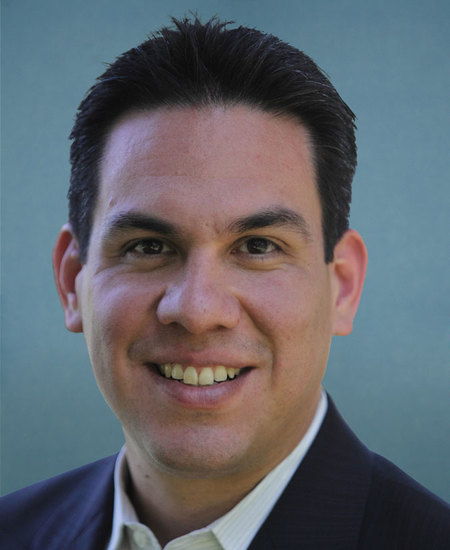
Rep. Pete Aguilar
Sponsored bills
Empowering Parents' Healthcare Choices Act of 2021 This bill provides a 60-day time frame within which parents with separate health insurance plans may choose which plan provides primary coverage for their newborn child. The bill limits the application of certain standard health insurance provisions that determine which plan becomes the primary coverage of a dependent child based on the order of the parents' birthdays.
Rebuilding Economies and Creating Opportunities for More People Everywhere To Excel Act or the RECOMPETE Act This bill establishes a grant program to assist economically distressed local communities and labor markets that meet specified economic criteria, including employment criteria. The Economic Development Administration (EDA) must award 10-year grants to a local government, tribal government, economic development district, or consortium of local government units located in such areas. Each grant recipient must develop and implement a comprehensive strategy to address the economic challenges specific to the area. The grants may be used to increase employment opportunities, increase local per capita income, support economic development, and develop infrastructure and housing. Additionally, the EDA must periodically evaluate each grant recipient based on certain benchmark criteria and annually report on the implementation of the program. The bill specifies formulas for determining the grant amount for each community or market and the federal share of the cost of each program or activity conducted under the program.
Water Conservation Rebate Tax Parity Act This bill expands the tax exclusions for energy conservation subsidies to include subsidies provided (directly or indirectly) (1) by a public utility for the purchase or installation of any water conservation or efficiency measure; (2) by a storm water management provider for the purchase or installation of any storm water management measure; or (3) by a state or local government to a resident of such state or locality for the purchase or installation of any wastewater management measure, but only if such measure concerns the taxpayer's principal residence.
Disaster Mitigation and Tax Parity Act of 2021 This bill excludes from gross income, for income tax purposes, any qualified catastrophe mitigation payment made under a state-based catastrophe loss mitigation program. A qualified catastrophe mitigation payment means any amount received for making improvements to an individual's residence for the sole purpose of reducing the damage that would be done to such residence by a windstorm, earthquake, or wildfire.
United States Call Center Worker and Consumer Protection Act of 2021 This bill establishes restrictions on businesses that relocate call centers or redirect customer service calls to locations outside the United States. Specifically, a business must notify the Department of Labor that it intends to move its customer service call center overseas and Labor must maintain a publicly available list of such businesses. Subject to narrow exceptions, a business appearing on such list is ineligible to receive federal grants or guaranteed loans for five years after the business is added to the list. Further, agencies must condition the awarding of government contracts on the requirement that any call center activity pursuant to the contract must be performed in the United States. Additionally, the bill requires call center employees to disclose their physical location at the beginning of each call initiated or received, unless all employees of the business participating in the communication are located in the United States, among other exceptions.
Averting Loss of Life and Injury by Expediting SIVs Act of 2021 or the Allies Act of 2021 This bill increases the number of special immigrant visas available to qualified Afghan nationals who worked for the U.S. government or the North Atlantic Treaty Organization (NATO) missions in Afghanistan. The bill also relaxes certain qualifications for such visas. Specifically, this bill makes available an additional 8,000 visas for principal aliens under this special visa program, to be available until all such visas have been issued. (The numerical limitations in this program apply only to the principal alien who applies for the visa, not to any accompanying spouse or child.) Under this bill, an alien may qualify based on a credible basis for concern about the possibility of an ongoing serious threat in Afghanistan due to their work with the U.S. government or a NATO mission, where currently the alien must have experienced such a threat. The bill also eliminates a requirement for each applicant to submit a credible sworn statement describing that threat. Furthermore, for an applicant qualifying for a visa by performing duties for U.S. military personnel stationed with a NATO mission, this bill eliminates a requirement that the duties performed qualify as sensitive and trusted duties. If an alien submits a visa application that included an accompanying spouse or child but the alien passes away before the application is granted, the surviving spouse or child shall remain eligible to receive a visa under that application. Currently, a surviving spouse or child retains eligibility only if the application was approved before the alien passed away.
Universal School Meals Program Act of 2021 This bill revises requirements under the food and nutrition programs of the Department of Agriculture, such as the school lunch and breakfast programs. For example, the bill permanently provides free meals to all school children regardless of income. The bill increases the reimbursement rate for school food authorities participating in the food and nutrition programs. The bill also prohibits school food authorities from (1) physically segregating or otherwise discriminating against any child participating in the free breakfast program, or (2) overtly identifying a child participating in the program with a special token or announcement. Additionally, the bill expands the summer food service program by making all children eligible for participation in the program. Further, the bill revises eligibility determinations for measuring poverty to include runaway or homeless youth, foster children, migratory children, and children participating in specified programs (e.g., Head Start).
This resolution reaffirms the House of Representatives' commitment to media diversity and expresses its pledge to eliminate barriers to such diversity.
Support Through Loss Act This bill provides employees with 24 hours of paid leave time each year for an absence resulting from a pregnancy loss or other specified circumstance related to pregnancy, fertility, or an unsuccessful assisted reproductive procedure or adoption match. Employers must notify each employee about the availability of this paid leave and may not discriminate or discharge an employee for exercising or attempting to exercise the right to such paid leave. The bill provides for enforcement of this requirement by the Department of Labor and through civil action brought by an employee or individual. Further, the bill requires specified federal agencies to conduct research and publish information about pregnancy loss and related evidence-based treatment options.